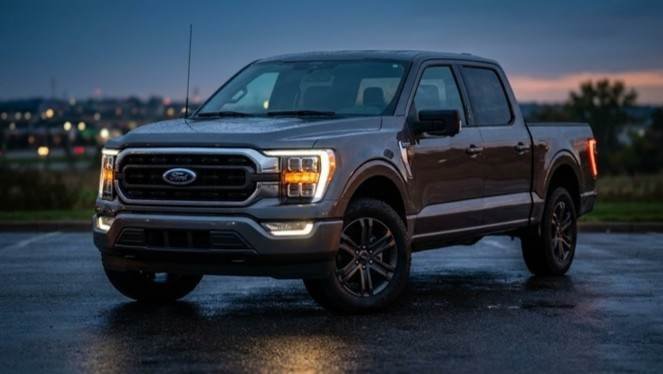
The F-150 is still America’s default full-size pickup, and that is exactly why the 2026 Ford F-150 features list can feel overwhelming. Ford does not sell one truck. It sells a catalog: work cabs, family SuperCrews, tow rigs, pavement-oriented trucks, and desert racers that share a nameplate and little else.
That spread is useful if you know what you are looking at. It is expensive if you do not. Two F-150s can look similar in a dealer photo and differ by thousands of pounds of towing capacity, a full payload rating, a hybrid generator system, or a lowered street suspension. The 2026 model year keeps that mix and adds a more distinct street-truck personality. The job for a shopper is not to memorize every option code. It is to match the hardware to the way the truck will actually be used.
Specifications can vary by configuration. Horsepower, towing, payload, pricing, and equipment should be confirmed on the official 2026 Ford order guide and the truck’s window sticker.
What’s New for the 2026 Ford F-150?
The 2026 F-150 is not a clean-sheet redesign. The current generation still traces back to the 2021 overhaul, with the last major interior and front-end refresh arriving for 2024. What 2026 does is sharpen the edges of that truck.
The headline addition is the F-150 Lobo, Ford’s factory street-truck take on the SuperCrew. Instead of more ground clearance, the Lobo is about stance: a lowered, sport-tuned setup, unique styling, and a look aimed at pavement rather than ruts. Think of it as the opposite of Tremor and Raptor. Those trucks climb. Lobo is meant to sit down and look like it belongs on a boulevard, at a tailgate, or in a jobsite parking lot where style matters as much as a tow rating.
Elsewhere, 2026 is evolutionary. Ford continues to treat the F-150 as a platform with many missions, not a single personality. Appearance packages, wheel designs, and trim grouping can shift from one model year to the next, which is why a leftover 2025 brochure is a bad shopping tool. If a feature decides the purchase — Pro Access Tailgate, 7.2-kW Pro Power Onboard, BlueCruise, a specific axle ratio — confirm it on the 2026 build, not last year’s memory.
The practical takeaway: 2026 buyers get a familiar F-150 with a new street-oriented configuration and the same core decision tree as before. Engine, cab, bed, 4×2 versus 4×4, and trim still matter more than a grille graphic.
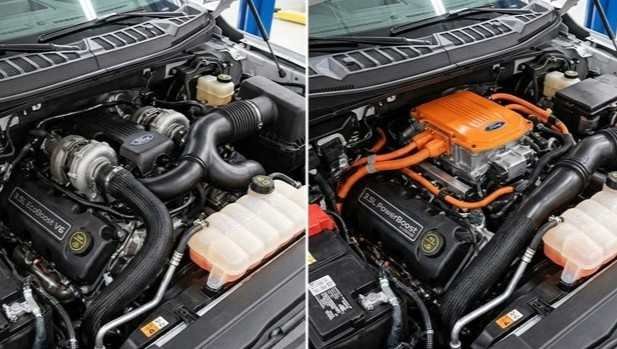
2026 Ford F-150 Engine Options
Engine choice is the first 2026 F-150 engine options decision that actually changes the truck. It affects towing, fuel cost, sound, maintenance, and whether the bed can run a jobsite’s worth of tools.
Ford’s gasoline F-150 lineup still revolves around turbocharged V6s, a naturally aspirated V8, a hybrid V6, and the high-output Raptor engines. Ratings below reflect recently published F-150 figures. Confirm 2026 horsepower and torque on Ford’s current specs, because output can move with calibration, exhaust, or model-year updates.
| Engine | Typical published output | Character | Ideal use |
|---|---|---|---|
| 2.7L EcoBoost V6 | About 325 hp / 400 lb-ft | Lightest, often the thriftiest non-hybrid | Daily driving, lighter towing, value builds |
| 3.5L EcoBoost V6 | About 400 hp / 500 lb-ft | The workhorse turbo | Maximum conventional towing when properly equipped |
| 5.0L V8 | About 400 hp / 410 lb-ft | Linear power, V8 sound | Mixed driving, mid-to-strong towing, buyers who want a V8 |
| 3.5L PowerBoost hybrid | About 430 hp / 570 lb-ft | Strong low-end torque, generator capability | Torque, stop-and-go driving, 7.2-kW onboard power |
| Raptor 3.5L High-Output EcoBoost | About 450 hp / 510 lb-ft | High-speed off-road power | Raptor only |
| Raptor R 5.2L supercharged V8 | About 700 hp / 640 lb-ft | Maximum acceleration | Raptor R only |
2.7L EcoBoost V6. This is the F-150 most people should start with if they commute, haul weekends, and do not live at a boat ramp. The 2.7 makes serious torque for its size, which is why it feels stronger in daily driving than the horsepower number suggests. It is usually easier on fuel than the 3.5 or 5.0 in unloaded driving. It is not the engine to spec if your trailer sits near the top of Ford’s towing chart.
3.5L EcoBoost V6. If towing is the point, this is often the engine Ford builds the max-tow story around. The extra displacement and torque help on grades, with a fifth-wheel in the bed, or when the truck is already carrying passengers and gear. The trade-off is more thirsty driving when empty and a more expensive build than a 2.7 XLT.
5.0L V8. The V8 is not the weak link people sometimes assume. Peak horsepower matches the 3.5 EcoBoost in recent ratings, but the torque arrives differently. It is smoother, more linear, and sounds like a truck. Buyers who dislike turbo lag, want simpler high-rpm character, or just want a V8 F-150 still have a real reason to tick this box. For the absolute highest conventional towing number, the 3.5 EcoBoost usually still wins on paper.
3.5L PowerBoost hybrid. PowerBoost pairs the 3.5 EcoBoost with an electric motor and a battery pack. Combined output is the torque story: around 570 lb-ft in recent ratings, which shows up when you leave a light or start a trailer moving. The hybrid can also be the efficiency play in city and suburban use. On a long interstate tow, it is still a heavy V6 truck pulling a trailer. The unique feature is not the MPG badge. It is 7.2-kW Pro Power Onboard.
Raptor engines. The high-output 3.5 and the supercharged 5.2 are not general-purpose F-150 engines. They exist for Raptor and Raptor R. Towing capacity is lower than a max-tow 3.5 SuperCrew because the off-road hardware, tires, and gearing are built for whoops, not fifth-wheels.
Which engine is “best”? None of them, in the abstract. A contractor who wants quiet jobsite power has a different answer than a rancher towing cattle or a parent who wants a SuperCrew for school and Costco.
2026 Ford F-150 Towing Capacity
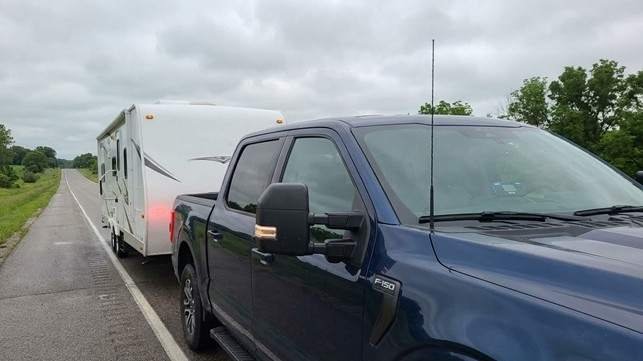
Search 2026 F-150 towing capacity and you will see a big number. Ford has advertised as much as about 13,500 pounds conventional towing when the F-150 is properly equipped. That figure is real. It is also easy to misuse.
Maximum towing is not a trim personality. It is a math problem: engine, axle ratio, cab, bed, drivetrain, cooling equipment, hitch type, passengers, cargo, and the truck’s gross combined weight rating (GCWR). A 4×4 SuperCrew with a 5.5-foot bed, a sunroof, and a family of five will not match the brochure’s highest number.
A useful way to read the chart:
| Powertrain | Typical towing role | What to expect |
|---|---|---|
| 2.7L EcoBoost | Light-to-moderate towing | Often capable into the four-digit-ton range when equipped; not the max-tow hero |
| 5.0L V8 | Strong mixed towing | Competitive for boats, equipment, and many travel trailers |
| 3.5L EcoBoost | Highest conventional ratings | Usually the path to Ford’s advertised maximum when the rest of the truck matches |
| PowerBoost | High torque, slightly different ratings | Excellent for launching a load; check the specific guide, because hybrid weight and gearing change the number |
| Raptor / Raptor R | Occasional towing | Far below max-tow F-150s; off-road setup comes first |
Why configuration eats towing capacity. Four-wheel drive adds weight. SuperCrew adds weight. Options add weight. A shorter rear overhang can change hitch ratings. Payload and tongue weight are linked: a loaded crew cab can run out of payload before it runs out of “towing capacity” on a website.
Before you buy, do three things. First, identify the trailer’s actual loaded weight, not the brochure dry weight. Second, use Ford’s F-150 towing guide for the exact cab/bed/engine/axle combination. Third, look at tongue weight and payload together. A 10,000-pound trailer with 12–15% tongue weight can consume 1,200–1,500 pounds of payload before you add people, fuel, a toolbox, or a bed cover.
If the trailer is a lifestyle sometimes, a well-spec’d 2.7 or 5.0 may be plenty. If the trailer is the truck’s job, the 3.5 EcoBoost, the right axle, and the tow package are the features that matter. Do not assume every 2026 F-150 can pull 13,500 pounds because the homepage said so.
2026 Ford F-150 Payload Capacity
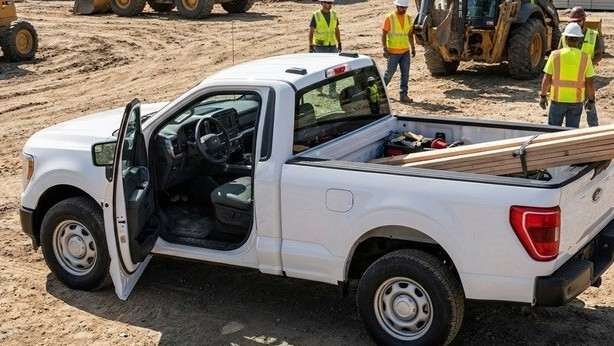
Payload is the weight the truck can carry in the cab and bed — people, tools, sand, a gooseneck hitch, a slide-in camper, coolers, dogs, everything that is not the truck itself. Towing gets the advertising. Payload is what gets people in trouble.
Ford’s advertised 2026 F-150 payload maximum applies to a specific, usually work-oriented configuration. In recent model years, that marketing number has been lower than some older F-150 brochures because the trucks got heavier with more standard equipment. The only payload rating that counts is the one on the driver’s door certification label of the truck you are buying.
Why the gap exists:
- SuperCrew luxury trims are heavier than a Regular Cab XL.
- 4×4, larger fuel tanks, panoramic roofs, bigger wheels, and hybrid hardware all consume payload.
- Tongue weight of a trailer counts as payload.
- Aftermarket running boards, tonneau covers, bed liners, and bumpers count too.
A family SuperCrew that “can tow 10,000 pounds” may only have 1,400–1,800 pounds of payload left after options. Put four adults in the cab, fill the tank, add a toolbox, and a travel-trailer tongue can push the truck over GVWR even if the towing chart still looks fine.
If you haul mulch, feed, a snowmobile, or a camper, ask for the payload of that VIN. If a dealer only quotes the maximum advertised number, keep asking.
2026 Ford F-150 Trim Levels and Features
Trim is how Ford packages comfort, chrome, screens, and attitude. It is not a substitute for choosing cab, bed, and engine.
XL. The work truck. Vinyl or tough cloth, simpler interior, easier-to-clean surfaces, and the most honest F-150 if the bed is the point. You can still get modern safety tech and a large screen in recent F-150s, but XL is where you skip massaging seats and start with rubber floors.
STX. The style-on-a-budget truck. STX takes a more accessible price point and adds sport appearance: unique wheels, blacked-out or athletic cues, and a look that photographs more expensive than XL. Feature content sits closer to work/mid-level than Lariat luxury.
XLT. The volume sweet spot for a lot of U.S. buyers. XLT is where cloth or available leather-trimmed upgrades, convenience features, and popular packages pile up. Plenty of family SuperCrews and tow trucks are XLTs because the cabin is civil without jumping into luxury-truck money.
Lariat. This is the line where the F-150 starts feeling like a premium vehicle that happens to have a bed. Expect richer materials, more available driver-assist gear, nicer audio, and the kind of interior lighting and seating that make a long interstate tow less of a chore.
King Ranch. Ford’s ranch-luxury trim: distinctive leather, unique badging, and a warmer, more Western cabin than Platinum’s cooler luxury. Feature content is high. The difference is taste as much as equipment.
Platinum. The modern luxury F-150 — dark chrome or polished cues, high-end seating, and nearly every comfort and tech option in play. Platinum is for buyers who want the truck to feel like a full-size SUV from the front seats.
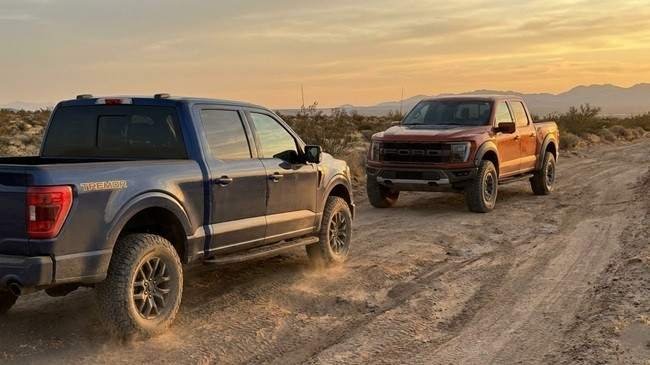
Tremor. An off-road trim, not just a sticker. Tremor sits above FX4 in hardware: more specialized suspension, all-terrain rubber, underbody protection, and trail-oriented drive modes. It is the F-150 for ruts, two-tracks, and job sites with broken pavement, without going full Raptor.
Raptor and Raptor R. These are high-speed off-road trucks with unique fenders, suspension, tires, and engines. They are F-150s in the same way a race-prep pickup is still a pickup. Daily-drivable? Yes. The same truck as an XL 2.7? Not even close.
Lobo. The 2026 street configuration. If Tremor is for dirt and Raptor is for whoops, Lobo is for stance and pavement presence. Do not shop it as an off-roader.
There is no universal best trim. XL can be the smartest truck on the lot. Platinum can be the right one if the F-150 is also the family road-trip vehicle. Spec the mission first, then the leather.

2026 Ford F-150 Interior Features
The 2026 F-150 interior is one reason Ford still wins over buyers who previously swore they wanted a half-ton only for work. After the recent refresh, even modest cabs got a much larger center screen and a more car-like dashboard architecture.
Cabs. Regular Cab is for work and maximum bed length. SuperCab has rear-hinged back doors and tighter rear quarters — useful for occasional adults or jobsite gear, awkward as a family hauler. SuperCrew is the F-150 most households actually want: four full doors and rear-seat space that can handle kids, dogs, and a week of groceries.
Seats and storage. XL and work-focused interiors emphasize durability and flat load floors. Higher trims add power-adjustable, heated, ventilated, and in some cases massaging or max-reclining front seats. Under-seat storage, a lockable center console, and door-pocket space are the unglamorous features owners use every day.
Mobile Office / Interior Work Surface. Ford still leans into the idea that an F-150 is a rolling desk. Available fold-flat or work-surface setups let a clipboard, laptop, or lunch land where a console or passenger seat would otherwise waste space. For contractors who write invoices in parking lots, that is a real feature, not a brochure gimmick.
Quiet and comfort. PowerBoost and well-optioned gas crews can be remarkably calm on the highway. That matters if the truck is a 400-mile-a-week commuter. It matters less if the interior will live with muddy boots and diesel cans. Choose materials accordingly. Light King Ranch leather looks great until it becomes a work truck.
2026 Ford F-150 Infotainment and Technology
The 2026 F-150 technology story starts with the screen, then spreads into trailers, software, and hands-free highway driving. A 12-inch touchscreen is the F-150’s new normal, not a luxury extra. Ford’s SYNC 4 system runs it, with wireless Apple CarPlay and wireless Android Auto on compatible phones. That is the feature most owners will use more than the off-road pages in the drive-mode menu.
Available and higher-trim technology typically includes:
- Built-in navigation, with connected traffic where equipped
- A 12-inch digital instrument cluster
- Wi-Fi hotspot capability
- Wireless charging
- B&O premium audio on upper trims
- Over-the-air software updates
- Phone-as-a-key / FordPass remote start and lock
Wireless smartphone projection is the honest daily interface. Ford’s native system is better than it used to be, especially for truck-specific controls: cameras, Pro Power, trailer settings, and off-road pages. If you hate hunting through menus while wearing gloves, spend time in the truck before you buy. Button count is lower than old F-150s. That is cleaner. It is not always faster with dirty hands.
Over-the-air updates can add fixes and features. They can also change a setting you liked. Treat software as part of the truck, the same way you treat a 10-speed automatic.

Pro Power Onboard
2026 F-150 Pro Power Onboard is Ford’s onboard generator system. Outlets in the bed and cabin can power tools, lights, cookers, compressors, and camp gear without a separate gas generator.
Power level is the detail that separates a convenience from a jobsite tool.
- Around 2.0 kW is the typical gasoline F-150 Pro Power offering when equipped. That is plenty for chargers, a TV, string lights, a small compressor, or a tailgate spread. It is not a whole workshop.
- 7.2 kW is the PowerBoost headline. That is enough to run more serious 240-volt and 120-volt loads: multiple tools, some RV air-conditioning scenarios, and contractor equipment that would stall a 2.0-kW system.
Practical uses:
- Contractors: Charge batteries, run saws, keep lights on after dark, skip loading a generator.
- Campers and overlanders: Quiet power at a site where generators are banned or annoying.
- Tailgaters: TVs, cookers, blenders, without running extension cords across a parking lot.
- Homeowners: Temporary power for a garage project or a storm-outage fridge, with limits. This is not the same system as an F-150 Lightning feeding a house through a home integration system.
If onboard power is a reason to buy the truck, PowerBoost stops being a fuel-economy option and becomes the feature. A 2.0-kW gas truck is still useful. It is a different product.
2026 F-150 Safety Features
Ford loads recent F-150s with a much thicker safety net than trucks from a decade ago. The 2026 F-150 safety features list still needs a standard-versus-available split, because XL work trucks and Platinum SuperCrews are not equipped the same.
Commonly standard or widely available driver-assist items on recent F-150s include:
- Automatic emergency braking with forward-collision warning
- Lane-keeping assist
- Blind Spot Information System (BLIS), often with trailer coverage when equipped
- Rear view camera
- Auto high-beam headlights
- AdvanceTrac stability control and trailer sway control
Available / package-dependent equipment often includes:
- Adaptive cruise control
- 360-degree camera
- Reverse brake assist
- Intersection assist and evasive-steer assist on some packages
- Parking sensors front and rear
- BlueCruise hands-free highway driving
- Connected navigation and deeper Co-Pilot360 Assist content
Do not assume a photographed Platinum’s camera overlay is on the XL in the next parking space. Read the window sticker. Towing packages and higher trims are usually where the camera and hands-free hardware show up.
None of this replaces a hitch that is rated correctly or a driver who leaves enough following distance with 7,000 pounds behind the bumper.
Ford BlueCruise
2026 F-150 BlueCruise is Ford’s hands-free driving system for pre-mapped divided highways — the stretches Ford calls Blue Zones. On those roads, a properly equipped F-150 can take over steering, speed, and lane centering while the driver still watches the road.
That last clause is the whole product. BlueCruise is not autonomy. Hands can come off the wheel. Attention cannot. Driver-facing monitoring is there to catch phone-in-lap behavior. If the system cannot see your eyes, it nags, then it quits.
Availability depends on hardware: the right driver-assist package, cameras, and often a specific cluster. Some trims include a trial period. After that, BlueCruise has been sold as a subscription. Terms change, so ask whether the truck includes 90 days, one year, or a longer plan, and what renewal costs.
It is excellent in the use case Ford designed: I-80, I-75, long, well-marked interstates. It is irrelevant on a two-lane to a jobsite. If you never drive mapped highways, do not pay for it.
2026 F-150 Towing Technology
The mechanical tow rating gets you in the door. The software is what keeps a 30-foot trailer from turning a Home Depot trip into a sweat.
Useful 2026 F-150 towing tech, when equipped:
- Integrated trailer brake controller. The feature to get if you tow anything with electric brakes. Aftermarket controllers work. A factory unit is cleaner and already talking to the truck.
- Tow/Haul mode. Changes shift logic and engine braking so the 10-speed stops hunting on grades.
- Pro Trailer Backup Assist. A knob on the dash that lets you steer the trailer by turning the knob the way you want the trailer to go. It is the feature that makes non-experts willing to reverse a camper.
- Pro Trailer Hitch Assist. Uses cameras and vehicle control to sneak the hitch under the coupler. Gimmicky until you use it alone in a crowded lot.
- Onboard scales / Smart Hitch-type monitoring. Helps estimate payload and tongue weight instead of guessing. Still not a substitute for a CAT scale, but better than folklore.
- Trailer cameras and 360 views. Blind-spot coverage with a trailer attached is one of the few driver-assist features that feels like it was designed by people who actually tow.
If you tow more than twice a year, the tow package, brake controller, and camera system are more important than a panoramic roof. Spec them on the build. Retrofitting cameras is harder than checking a box.
2026 F-150 Bed and Cargo Features
Lengths. F-150 beds typically come in 5.5-foot, 6.5-foot, and 8-foot lengths, paired with Regular Cab, SuperCab, or SuperCrew. SuperCrew plus 5.5-foot bed is the U.S. default because it parks like a large SUV and still swallows a lot of gear. SuperCrew plus 6.5-foot is the better all-around work/family compromise. Eight-foot beds are for lumber, conduit, and people who measure cargo, not parking spaces.
Available and work-focused bed features include:
- Pro Access Tailgate — a tailgate that drops like normal and can swing open at the side for closer bed access, useful in tight loading docks
- LED bed lighting
- 12-volt and, with Pro Power, 120-volt (and 240-volt on 7.2-kW trucks) outlets
- BoxLink cleats and tie-downs
- Available spray-in or drop-in liners
- Tailgate step on some configurations
- Under-rail or in-bed storage depending on package
A 5.5-foot bed with a tonneau and a family crew cab is a lifestyle truck. An 8-foot XL is a tool. Both are F-150s. Only one will carry 4×8 sheets flat between the wheel wells the way you expect — and even then, check width and overhang instead of assuming.
2026 F-150 Off-Road Features
Ford sells off-road the same way it sells luxury: in layers.
FX4 is the package for buyers who want 4×4, skid plates, all-terrain tires, and hill-descent hardware without a dedicated off-road trim. It is the sensible dirt package for a truck that still has to ride decently to a job.
2026 F-150 Tremor is the middle path that actually means something. Compared with FX4, Tremor is more specialized: unique suspension, more aggressive tires (think 33-inch class, depending on spec), extra protection, trail-oriented drive modes, and a higher tolerance for ruts and rocks. It is for Forest Service roads, ranch two-tracks, and job sites that destroy street tires. It is not a Raptor.
Raptor is a high-speed off-road truck: long-travel suspension, wide track, 37-inch tires, unique chassis tuning, and a high-output EcoBoost. It is built to take whoops at speeds that would wreck a Tremor. It is worse at max towing, worse on fuel, and worse in tight garages.
Raptor R adds the supercharged 5.2-liter V8 and the kind of power that makes the Raptor’s already serious truck feel unhinged. Same mission, more engine. Same warnings about fuel, tires, insurance, and payload.
Lobo does not belong in this comparison except as a contrast. It is the street-lowered 2026 configuration. If your “off-road” is a grass overflow lot, Lobo is fine. If your off-road is a rutted fire road, it is the wrong truck.
2026 F-150 Fuel Economy and PowerBoost
EPA numbers are a starting point for unloaded, polite driving. They are not a towing forecast.
In general terms among 2026 F-150 powertrains:
- The 2.7 EcoBoost is often the most efficient non-hybrid in mixed driving.
- PowerBoost can win in town and in suburban commuting because it harvests stopping energy and can move the truck electrically at low speed. That advantage shrinks on a long, fast interstate run and can disappear when towing.
- The 3.5 EcoBoost and 5.0 V8 cost more at the pump when empty, especially with 4×4 and all-terrains.
- Raptor fuel economy is the price of 37-inch tires and desert hardware.
What wrecks MPG faster than engine choice:
- Towing and aero drag from a trailer
- 35- or 37-inch off-road tires
- Short gearing
- A heavy 4×4 SuperCrew with a roof rack
- 80-mph highway habits
2026 F-150 PowerBoost is at its best as a mixed-use engine: school, jobsite, around-town torque, and 7.2-kW outlets. If your year is 20,000 miles of empty highway at 80 mph, a 2.7 may be the quieter cost story. If your year is a trailer every weekend, buy the engine that tows, then budget diesel-like fuel bills anyway — because trailers do that to every half-ton.
2026 Ford F-150 Price by Trim
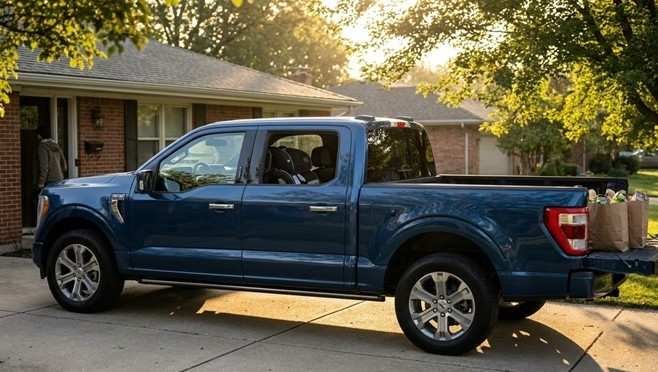
Prices move. Destination, packages, and 4×4 can transform a “starts at” number. Treat the figures below as recent starting-MSRP gravity for the F-150 range, not a quote.
| Trim / model | Recent starting-MSRP neighborhood | Reality check |
|---|---|---|
| XL | High $30,000s to about $40,000 | Easy to option into mid-$40,000s |
| STX | Mid-$40,000s | Appearance plus volume features |
| XLT | High $40,000s to low $50,000s | America’s default F-150 money |
| Lariat | About $60,000 and up | Luxury equipment adds fast |
| Tremor | Low-to-mid $60,000s and up | Off-road hardware is the cost |
| King Ranch / Platinum | High $60,000s to $70,000s+ | Fully loaded SuperCrews climb quickly |
| Raptor | About $80,000 and up | Tires and insurance are extra lifestyle costs |
| Raptor R | About $110,000 and up | A specialty truck with specialty pricing |
| Lobo | Confirm on 2026 order guide | New street configuration; do not guess from old trims |
Add destination and delivery — often around $2,000 — plus tax, title, and dealer fees. A tow package, 4×4, larger bed, hybrid, and 20-inch wheels will do more to the out-the-door price than a heated steering wheel.
Ford and dealers also run incentives that change monthly. An XL 2.7 with a discount can undercut a loaded leftover. A Raptor almost never looks cheap, even on a good month.

Which 2026 Ford F-150 Features Matter Most?
This is the section that should decide the build.
Work. Start with cab/bed, payload, and a durable interior. XL or XLT, the right bed length, a spray-in liner, Pro Power if tools need outlets, and 4×4 only if the job needs it. Skip panoramic roofs.
Towing. Engine, axle ratio, tow package, brake controller, mirrors, and payload. The 3.5 EcoBoost is usually the max-tow path. Cameras and Pro Trailer Backup Assist are worth more than ambient lighting. Weigh the trailer.
Family. SuperCrew, safety suite, comfortable seats, wireless CarPlay/Android Auto, and enough range in the back seat for boosters. XLT or Lariat covers most households. King Ranch and Platinum are if the F-150 is also the road-trip vehicle.
Commuting. 2.7 EcoBoost or PowerBoost, sensible tires, and BlueCruise only if your drive is mapped interstate. A Raptor is a loud, expensive commuter.
Camping. SuperCrew 6.5-foot bed is the versatile answer. Pro Power Onboard (7.2 kW if you run a fridge, induction, or AC), a soft or hard cover, and FX4 or Tremor if campsites are unpaved. Lobo if the “camping” is a paved park.
Off-roading. FX4 for light dirt, Tremor for trails, Raptor for speed, Raptor R for excess. Do not buy Lobo for this.
The right 2026 Ford F-150 features are the ones you will use on Tuesday, not the ones that looked good in a desert commercial.

2026 Ford F-150 vs Silverado 1500 vs Ram 1500
A feature-focused snapshot, not a trophy ceremony.
Powertrains. Ford’s unique piece is still PowerBoost plus serious onboard generation. Chevrolet’s strength has included a diesel option in the 1500 space in recent years, which some highway towers prefer. Ram has leaned on inline-six Hurricane power and a refined driving character. Each truck’s “best” engine depends on whether you want hybrid electricity, diesel torque, or six-cylinder boost.
Towing. All three advertise impressive maximums that apply to specific builds. Ford’s 3.5 EcoBoost max-tow story is competitive. The truck you can order with the axle, mirrors, and payload you need matters more than a 200-pound difference on a chart.
Work functionality. F-150 advantages shoppers actually feel: Pro Power Onboard, Pro Access Tailgate, a huge aftermarket, and Ford’s aluminum-body playbook. Silverado and Ram counter with their own bed systems, diesels or sixes, and dealer networks. Contractors should compare outlets, payload, and upfit, not tailgate slogans.
Technology. Ford’s BlueCruise is one of the more mature hands-free highway systems. GM and Stellantis have their own adaptive-cruise and hands-free answers, with different maps, subscriptions, and hardware. Sit in all three and use the cameras. Towing cameras are a better tiebreaker than icon design.
Off-road. Ford’s Tremor / Raptor / Raptor R ladder is clear. Chevrolet has ZR2. Ram has Rebel and high-power off-road halo trucks that have changed names as TRX gave way to later models. If off-road is the purchase, compare suspension travel and tire size, not badge emotion.
Interior luxury. Ram has often led the “doesn’t feel like a truck” argument. Recent F-150 Lariat/Platinum/King Ranch cabs closed a lot of that gap. Chevrolet High Country is the GM luxury answer. The winner is the seat that fits you after an hour.
Shop them as tools. The F-150’s case is breadth: hybrid generator truck, street Lobo, work XL, and Raptor under one roof.
FAQ/Frequently Asked Questions
What are the main features of the 2026 Ford F-150?
A wide engine lineup, competitive towing when properly equipped, SuperCrew practicality, a 12-inch SYNC 4 screen with wireless Apple CarPlay and Android Auto, available Pro Power Onboard, BlueCruise, and specialized versions including Tremor, Raptor, Raptor R, and the new Lobo street configuration.
How much can the 2026 F-150 tow?
Ford has advertised up to about 13,500 pounds conventional towing when properly equipped, typically tied to specific 3.5-liter EcoBoost builds. Many F-150s rate lower. Cab, bed, 4×4, axle ratio, and payload all change the number.
Does the F-150 have a hybrid?
Yes. The 3.5-liter PowerBoost hybrid remains Ford’s gasoline-electric F-150, combining V6 turbo power with an electric motor, strong torque, and the highest Pro Power Onboard output.
What is Pro Power Onboard?
It is the F-150’s onboard generator system, with bed and cabin outlets. Gasoline trucks can offer about 2.0 kW when equipped. PowerBoost can offer 7.2 kW, which is in a different league for tools and camp power.
Does the F-150 have Apple CarPlay?
Yes. Recent F-150s support wireless Apple CarPlay and wireless Android Auto through the SYNC 4 infotainment system on compatible phones.
Does the F-150 have BlueCruise?
Yes, on properly equipped trucks. BlueCruise allows hands-free driving on pre-mapped divided highways. The driver must stay attentive, and continued use may require a subscription after an included trial.
What is the difference between Tremor and Raptor?
Tremor is a trail-oriented F-150 with extra off-road hardware on a still-practical half-ton. Raptor is a wide, long-travel, high-speed off-road truck with unique suspension, 37-inch tires, and exclusive engines. Raptor R adds a supercharged V8.
How much does the 2026 F-150 cost?
Recent starting MSRPs have ranged from around $40,000 for work-oriented XL trucks into the $80,000s for Raptor and about $110,000 for Raptor R, before destination, options, tax, and fees. Confirm current 2026 pricing with Ford.
Which F-150 engine has the highest towing capacity?
The 3.5-liter EcoBoost V6 is usually the path to the highest advertised conventional rating when the rest of the truck is spec’d for it. Always check the towing guide for that cab, bed, and axle.
How much payload can the F-150 carry?
The advertised maximum applies only to certain configurations and has been tighter on recent, heavier F-150s than some older brochures suggested. Read the certification label on the driver’s door of the actual truck.
The 2026 F-150 is still less a single truck than a system of choices. That is the real story behind the 2026 Ford F-150 features list. Engines from a 2.7 EcoBoost to a supercharged Raptor R, beds from 5.5 to 8 feet, trims from XL to Platinum, and specialized hardware for work, dirt, and now the street-lowered Lobo all share a badge.
Configuration is the purchase. A max-tow 3.5 SuperCrew, a PowerBoost contractor truck with 7.2-kW outlets, a family XLT, and a Raptor are not variations of the same product. They are different vehicles. Verify the exact engine, axle, payload, towing rating, packages, and out-the-door price on the truck you intend to take home. The right F-150 is the one whose features match the load, the road, and the budget — not the one that won a commercial.
Related Post