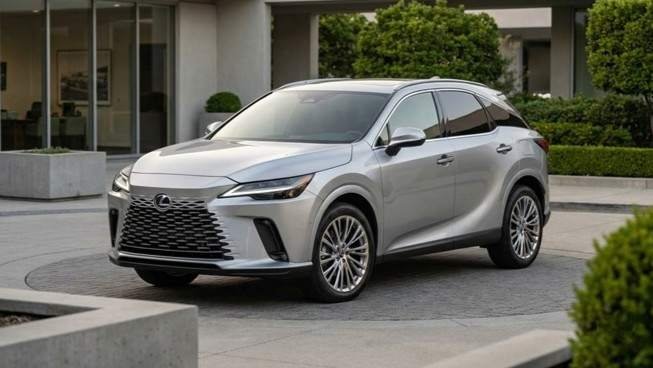
The Lexus Premium vs Luxury decision is simpler than a lot of comparison pages make it sound. On most Lexus models, Luxury is not a stronger engine, a different hybrid system, or a more “real” Lexus. It is usually a comfort, materials, convenience, and technology step up on the same vehicle.

That is why the choice feels confusing. Premium already looks and feels expensive. It is not a stripper trim. In many showrooms it is the core Lexus experience: quiet cabin, strong standard safety tech, nice seats, and enough equipment that a shopper can leave without feeling deprived. Luxury then adds the extras that make the car feel richer day to day: nicer upholstery on some models, more seat functions, extra cameras or displays, a better audio system, and more convenience features.
The catch is important. Lexus trim names do not mean the same thing on every vehicle. A Premium NX is not equipped like a Premium GX. A Luxury ES is not a Luxury RX with a trunk. Model year changes matter, too. A feature that was Luxury-only three years ago may be standard on Premium now, or it may sit in an optional package.
This guide explains the real Lexus Premium vs Luxury difference, what you typically get for the extra money, when the Luxury trim features are worth it, and how to compare two cars without mixing up engines, drivetrains, or option packages.
Lexus Premium vs Luxury
Use this as a starting map, not a window sticker. Exact equipment depends on the model, model year, powertrain, and packages.
| Category | Premium, typically | Luxury, typically | What to verify |
|---|---|---|---|
| Price | Lower MSRP on the same model | Several thousand dollars more, sometimes more than that | Destination, AWD, hybrid, packages, dealer fees |
| Engine / powertrain | Usually the same as Luxury on that model | Usually the same as Premium on that model | Gas vs hybrid vs PHEV vs EV is a separate choice |
| Interior materials | High-quality Lexus cabin; NuLuxe or leather depending on model | Richer leather or upgraded trim on many models | Upholstery name, wood/metal trim, headliner |
| Seats | Often heated front seats and solid power adjustment | More likely to add ventilation, extra power/memory, rear comfort | Passenger memory, rear heat, lumbar, cushion length |
| Climate | Dual-zone automatic climate on many models | Extra vents, rear climate, or heated wheel more often | Tri-zone climate, climate concierge, rear controls |
| Infotainment | Current Lexus screen and smartphone integration on recent models | May add HUD, digital key, extra displays, or better cameras | Screen size, nav, wireless charging, software year |
| Audio | Standard Lexus speaker system | Mark Levinson or another upgrade on many models | Speaker count, amplifier, whether ML is standard or optional |
| Safety / assistance | Lexus Safety System+ usually standard on recent models | Extra cameras, parking support, or convenience aids | Blind-spot monitor, surround view, parking brake assist |
| Exterior | Attractive wheels, LED lighting, Lexus styling | Larger/fancier wheels, extra lighting, more convenience hardware | Wheel size, roof, liftgate, mirrors, running boards |
| Comfort extras | Already comfortable | The “every drive feels special” items | Sunshades, ambient lighting, power column, kick-sensor liftgate |
| Options | Can be well equipped with packages | Sometimes has more standard content, still not fully loaded | Never assume the higher trim includes every box |
The pattern is consistent even when the parts list is not: Premium is the complete Lexus. Luxury is the more lavishly equipped version of the same car.
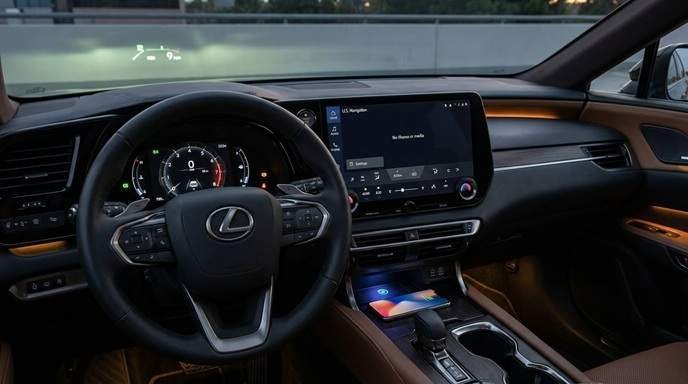
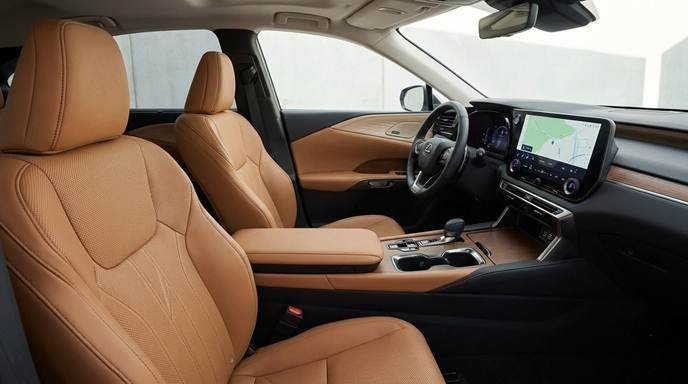
Lexus Premium vs Luxury Interior Differences
The Lexus Premium vs Luxury interior gap is the one most people notice in a back-to-back sit. It is also the easiest place to overpay if you fall in love with a showroom smell and never check the feature list.
Upholstery is model-dependent. On some crossovers, Premium uses Lexus NuLuxe, a high-end synthetic leather, while Luxury steps up to genuine leather. On other models, Premium already has leather and Luxury moves into a softer, more richly finished hide or a more elaborate stitch-and-trim combination. That is why “Luxury means leather, Premium means fake leather” is a bad rule. It is true on some vehicles and wrong on others.
Seat materials affect more than looks. Better leather can feel warmer in winter, less sticky in summer, and more expensive when you brush it with your hand. It can also be easier to scuff if you carry dogs, kids, or hiking gear. NuLuxe, when fitted, is often more practical and still looks upscale in person.
Interior trim is the second giveaway. Luxury trims more often add open-pore wood, sharper metal accents, unique stitching, or a more carefully finished console. Premium is rarely cheap inside. Lexus does not usually do “rental-car plastic” at this level. Luxury is about density: more texture, more contrast, more of the details you notice when the car is parked in your garage.
Ambient lighting, cabin finishing, and small touch points matter more than shoppers admit. Illuminated sills, a better headliner, a nicer steering-wheel wrap, or a cooler-looking shifter surround will not change a commute time. They do change whether the car still feels special after the payment becomes routine.
Perceived quality is the real Luxury pitch. If you care about that every morning, the upgrade can make sense. If you care about reliability, quietness, and Lexus dealer support, Premium already delivers a large share of the brand.
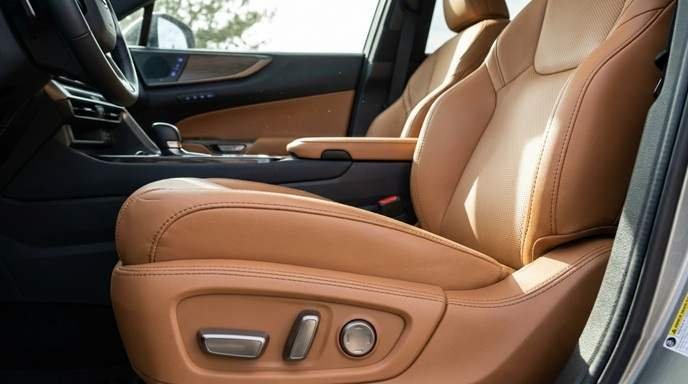
Lexus Premium vs Luxury Seats
Seats are where the Lexus Premium vs Luxury seats comparison gets practical. Heated front seats are common on Premium in recent years, especially on SUVs and crossovers sold in the U.S. That means you should not assume you must buy Luxury just to avoid cold leather in January. Check the specific car. Some older or lower-volume configurations still package heat differently.
Ventilated seats are a different story. On many Lexus models, front ventilation is one of the clearest Luxury trim features. In Phoenix, Houston, Atlanta, or a parked car after a grocery run in July, ventilation is more useful than another inch of chrome. In mild coastal weather, you may use it less than you expected.
Power adjustments and lumbar support vary. Both trims usually offer a power driver’s seat. Luxury is more likely to add extra passenger-seat power, driver memory, a power steering column, and a more complete lumbar setup. Memory settings are underrated if two people share the car. They are almost irrelevant if you are the only driver and never move the seat.
Rear-seat comfort is easy to ignore in a test drive because salespeople sit you up front. On three-row models and some sedans, Luxury is more likely to include heated rear seats, extra recline, sunshades, or rear climate controls. If the second row is for kids in booster seats, those extras may not matter. If you regularly carry adults, they might be the whole reason to upgrade.
Long-distance comfort is a combination of cushion shape, climate features, noise, and whether you can change posture. Luxury seats often win a three-hour interstate drive. Premium seats often win if you are deciding based on value and the rest of the car already feels right.
Sit in both. Do not buy ventilation from a brochure if you never notice heat in a five-minute loop around the dealer.
Technology Differences
Lexus Premium vs Luxury technology is less about whether the car has a screen and more about which extras sit on top of that screen.
On recent Lexus models, both trims often share the same basic infotainment system, smartphone integration, and a large center display. Wireless Apple CarPlay and Android Auto are common on current vehicles, but availability still depends on year and configuration. If you are shopping used, this is one of the first things to confirm. A 2020 Premium and a 2025 Premium are not the same tech product.
Navigation may be built in, app-based, or less important if you use CarPlay every day. Do not pay Luxury money for factory nav unless you actually want it. Many owners never leave their phone interface.
Displays are a common Luxury add. A head-up display, extra digital content, or a more elaborate meter setup can appear as you move up. A HUD is genuinely useful if you dislike looking down. It is also one of those features people either love in ten minutes or never think about again.
Wireless charging, digital key, and connected services are model-year dependent. Digital key, where offered, is a convenience item, not a reason to ignore a better-priced Premium. Phone-as-key systems are only as good as your phone battery and the backup fob in your bag.
Camera systems and parking assistance are the tech extras with real-world value on bigger Lexus SUVs. A standard backup camera is not the same as a panoramic view monitor. Automatic parking-support braking is not the same as beeps. Luxury trims are more likely to include the extra cameras and low-speed helpers, but packages can scramble that. A loaded Premium can out-tech a stripper Luxury if the market you are shopping has odd inventory.
If you live on a narrow street, park in a tight garage, or drive a three-row TX, extra cameras may be worth more than wood trim. If you drive a midsize sedan into an open driveway, they may not.
Audio System Differences
Audio is one of the few Lexus Luxury vs Premium upgrades you will use on every trip, including the dull ones. Premium usually gets a competent Lexus speaker system. For talk radio, podcasts, calls, and mixed playlists at moderate volume, it is often perfectly fine. Luxury, on many models, is the trim where Mark Levinson or another upgraded system becomes standard or much easier to get.
That “on many models” caveat matters. Mark Levinson is not automatically included on every Lexus with a Luxury badge. On some vehicles it is standard at that grade. On others it is optional, bundled, or reserved for an even higher configuration. Count speakers only after you see the window sticker.
Who benefits from the upgrade?
- People who listen to music as part of the point of owning a nicer car
- Drivers who take long highway trips
- Anyone who finds base-system bass thin or vocals harsh at higher volume
- Households that use the car as a rolling living room for kids’ videos and playlists
Who can skip it?
- Commuters who mostly take calls
- Shoppers who will wear noise-canceling headphones in the passenger seat
- Buyers who would rather put the money into AWD, a hybrid powertrain, or a lower payment
If possible, play the same song in both cars at the same volume. Audio quality is personal. Brochure wattage is not.
Exterior Differences
From 30 feet away, many Premium and Luxury models look like the same Lexus. Up close, Luxury usually spends money on wheels, lighting details, and convenience hardware.
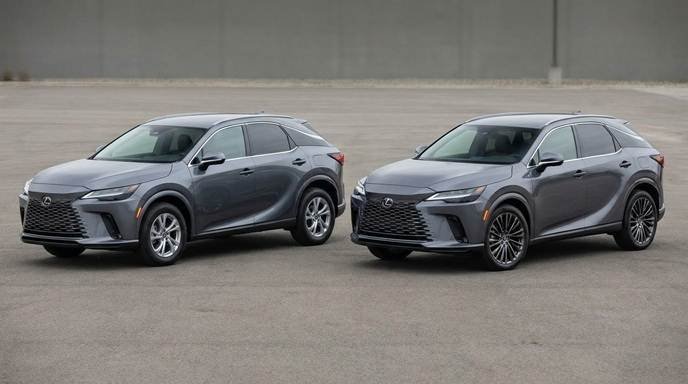
Wheels are the obvious tell. Luxury trims often wear larger or more intricate designs. That can look better. It can also mean lower-profile tires, a firmer ride, and a higher replacement bill after a pothole. A Premium wheel-and-tire package is sometimes the more sensible U.S. ownership choice, especially in cities with broken pavement.
Lighting differences are usually subtle: extra LED elements, different lamps, or additional lighting in mirrors and door handles. Both trims generally look like modern Lexus vehicles at night. Do not assume Luxury is the only trim with LEDs.
Mirrors may add memory, auto-dimming, puddle lamps, or power-folding. Those are convenience features. They help in tight parking structures and when two drivers share the car.
Liftgates matter on SUVs. Power liftgates are common. A hands-free kick sensor is more often a Luxury-style extra. If your arms are full of groceries or sports gear several times a week, that sensor is more useful than another interior color.
Roof options, chrome versus black trim, running boards, and unique exterior accents vary too much to treat as universal. Some Luxury SUVs look more formal. Some Premium F Sport-adjacent cars look sportier than Luxury without being Luxury at all. If styling is the reason you are upgrading, walk around both cars in daylight. Photos flatten wheel designs and paint.

Safety and Driver Assistance
Recent Lexus models typically include a strong baseline of driver assistance on both Premium and Luxury. Lexus Safety System+ — currently in its later versions on new vehicles — commonly covers things like automatic emergency braking, lane tracing, adaptive cruise control, and related highway assists. That means Luxury is usually not the trim you buy “to get safety.”
The extras are the differentiator:
- Blind-spot monitoring and rear cross-traffic alerts are widespread, but they have not always been standard on every Premium in every year. Used shoppers should verify.
- Surround-view or panoramic cameras are more often Luxury or package items.
- Parking support functions that can apply the brakes at low speed are trim- and year-dependent.
- Adaptive headlights, trailer aids, and extra cabin monitoring features, where offered, tend to cluster higher in the range.
Adaptive cruise control is a good example of why you cannot shop by badge alone. On current vehicles it is often standard. On older used cars it may depend on package. If highway driving is your life, confirm the exact system in the car you are buying, not the brochure for a different year.
Also separate crash protection from convenience. Extra cameras help you avoid parking-lot mistakes. They do not turn a Premium into an unsafe car. Both trims are Lexus products with the same fundamental structure for that model.
Performance Differences
This is the most common myth in the Lexus Premium vs Luxury trim debate. Luxury does not automatically mean more horsepower. On the same model and powertrain, Premium and Luxury usually share:
- the same engine or electric motor setup
- the same transmission
- the same hybrid or plug-in hybrid hardware
- the same available FWD, AWD, or EV drive layout
The performance choice is normally a different menu: NX 250 versus NX 350 versus hybrid, RX 350 versus RX 350h versus RX 500h, gas GX versus whatever Lexus offers in that family, and so on. Buyers mix this up constantly. They see a higher price and assume a stronger powertrain.
AWD is also not a Luxury exclusive on most SUVs. Lexus Premium vs Luxury AWD is usually a drivetrain option or a separate configuration, not the reason the cabin has nicer stitching. A Premium AWD and a Luxury FWD are not equals just because one says Luxury.
Suspension and drive modes can differ, but that is often because of wheel size, an F Sport model, or an available adaptive suspension — not because Luxury secretly includes a different engine. If a specific model’s Luxury grade adds adaptive dampers or a unique drive-mode setup, that will be listed in the official specs for that vehicle. Do not generalize it across the brand.
Lexus Premium vs Luxury MPG follows the same logic. Fuel economy is driven by engine, hybrid hardware, weight, aerodynamics, and wheel/tire choice. Luxury’s extra equipment may add a little weight. Larger wheels may cost a little efficiency. The hybrid-versus-gas decision will dwarf the trim badge.
Ride Comfort
Ride comfort is where wheels and seats fight each other. Premium may ride more forgivingly if it has smaller wheels and taller tire sidewalls. Luxury may ride more polished in terms of seat comfort and cabin isolation, then give a bit of that back if it sits on big wheels with thin tires. The winner depends on the road.
Adaptive suspension, where available, can make a larger difference than the Premium/Luxury name. It is not standard across the brand, and it is not safe to assume Luxury includes it.
Cabin insulation is a Lexus strength at both levels. These cars are generally quiet. Luxury may add a little more hush through better seals, thicker glass, or extra sound material on some models. The first test is still a highway expansion-joint at 70 mph, not a parked comparison of stitching.
If you want the most comfortable Lexus for broken U.S. commuter roads, do not automatically pick the fanciest wheel. Drive both. Listen for tire roar. Feel the seat after 20 minutes, not 20 seconds.
Lexus Premium vs Luxury Price
There is no single Lexus Premium vs Luxury price gap that applies to the whole lineup.
What you can say honestly:
- Luxury costs more than Premium on the same model.
- The difference is usually measured in thousands of dollars of MSRP, not a few hundred.
- Destination and handling is extra on both.
- AWD, hybrid, plug-in hybrid, and EV powertrains can change the price more than the trim badge.
- Optional packages can shrink or erase the apparent gap.
- Dealer-installed accessories, protection packages, and market markups can matter as much as Lexus’s trim structure.
- Monthly payment comparisons are how people accidentally “upgrade” into Luxury and then wonder why the car is expensive.
A Premium with AWD, a popular paint, and a couple of packages can sticker close to a simpler Luxury. A Luxury with a big wheel upgrade, a trailer package, and dealer extras can jump far above the number you saw in an ad.
Financing implications are straightforward. A higher amount financed means more interest if you are not paying cash. On a lease, more residual value can offset some of the higher MSRP, but that is deal-specific. Do not assume Luxury leases better. Ask for capitalized cost, residual, money factor, and fees on both cars.
For used and CPO shoppers, the original MSRP gap may have compressed. A two-year-old Premium with low miles can be a better buy than a Luxury that has been used as a highway beater. Price the actual car.

Is Lexus Luxury Worth the Extra Money?
The Lexus Luxury package worth it question — and the matching Lexus Premium package worth it question — only makes sense after you decide what you are actually buying. On current vehicles these are usually trims, not little option bundles. On some older Lexus models, “Premium Package” really was a package. That vocabulary mix-up still trips people up.
Luxury is easier to justify when:
- You keep cars a long time and sit in them every day
- You want ventilated seats, better audio, extra cameras, or memory features you will use
- Rear passengers matter
- The GX/RX/TX/NX you want already has the right engine in both trims, so the extra money is purely comfort
- You dislike adding aftermarket comfort items and want factory integration
Premium is easier to justify when:
- You want the core Lexus experience and a lower payment
- You care more about AWD, hybrid efficiency, or reliability than ambient lighting
- You will replace tires, and simpler wheels look cheaper to live with
- The Luxury extras on that model are things you shrugged at in the test drive
- You are shopping used and the Premium is cleaner, newer, or better equipped in the ways that count
A practical rule: if the extras would still tempt you on a fully loaded car that never left pavement, you are a Luxury buyer. If you are upgrading “because Luxury sounds like the one you are supposed to get,” you are probably a Premium buyer.
Neither trim is universally better. The right one is the one whose extra equipment you can name without looking at the brochure.
Resale Value
Luxury does not automatically have better resale value.
Resale is a pile of factors:
- model popularity (RX helps; slow-selling configurations do not)
- mileage and condition
- service history
- color and options people actually want
- AWD in snow country
- accident history
- whether the next buyer wants that engine
- how expensive the car was to begin with
A Luxury trim can ask more money because it has more features. It can also have more dollars of depreciation because it started higher. A well-kept Premium with AWD and a common color can be easier to sell than a Luxury in a polarizing interior that needs tires.
For CPO shoppers, certified condition and remaining warranty often matter more than the badge on the window. Buy the cleaner car with records.

Ownership and Maintenance Costs
Scheduled maintenance is usually similar because the powertrain is usually similar. Oil changes, inspections, and Lexus dealer service intervals do not magically get cheaper because you chose Premium.
Where costs can diverge:
- Tires and wheels. Larger Luxury wheels are easier to curb and often cost more to replace. Low-profile tires are more vulnerable to potholes.
- Brakes. Bigger wheels and extra weight can mean different rotor sizes. This is vehicle-specific, not a brand-wide Luxury penalty.
- Insurance. A higher-value car with more electronics can cost more to insure and more to repair after a parking-lot bump. Cameras in bumpers are convenient until they are in an accident.
- Repairs. More motors in seats, more speakers, more cameras, and more lighting means more things that can eventually fail outside warranty. Most owners never think about this. It is still part of the ownership math.
- Warranty. Factory coverage is generally the same regardless of Premium or Luxury. Confirm current terms on Lexus’s U.S. site for the model year you are buying.
Long-term, the expensive mistake is not Premium versus Luxury. It is buying the wrong powertrain, skipping a pre-purchase inspection on a used car, or financing a pile of dealer extras you did not need.
Lexus Premium vs Luxury by Model
Trim differences vary across the lineup. These are patterns to use while you verify the current model year.
RX. This is the volume Lexus SUV for a reason, and Premium vs Luxury is a common fork. The engine/hybrid choice is separate from the cabin choice. Luxury usually means a richer interior and more convenience. F Sport is a different personality, not a higher Luxury.
NX. Compact, easy to live with, and a place where upholstery often changes between Premium and Luxury. Powertrain choices (including hybrid and plug-in hybrid, depending on year) can affect price and MPG more than the trim name.
TX. Three-row shoppers should pay attention to second-row comfort, climate, and cameras. Luxury extras that seem minor in a two-row car become useful when the TX is full of people.
ES. A sedan where Premium already feels complete. Luxury, and on some years Ultra Luxury, add more comfort rather than a different driving character. Do not assume SUV-style AWD comparisons apply here; the ES has long been a front-drive-focused Lexus in the U.S.
GX. Do not treat this like an RX. Premium and Luxury are the more road-oriented grades. Overtrail is the off-road path. Plus trims add another layer. A GX Luxury is not “the off-road one.”
LS. The flagship sedan does not shop like an NX. The conversation is less “is Luxury worth $X over Premium?” and more about which LS configuration matches a buyer who is already looking at the top of the brand.
RZ. As Lexus’s electric crossover, Premium vs Luxury is still mostly an equipment discussion. Do not assume the higher trim automatically includes a bigger battery or more range. Check the specific year’s specs.
If you are comparing across models — NX Luxury versus RX Premium, for example — you are not comparing trims anymore. You are comparing vehicles.
Common Comparison Mistakes
Comparing different model years. A 2021 Luxury and a 2026 Premium may not share a screen, a safety suite, or even the same generation. Year first, trim second.
Assuming trim names mean identical equipment. Lexus trim levels explained poorly on the internet usually start here. NX, RX, TX, ES, and GX do not copy each other’s feature lists.
Ignoring optional packages. A Premium with the right package can beat a base Luxury on the features you care about.
Comparing FWD and AWD incorrectly. An AWD Premium is not “less car” than a FWD Luxury in snow. It is a different drivetrain.
Looking only at monthly payment. Stretching term length to afford Luxury hides the cost. Compare out-the-door price.
Ignoring wheel and tire costs. The pretty 21-inch design can become a $1,200 annoyance later. That number will vary; the principle will not.
Assuming a higher trim means a different engine. It usually does not.
Shopping “Luxury” when you actually want F Sport. Sport appearance, seats, and handling are a different path on many Lexus models.
Frequently Asked Questions
Is Lexus Luxury better than Premium?
It is better equipped in comfort and convenience on the same model, not automatically faster, safer in a basic sense, or more reliable.
What does Lexus Premium include?
Premium trim features usually include a full Lexus cabin, strong standard safety tech on recent models, and enough comfort equipment to be a complete car. The exact list is model-specific.
What does Lexus Luxury include?
Luxury trim features typically add richer materials and extra convenience: things like upgraded leather on some models, more seat functions, better audio on many vehicles, and extra cameras or displays. Confirm the specific car.
Is Lexus Premium considered a luxury trim?
Yes, in the sense that it is a well-equipped Lexus, not an economy grade. Luxury is simply the more opulent grade above it on many models.
Does Lexus Luxury have a better engine?
Usually no. Engine, hybrid system, and AWD are typically chosen separately from Premium vs Luxury.
Is Lexus Luxury worth the extra money?
It is if you will use the extra comfort and technology. It is not if you mainly want the Lexus ownership experience and a saner price.
Which Lexus trim has the most features?
Not always Luxury. Some models have Ultra Luxury, F Sport Handling, Overtrail+, or plus grades above or beside it. The top-feature trim depends on the model.
Does Lexus Premium have heated and ventilated seats?
Heated front seats are common on Premium in many current vehicles. Ventilated seats are more often a Luxury-style feature, but this is not universal. Check the window sticker.
The Lexus Premium vs Luxury difference is mostly cabin, convenience, and equipment density. It is not a secret performance upgrade. Choose Premium when you want the core Lexus experience — quiet, well-made, well-equipped — and you do not need every comfort extra. For a lot of U.S. buyers, that is the rational trim.
Consider Luxury when you can name the extra equipment you want, you will use it, and the price difference still feels reasonable after destination, drivetrain, and fees. Before you buy, compare the exact model, model year, engine or hybrid system, FWD/AWD, wheel size, and packages. Read the window sticker. Sit in the second row. Play music. Ignore the badge long enough to decide whether the extras are for you or just for the brochure.
Related Post