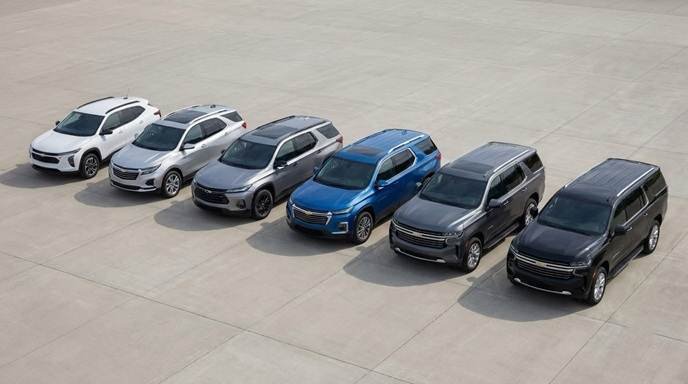
Chevrolet’s 2026 SUV lineup is wide on purpose. Shoppers can start in a small, low-priced crossover, step up to a family three-row, go full-size for towing and cargo, or skip gasoline entirely with a Chevy electric SUV. That variety is useful. It is also why a simple “which Chevy SUV should I buy?” search gets messy. The 2026 Chevy SUVs lineup covers nine nameplates in the U.S.: Trax, Trailblazer, Equinox, Blazer, Traverse, Tahoe, Suburban, Equinox EV, and Blazer EV. They do not all do the same job. Some are FWD-only commuters. Some offer AWD. Some seat eight and tow a camper. Two are battery-electric.

This guide is built for U.S. buyers comparing Chevy SUV models 2026 by size, price, powertrain, seating, and use case. Starting prices below are manufacturer suggested retail prices before destination, tax, options, and dealer fees. Chevrolet can revise equipment and pricing, and exact horsepower, range, towing, and cargo figures often change by trim. Confirm the window sticker and Chevrolet’s U.S. site before you buy.
2026 Chevy SUV Lineup at a Glance
| Model | Category | Seating | Powertrain | AWD/4WD | Starting price (typical 2026 MSRP) | Major strength |
|---|---|---|---|---|---|---|
| Trax | Small crossover | 5 | Gas turbo 3-cyl | FWD only | Low $20,000s | Lowest Chevy SUV price |
| Trailblazer | Small SUV | 5 | Gas turbo 3-cyl | AWD available | Mid $20,000s | Small size with available AWD |
| Equinox | Compact SUV | 5 | Gas turbo 4-cyl | AWD available | High $20,000s to ~$30,000 | Mainstream family compact |
| Blazer | Midsize 2-row | 5 | Turbo 4-cyl or V6 | AWD available | Mid $30,000s | Style and stronger gas engines |
| Traverse | Midsize 3-row | 7–8 | Gas turbo 4-cyl | AWD available | High $30,000s | Three-row space without going full-size |
| Tahoe | Full-size SUV | 7–9 | V8 or diesel | 4WD available | Around $60,000 | Towing, passenger space, body-on-frame |
| Suburban | Full-size extended | 7–9 | V8 or diesel | 4WD available | A few thousand above Tahoe | Maximum cargo behind the third row |
| Equinox EV | Compact electric | 5 | Electric | AWD available | Mid $30,000s before incentives | Long-range Chevy electric SUV |
| Blazer EV | Midsize electric | 5 | Electric | AWD available | Mid-to-high $40,000s before incentives | Larger EV with more performance choices |
Destination charges are extra. Full-size trucks and EVs can carry different destination fees than small crossovers. Out-the-door price is the number that matters.
2026 Chevy Trax
The 2026 Chevy Trax is Chevrolet’s value play: a small two-row crossover with a low starting price, modern screens, and enough room for daily errands. If you are sorting Chevy SUVs 2026 by monthly payment, Trax is usually the first one to pencil out.
Chevrolet pairs Trax with a turbocharged 1.2-liter three-cylinder rated at 137 horsepower and 162 lb-ft of torque, driving the front wheels through a six-speed automatic. There is no factory AWD. That is the Trax trade-off in one sentence. It is cheap to buy and cheap to run in mild weather. It is not the snow-belt, dirt-road answer.

Fuel economy is one of its strongest arguments. Recent Trax ratings have been among the thriftiest in Chevrolet’s gas SUV group, typically in the high 20s city and around 30 mpg highway depending on trim and tires. Confirm the 2026 EPA label on the car you are buying. Real-world mpg drops with short trips, winter fuel, roof cargo, and a heavy right foot.
Cargo is small-SUV practical: groceries and weekend bags behind the second row, more with the seats folded. It will not swallow a stroller, coolers, and luggage like a Traverse. Technology is a selling point even on lower trims: a large infotainment screen, wireless smartphone connectivity on many versions, and Chevrolet’s standard driver-assistance bundle on recent models.
Trims typically run from LS up through LT, Activ, and 2RS, with Activ adding a tougher look and 2RS leaning sportier. None of that changes the FWD layout.
Ideal buyer: first SUV, around-town commuter, or anyone who wants a new Chevy with modern tech and does not need AWD, towing, or a third row.
2026 Chevy Trailblazer
Trailblazer sits next to Trax in size but not in mission. It is still a small five-seater. The important difference is capability: 2026 Chevy Trailblazer offers available AWD, and its powertrain split is built around that.
FWD Trailblazers have used a 1.2-liter turbo three-cylinder. AWD models use a stronger 1.3-liter turbo three-cylinder with more gears. Exact 2026 horsepower is configuration-specific, but the 1.3-liter has been rated around 155 horsepower in recent years. If AWD is the reason you are cross-shopping, you are shopping the 1.3-liter Trailblazer, not Trax.
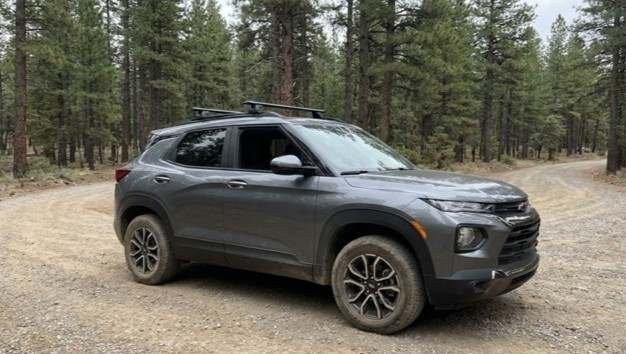
Efficiency remains small-SUV friendly, though AWD costs some mpg versus a FWD Trax. Cargo volume is in the same neighborhood as other subcompact crossovers: usable, not cavernous. The cargo floor and hatch opening are what you should judge in person if you carry golf clubs or a folded stroller every week.
Trailblazer’s Activ trim is the one that looks ready for a gravel driveway. It is still a unibody crossover, not a body-on-frame off-roader. Think light snow, forest-service roads, and extra ground clearance, not rock crawling.
Technology and safety follow the rest of Chevrolet’s newer small SUVs: touchscreen infotainment, available extras as you climb trims, and Chevy Safety Assist features that are commonly standard. Trailblazer is the answer when Trax feels too car-like and Equinox feels bigger or more expensive than you need.
Ideal buyer: wants a small Chevy SUV with AWD, modest fuel bills, and a slightly more upright, small-SUV stance than Trax.
2026 Chevy Equinox
The 2026 Chevy Equinox is the volume compact: five seats, available AWD, and the size most U.S. families actually use. The current generation arrived as a 2025 redesign, so 2026 is largely that vehicle with pricing and equipment updates rather than a new body.
Power comes from a 1.5-liter turbo four-cylinder rated at 175 horsepower and 184 lb-ft of torque, with an eight-speed automatic. FWD is standard; AWD is optional. That 175-horsepower figure is adequate for commuting and highway merging. It is not a Blazer V6.
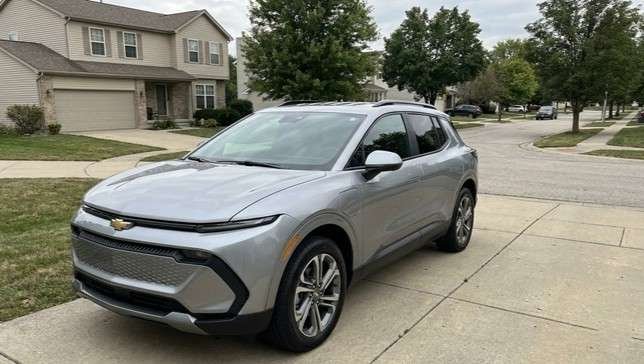
Fuel economy is a main reason to pick Equinox over Blazer or Traverse. AWD versions use more fuel than FWD. Check the specific 2026 window sticker, because wheel size and trim change the EPA numbers.
Cargo space is the jump people feel after Trax or Trailblazer. You get a deeper hold behind the second row and a more usable fold-flat area for Costco runs. Towing, if offered on a given Equinox configuration, is modest by truck standards — often in the compact-SUV 1,500-pound conversation, not the Traverse’s 5,000-pound one. Verify the rating on the vehicle. Do not assume every Equinox can tow.
Interior tech was a big part of the redesign: a wide infotainment display, a digital driver cluster on many trims, and wireless phone integration. Safety tech is strong for the class on recent models, with automatic emergency braking and lane support commonly included.
Trims typically include LS, LT, Activ, and RS. Activ brings a more rugged look; RS looks sportier. The engine stays the same.
Ideal buyer: two-row household that wants a mainstream compact, available AWD, and better space than the little Chevys without paying midsize or full-size money.
2026 Chevy Blazer
Blazer is Chevrolet’s two-row midsize with more attitude than Equinox. It does not add a third row. It adds styling, a higher driving position feel, and — importantly — stronger engine choices.
Recent Blazers have offered a turbo 2.0-liter four-cylinder around 228 horsepower and a 3.6-liter V6 around 308 horsepower, with available AWD. If 2026 continues that split, the V6 is the reason some buyers skip Equinox. It is also why Blazer can cost more to buy and fuel. Confirm 2026 powertrains on Chevrolet.com; GM has been known to shuffle engine availability by trim.
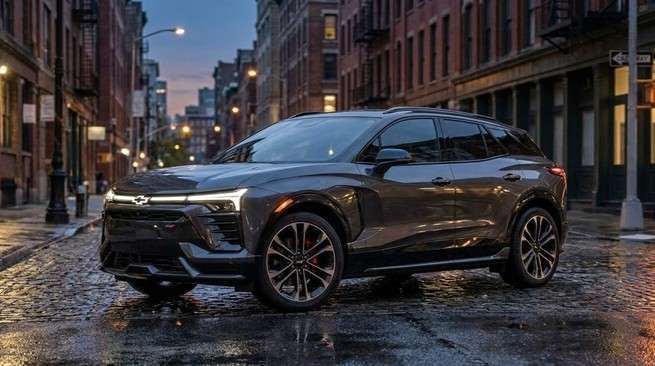
The interior is more cockpit-like than Traverse. Adults fit in the second row, but this is not the carpool king. Cargo sits between Equinox and Traverse: good for luggage, not a three-row family dump.
Technology includes a large infotainment setup, available Bose audio on higher trims, and the usual Chevy driver assists. Super Cruise has been more of a Traverse/Tahoe/EV conversation than a base Blazer feature; do not assume it is included.
Blazer’s place in the 2026 Chevrolet SUV lineup is the two-row driver who wants more power and design than Equinox and does not need seven seats.
Ideal buyer: style- and power-focused two-row shopper, especially if you want available V6 punch and AWD.
2026 Chevy Traverse
Traverse is the 2026 Chevy 3 row SUV most families should look at before jumping to Tahoe money. It is a unibody midsize three-row, not a body-on-frame truck.
The current Traverse uses a 2.5-liter turbo four-cylinder rated at 328 horsepower and 326 lb-ft of torque. That is a lot of output for a four-cylinder, and it is why Traverse does not feel like the old underpowered three-row crossovers. An eight-speed automatic and available AWD round out the hardware.

Passenger capacity is 7 or 8, depending on second-row captain’s chairs versus a bench. Third-row space is usable for kids and, on shorter trips, smaller adults. Cargo behind the third row is the limitation of every midsize three-row: enough for backpacks and groceries, not a week of luggage for eight people. Fold rows and it opens up substantially.
Towing is a Traverse talking point. Chevrolet has rated properly equipped recent Traverses at up to 5,000 pounds. That covers many pop-up campers, small boats, and utility trailers. It does not match Tahoe. Payload still matters: passengers plus gear count against what you can put in the trailer.
Available Super Cruise on higher trims is a genuine highway convenience if you do a lot of compatible-road miles. It is hands-free driver assistance on mapped divided highways, not a self-driving system. You still have to pay attention.
Ideal buyer: family that needs three rows and AWD, tows occasionally around 3,000–5,000 pounds, and wants to stay out of full-size fuel bills and parking-lot bulk.
2026 Chevy Tahoe
Tahoe is the full-size Chevrolet SUV: body-on-frame, available V8 or diesel, serious towing, and seating for a crowd. If Traverse feels tight in the third row or you regularly tow, this is the next step.
Recent U.S. Tahoes have offered:
- 5.3-liter V8, 355 horsepower
- 6.2-liter V8, 420 horsepower
- 3.0-liter Duramax diesel, 305 horsepower and 495 lb-ft of torque

All use a 10-speed automatic. Rear-wheel drive is available; 4WD is the common choice in snow country. 2026 buyers should confirm that this engine set continues on the specific trim they want. Chevrolet has not replaced Tahoe with an all-new generation for 2026; that larger change has been discussed for a later model year.
Towing is Tahoe’s job. Properly equipped recent models have been rated around the 8,000-pound range, with the exact maximum depending on engine, axle, 2WD/4WD, and cooling equipment. That is the difference between a small camper and a real travel trailer — still subject to payload, tongue weight, and brake requirements.
Cargo behind the third row is better than Traverse but clearly behind Suburban. Seating can be 7, 8, or 9 depending on bench versus captain’s chairs and a front bench on some trims.
Trims matter more here than on Trax. LS and LT are workhorses. RST is the street-styled performance look, often tied to the 6.2-liter. Z71 adds off-road-oriented tires, appearance, and hardware for dirt and snow, not rock crawling. Premier and High Country pile on luxury. Super Cruise is available on select trims and is one of the better reasons to shop a loaded Tahoe for highway travel.
Fuel economy is full-size SUV reality. The diesel can help highway mpg and towing torque. The 6.2-liter will not.
Ideal buyer: needs body-on-frame towing, three-row space, and full-size presence; can accept fuel costs and a larger parking footprint.
2026 Chevy Suburban
Suburban is a Tahoe with a longer body. Same engines, same 10-speed, same 2WD/4WD choice, same trim logic, including Z71, RST, and High Country. The reason it exists is cargo and stretch-out room.

The extra length shows up behind the third row. This is the Chevrolet for families who keep the third row in use and still need luggage, sports gear, or a stroller behind it. On a road trip, that difference is the whole vehicle. In a tight garage, it can be the deal-breaker.
Passenger capacity is in the same 7–9 window as Tahoe. Third-row adults are happier in both full-size Chevys than in Traverse; Suburban then adds the cargo that Tahoe owners often wish they had.
Towing is in the same class as Tahoe. Do not buy Suburban only for a higher tow rating. Buy it because the box behind the seats is bigger. Maximum ratings still depend on configuration.
Fuel use, turning circle, and price all step up with the extra size. Starting MSRP typically sits a few thousand dollars above a comparable Tahoe before options.
Ideal buyer: long-distance family hauler, sports-team driver, or anyone who uses the third row and still needs real cargo.
2026 Chevy Equinox EV
The 2026 Chevy Equinox EV is Chevrolet’s more affordable electric SUV, roughly compact-crossover size and unrelated mechanically to the gas Equinox. Same name, different platform (GM Ultium).

EPA-estimated range on recent FWD Equinox EVs has been as high as about 319 miles. AWD versions travel less far on a charge. Treat that as an EPA estimate, not a winter promise. Cold weather, high speed, HVAC use, and fast-charging habits all cut real-world range. Confirm the 2026 label for the trim you want.
Charging is three conversations:
- Home charging: A 240-volt Level 2 setup is what makes Equinox EV easy. 120-volt overnight charging is slow. Budget for a home charger and possible panel work.
- DC fast charging: The car can take highway fast chargers; peak rate depends on battery temperature and state of charge.
- NACS compatibility: GM has been opening Tesla Supercharger access for its EVs, often with an adapter before native NACS ports arrive on a GM schedule. Ask whether the 2026 Equinox EV you are buying includes an adapter, which Superchargers it can use, and what the charge port actually is.
Vehicle-to-home capability has been part of GM’s Energy pitch for Ultium SUVs, but it is not a magic standard outlet on every Equinox EV. It generally requires compatible GM home equipment and the right vehicle enablement. If backup power is a reason to buy, get that in writing for the specific configuration.
Technology includes a large screen, Google built-in on many GM EVs, and available Super Cruise on some trims. Compared with the gas Equinox, you get electric smoothness and lower energy cost if you charge at home, in exchange for charging planning and a different repair/insurance profile.
Ideal buyer: compact-SUV household with home charging, mostly local and regional driving, and interest in EV running costs rather than a V8.
2026 Chevy Blazer EV
Blazer EV is the larger, more expensive 2026 Chevy electric SUV. It is not a gas Blazer with a battery. Trims have included LT, RS, and SS, with different power, range, and personality.
Range varies a lot by configuration. Some recent Blazer EV setups have been estimated in the high 200s to around 300-plus miles; the SS performance version trades range for power. Always read the EPA estimate on the specific 2026 model. SS, AWD, and bigger wheels can move the number more than people expect.
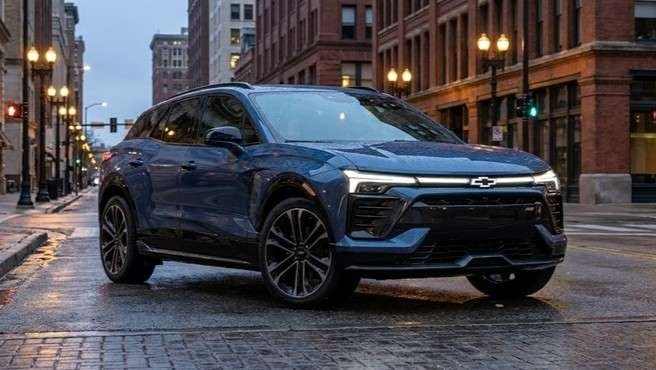
Drivetrain choices include FWD on some LT models and AWD on sportier versions. SS is the dual-motor performance flagship. That makes Blazer EV the EV for buyers who want acceleration and presence, not just efficiency.
Charging follows the same GM Ultium story as Equinox EV: Level 2 at home, DC fast charging on the road, Supercharger access depending on adapter/NACS rollout. Super Cruise has been a Blazer EV highlight on equipped trims.
Versus Equinox EV, Blazer EV is typically roomier in a midsize way, more powerful, more expensive, and more range-sensitive to the performance trims. Versus gas Blazer, it is quieter and quicker in many AWD/SS forms, with a completely different ownership routine.
Ideal buyer: wants an electric midsize two-row, likes the Blazer look, and will pay more than Equinox EV money for space or performance.

Gas vs Electric Chevy SUVs
Neither powertrain wins for everyone.
Everyday use. Gas models refuel in minutes anywhere. EVs are better if you charge at home and your daily miles fit the battery with a cushion. Apartment dwellers without reliable charging should not start with Equinox EV or Blazer EV just because the monthly fuel math looks pretty.
Energy cost. Home electricity is often cheaper per mile than gasoline, especially versus Tahoe. Public DC fast charging can erase that advantage.
Maintenance. EVs skip oil changes and have less conventional brake wear because of regen. They are not maintenance-free. Tires, cabin filters, brake fluid, and high-voltage repairs still exist. Gas SUVs have a huge independent-shop network.
Road trips. Gas Traverse/Tahoe/Suburban are simpler. EVs work if you plan chargers, winter range, and dwell time. Super Cruise helps on mapped highways in either case when equipped.
Towing. Gas Tahoe/Suburban remain the towing tools. EV towing, when rated at all, cuts range hard. Do not assume an electric Chevy matches a 5.3-liter Tahoe.
Incentives and insurance. Federal and state EV incentives can change the Equinox EV math. Insurance and repair costs on EVs can be higher. Run both numbers.
Pick the powertrain that matches charging access, trip pattern, and towing. Do not pick it from a badge.
Which Chevy SUVs 2026 Fit Your Needs?
- Lowest starting price: Trax
- Small SUV, no AWD needed: Trax
- Small SUV with available AWD: Trailblazer
- Mainstream compact with AWD: Equinox
- Two-row style and stronger gas engines: Blazer
- Family three-row without full-size bulk: Traverse
- Three-row SUV, maximum people-and-cargo flexibility: Suburban, then Tahoe
- Maximum cargo space: Suburban
- Towing: Tahoe or Suburban; Traverse if 5,000 pounds is enough
- Electric SUV on a lower EV budget: Equinox EV
- Electric SUV with more performance/size: Blazer EV
- Premium/full-size luxury-tinged Chevy: Tahoe or Suburban High Country
If you need AWD and three rows, Traverse AWD is the logical middle. If you need AWD and small size, Trailblazer. If you need 4WD and a trailer, Tahoe Z71 or a 4WD Suburban.
2026 Chevy SUV Prices
2026 Chevy SUV prices start with MSRP and almost never end there.
Build the real number like this:
- Starting MSRP for the trim
- Destination and handling (often more than $1,000; full-size can be higher)
- AWD/4WD, paint, packages, running boards, sunroof, trailering equipment
- Dealer add-ons (paint protection, nitrogen, etch)
- Tax, title, registration
- Insurance, which jumps from Trax to Tahoe and can jump again on EVs
- Fuel or electricity
A loaded Trax can approach a base Equinox. A loaded Traverse can approach a base Tahoe. Compare out-the-door quotes on the same day.
EVs add home charger installation and, sometimes, lower fuel cost and tax credits. Those credits have rules (income, assembly, battery) that change. Do not subtract $7,500 unless you qualify.
Financing a higher trim at a longer term can hide the price of RST wheels or a High Country interior. Ask for the cash price first.
MPG, EV Range and Efficiency
2026 Chevy SUV MPG depends on size and drivetrain more than the Chevrolet badge.
Broadly:
- Trax and FWD Trailblazer: most efficient gas choices
- Equinox: compact-SUV average, AWD costs mpg
- Blazer V6 and Traverse: more power, more fuel
- Tahoe/Suburban: lowest mpg; diesel helps highway towing more than city errands
- Equinox EV: highest “mpg-equivalent,” with EPA range on recent FWD models around the 300-mile class
- Blazer EV: strong range on efficiency-oriented trims, less on SS
EPA numbers assume specific wheels, test loops, and climate. Real-world results fall with:
- cold starts and winter gasoline or cold batteries
- 75–80 mph Interstate speeds
- AWD/4WD
- all-terrain or low-profile tires
- roof racks and headwinds
- heavy cargo or a trailer
For EVs, EPA range is a laboratory estimate. Fast charging, repeated high-speed legs, and cabin heat can take a visible bite. Plan trips with a buffer, not to 0%.
Towing Capacity
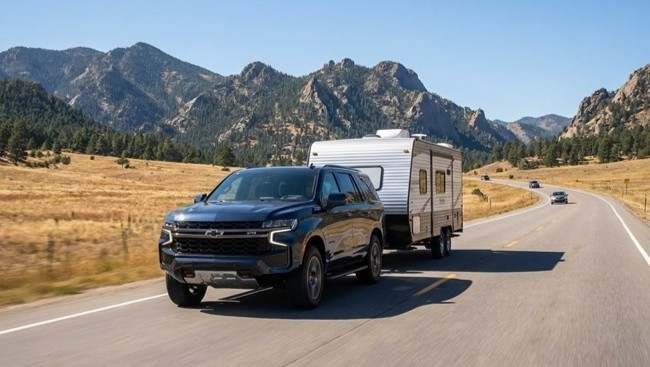
2026 Chevy SUV towing capacity is a spread, not a single number.
Typical recent Chevrolet ratings, which you must verify for 2026 by VIN:
- Trax: generally not a towing vehicle in any meaningful sense
- Trailblazer / Equinox: light towing only, often around 1,000–1,500 pounds when rated
- Blazer: modest to moderate depending on engine
- Traverse: up to 5,000 pounds when properly equipped
- Tahoe / Suburban: full-size ratings, commonly around 8,000 pounds depending on engine and axle
Maximum towing is the brochure number with the right hitch, cooling, and a lightly loaded SUV. Payload is how much people, cargo, tongue weight, and aftermarket gear you can add before the tires and springs are done. A Tahoe with a family of six, a rooftop box, and a full tank may not have payload left for a heavy trailer tongue.
Practical towing also needs:
- a hitch receiver and wiring
- a brake controller above very light trailers
- mirrors and cameras
- respect for mountain grades and transmission temps
If towing is the mission, shop Tahoe/Suburban first, Traverse second, and do not force Equinox EV into that role.

Safety and Technology
Most 2026 Chevrolet SUVs include a version of Chevy Safety Assist as standard or near-standard: automatic emergency braking, forward collision alert, lane-keep assist, and related highway/city aids. Blind-spot monitoring and rear cross-traffic alerts are widespread but still worth confirming on base Trax/Trailblazer trims.
Cameras scale with price. A backup camera is table stakes. Surround-view systems show up as you spend more, and they are genuinely useful on Traverse, Tahoe, and Suburban.
Infotainment on newer Chevys is screen-heavy. Redesigned Equinox, Traverse, Trax, and the EVs use large displays and wireless Apple CarPlay/Android Auto or Google built-in, depending on the vehicle. Used to knobs? Drive before you buy.
Super Cruise is Chevrolet’s standout extra: hands-free driving on compatible mapped divided highways, with driver monitoring. Availability has centered on higher Traverse, Tahoe, Suburban, Blazer EV, and some Equinox EV trims. It is optional or trim-locked, not universal across Chevy SUVs 2026.

Major 2026 Changes
For 2026 Chevrolet SUVs story is mostly continuation, not a showroom full of all-new sheet metal.
What that means in practice:
- Trax, Trailblazer, Equinox, Blazer, Traverse, Tahoe, Suburban, Equinox EV, and Blazer EV all remain in the U.S. lineup.
- Equinox and Traverse are still their recent redesigns, not brand-new again for 2026.
- Tahoe and Suburban remain the current generation for 2026; a larger overhaul has been discussed for a later year, which is not the same as a confirmed 2026 redesign.
- Expect price adjustments, color changes, and standard-equipment shuffling. Those are real, but they are not a new platform.
- EV changes to watch are software, Super Cruise availability, charging-port/adapter policy, and range labels — not necessarily new bodies.
If a dealer describes a 2026 SUV as “all new,” ask what is actually new versus leftover 2025 stock with a new model-year sticker.
Chevy SUV Comparisons
Trax vs Trailblazer. Trax costs less and is FWD only. Trailblazer adds available AWD and a more small-SUV character. Same general size class.
Trailblazer vs Equinox. Equinox is roomier, more grown-up, and better as a one-car household. Trailblazer is easier to park and cheaper.
Equinox vs Blazer. Equinox is the sensible compact. Blazer is the two-row with more design and, on many trims, more horsepower. No third row in either.
Blazer vs Traverse. Blazer: five seats, sportier. Traverse: seven or eight seats, family cargo, 5,000-pound towing class.
Traverse vs Tahoe. Traverse is easier to live with daily and cheaper to fuel. Tahoe tows more, lasts as a body-on-frame truck, and has a more adult third row.
Tahoe vs Suburban. Same mechanical recipe. Suburban is longer and has much more cargo behind the third row.
Equinox vs Equinox EV. Shared name, different vehicles. Gas Equinox refuels anywhere. Equinox EV needs charging and can be cheaper per mile at home, with EPA range in the 300-mile class on efficient configs.
Equinox EV vs Blazer EV. Equinox EV is the value/range-oriented Chevy electric SUV. Blazer EV is larger/sportier and more expensive, with range that depends heavily on LT vs SS.
Frequently Asked Questions
How many Chevy SUVs are available for 2026?
Nine in the U.S. showroom sense: Trax, Trailblazer, Equinox, Blazer, Traverse, Tahoe, Suburban, Equinox EV, and Blazer EV.
What is the cheapest 2026 Chevy SUV?
Trax. It is Chevrolet’s lowest starting-MSRP SUV, typically priced in the low $20,000s before destination.
Which 2026 Chevy SUVs have AWD?
Trailblazer, Equinox, Blazer, Traverse, Equinox EV, and Blazer EV offer AWD on at least some configs. Tahoe and Suburban offer 4WD. Trax is FWD only.
Which 2026 Chevy SUV has three rows?
Traverse, Tahoe, and Suburban. Equinox, Blazer, Trax, Trailblazer, and the EVs are two-row.
Which Chevy SUV has the most cargo space?
Suburban, especially behind the third row. Tahoe is next among three-rows; Traverse trails both when all seats are up.
Does Chevy have electric SUVs for 2026?
Yes. Equinox EV and Blazer EV. They are dedicated EVs, not gas models with optional batteries.
Which 2026 Chevy SUV is best for towing?
Tahoe or Suburban for maximum capacity. Traverse is the crossover answer if you need about 5,000 pounds. Confirm the rating on the specific vehicle.
What is the difference between the Tahoe and Suburban?
Same full-size platform and engines. Suburban is longer and offers substantially more cargo space behind the third row.
Chevy SUVs 2026 are a ladder, not a single answer. Trax is the price leader. Trailblazer is the small AWD pick. Equinox is the default compact. Blazer is the two-row with more engine. Traverse is the three-row most families should drive first. Tahoe and Suburban are the towing and cargo trucks. Equinox EV and Blazer EV are the electric path if home charging is real.
Match the vehicle to seats, AWD, towing, garage length, and fueling — then price the actual trim. Chevrolet’s lineup is broad enough that you should not have to force one SUV to do a job another Chevy already does better.
Related Post