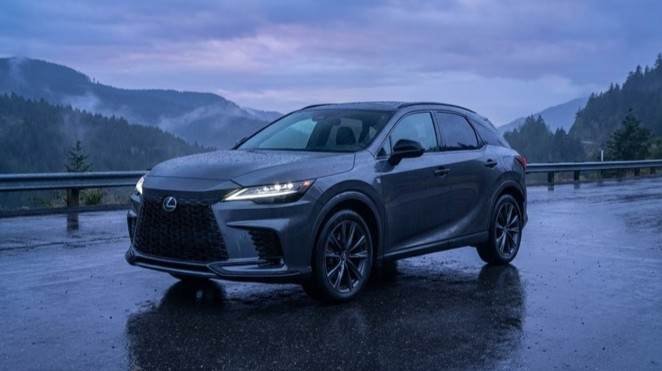
The letters on the window sticker are the easy part. The harder part is knowing what they are attached to.
Shoppers looking at Lexus all wheel drive vehicles usually start with a blunt filter: AWD, or not. That filter misses the point. Lexus does not put one drivetrain behind every AWD badge. An NX hybrid sending a pulse of torque to a rear motor in a snowy parking lot is not doing the same job as a GX in low range on a rutted trail. A TX on all-season tires is not a winter specialist just because the spec sheet says AWD. And a gasoline RX with a conventional all-wheel system is not the same machine as an electrified Lexus using DIRECT4.
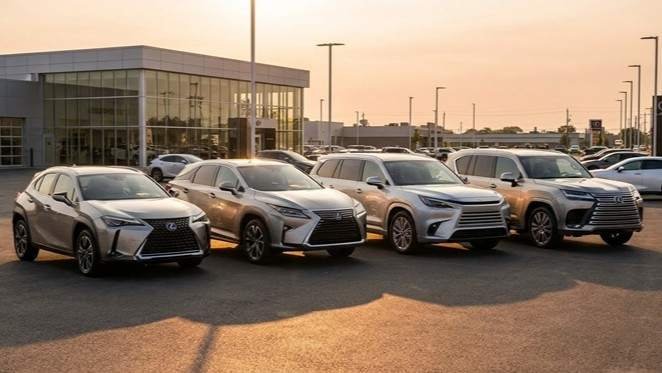
If you are shopping a 2026 Lexus for rain, snow, a mountain driveway, or just the peace of mind of driven rear wheels, you need more than the badge. You need the system, the tires, the ground clearance, and the way the vehicle is actually used.
This guide is for that shopping trip. It explains how Lexus AWD works, which current models offer it, where Lexus still uses body-on-frame 4WD, how hybrid AWD differs from a mechanical setup, and which configuration fits commuting, families, winter climates, towing, and light off-road use. Confirm the exact 2026 build on Lexus.com and the window sticker. Drivetrain availability is model- and trim-specific, and it can change by year.
What Does All-Wheel Drive Mean on a Lexus?
All-wheel drive on a Lexus means the vehicle can send power to the front and rear wheels, rather than driving only one axle all the time. It does not mean every wheel gets equal power all the time. It does not mean the vehicle is an off-roader. It does not mean you can ignore tires, speed, or braking distance on ice.
In simple terms, AWD is traction insurance for pavement. When a front tire starts to slip in rain, slush, or light snow, the system can shift torque toward the axle or wheel that still has grip. Some Lexus systems do this through a mechanical center coupling and driveshaft. Others do it with an electric motor at the rear and no traditional two-piece driveline to the back of the car. A smaller group uses independently controlled electric motors and a system Lexus calls DIRECT4.
That distinction matters. Traction assistance is about staying composed on a highway on-ramp or a slushy neighborhood street. True off-road capability is about ground clearance, approach angles, low-range gearing, skid plates, locking differentials, and tires that can claw dirt. Most Lexus crossovers are in the first category. The GX and LX are in the second.
If you buy AWD thinking you have purchased a Jeep-style 4×4, you bought the wrong story. If you buy it because you want more composure in wet weather and light snow than a front-drive Lexus, you are in the right aisle.
Which Lexus Vehicles Have All-Wheel Drive in 2026?
Not every Lexus is AWD. Not every AWD Lexus uses the same hardware. And some of the most capable trucks in the lineup are labeled 4WD, not AWD.
The table below reflects the current-generation U.S. Lexus utility and passenger lineup as shoppers should expect to find it for 2026. Always verify the specific VIN and window sticker. FWD-only trims still exist on several crossovers. Sedan availability has been narrower than the SUV side.
| Model | Type | Typical powertrain family | AWD / 4WD |
|---|---|---|---|
| UX | Subcompact crossover | Hybrid | AWD available |
| NX 250 | Compact crossover | Gas | FWD |
| NX 350 | Compact crossover | Turbo gas | AWD |
| NX 350h | Compact crossover | Hybrid | AWD |
| NX 450h+ | Compact crossover | Plug-in hybrid | AWD |
| RX 350 | Midsize crossover | Turbo gas | FWD or AWD |
| RX 350h | Midsize crossover | Hybrid | AWD |
| RX 450h+ | Midsize crossover | Plug-in hybrid | AWD |
| RX 500h | Midsize crossover | Performance hybrid | AWD |
| TX 350 | Three-row crossover | Turbo gas | FWD or AWD |
| TX 500h | Three-row crossover | Performance hybrid | AWD |
| TX 550h+ | Three-row crossover | Plug-in hybrid | AWD |
| RZ | Electric crossover | Dual-motor EV (AWD versions) | AWD on dual-motor |
| GX 550 | Body-on-frame SUV | Twin-turbo V6 | 4WD |
| LX | Full-size body-on-frame SUV | Twin-turbo V6 / hybrid depending on version | 4WD |
| IS | Compact sedan | Gas | AWD on some versions |
| LS | Flagship sedan | Gas / hybrid | AWD on some versions |
| ES | Midsize sedan | Gas / hybrid | Typically FWD |
If a salesperson says “all Lexus SUVs are AWD,” ask which system, and ask whether the NX 250 or RX 350 on the pad is actually FWD.
Lexus AWD SUVs
The utility side is where most buyers will spend their money. It is also where Lexus AWD models diverge the most.
Lexus NX
The NX is the compact crossover: easier to park than an RX, more adult than a subcompact, and the first Lexus many households actually consider.
Drivetrain is split on purpose. The NX 250 is the simpler, typically front-drive gas model. The NX 350 adds a turbocharged four-cylinder and AWD. The NX 350h and NX 450h+ use electrified AWD, with a rear motor helping the front powertrain rather than a traditional always-on mechanical rear axle.
Intended use is commuting, small families, and all-weather pavement. Ground clearance is crossover-normal, not trail-normal. In snow, an NX 350h on proper winter tires will outperform a higher-spec NX on worn all-seasons. The AWD system is there to help you leave a slippery intersection. It is not there to replace four snow tires.
Configuration differences that matter: FWD vs AWD on the gas side, hybrid vs plug-in on the electrified side, and F Sport models that change tires and suspension more than they change the basic traction idea. If you live where it snows, skip the FWD NX 250 unless you are committed to winter rubber and modest expectations.
Lexus RX
The RX is still the default Lexus SUV in a lot of driveways. It is a two-row midsize crossover with a quieter, more isolated character than the NX and less off-road intent than a GX.
The RX 350 can be FWD or AWD. That is the first question, not the last. Hybrid versions—RX 350h, RX 450h+, and the stronger RX 500h—use electrified AWD. The 500h is the performance-hybrid RX, not merely a 350h with different wheels. Its AWD calibration and power delivery are meant to feel more athletic. It is still a street crossover.
Traction characteristics are pavement-first. The RX is comfortable in rain and light-to-moderate snow when the tires match the weather. It is a poor substitute for a GX if your “AWD need” is a cabin in the woods with a rutted access road. It is an excellent substitute if your need is a stable, quiet highway vehicle that does not push the front tires as hard as a FWD crossover in a storm.
Lexus TX
The TX is the three-row Lexus for people who outgrew the RX but do not want a truck-based GX. TX 350 is the turbo gas three-row, with FWD and AWD depending on how it is built. TX 500h and TX 550h+ bring hybrid and plug-in hybrid AWD to the same three-row package. That matters for car seats, cargo, and the kind of family trip where the third row is not a marketing prop.
AWD on a TX is about weather and a loaded vehicle, not rock crawling. A three-row crossover with passengers, luggage, and a wet mountain pass is exactly when extra driven wheels help. It is also when payload, tire pressure, and brakes matter more than the AWD logo. If you need to tow at the high end of Lexus crossover ratings, compare the specific TX configuration’s towing rating rather than assuming AWD raises the number. Towing is a certification, not a vibe.
Lexus GX
The GX 550 is a body-on-frame SUV with full-time 4WD, a twin-turbo V6, and hardware aimed at dirt, ruts, and loaded trips that would make an RX look underbuilt. Lexus does not treat this as a crossover AWD system, and neither should you. Low-range gearing, Multi-Terrain Select, and (on more trail-focused trims) extra off-road equipment are the point.
If you asked “is the Lexus GX AWD or 4WD?” the useful answer is 4WD. It can still be used as a daily luxury SUV. It is heavier, thirstier, and more truck-like than an RX. That is the trade. Buy a GX because you want the chassis and the 4WD system. Do not buy it only because you want snow traction for a 12-minute commute. An NX or RX with winter tires will do that job with less truck attached.
Lexus LX
The LX is the full-size flagship SUV: more vehicle, more mass, more 4WD capability, and more of everything that makes parking-garage life annoying. It uses a body-on-frame 4WD layout in the same family as Lexus’s serious SUVs, not the NX’s hybrid rear motor. Versions and hybrid availability can vary by year, so read the 2026 window sticker rather than an old LX 600 brochure. The intended customer is someone who wants luxury, presence, and the ability to take a large SUV onto poor roads or pull a substantial trailer—within the rating on that specific truck.
If your week is school, Costco, and a paved highway, the LX is excess. If your week includes ranch roads, snow country, and a trailer, it is the Lexus that was actually designed for load and terrain.

Lexus AWD Sedans
The SUV side is the volume story. The sedan side is the “confirm it still exists on the lot” story. For 2026, Lexus still occupies the sedan space, but the company has clearly pushed shoppers toward crossovers. Do not walk into a store assuming every Lexus sedan is AWD, or even that every sedan in last year’s brochure is still being built the same way.
Recent U.S. patterns, which you should verify on a 2026 build sheet:
- IS: AWD has been offered on IS 300 and IS 350 versions. The high-output IS 500 has been a rear-drive car. If you want a sport sedan with AWD, the IS is the traditional answer—if that configuration is on the 2026 order guide in your region.
- LS: The flagship sedan has offered AWD on certain LS 500 configurations. This is luxury-car AWD: stability and weather composure, not ground clearance.
- ES: The volume Lexus sedan has been a front-drive car in recent U.S. years, including hybrid ES models. Do not shop an ES as an AWD sedan unless the 2026 sticker actually says so.
Older Lexus sedans—GS, older ES AWD, and various IS generations—show up on used lots with AWD. Those are not 2026 vehicles. Treat them as used-car shopping, with the inspection notes later in this article.
If you need sedan packaging and winter traction, confirm AWD on the IS or LS first. If you need winter traction and cargo, you will probably end up in an NX or RX anyway.
Lexus Hybrid AWD Vehicles
Lexus hybrid AWD is not a smaller version of GX 4WD. It is a different invention. On many Lexus hybrids (the NX 350h, RX 350h, UX hybrid, and similar E-Four-style setups), the engine and a motor drive the front wheels. A separate electric motor can drive the rear wheels. There is often no conventional driveshaft sending engine torque to the rear axle the way a gas RX 350 AWD does. The rear motor wakes up when the vehicle wants launch traction, extra stability, or slip control, and it can stay quiet when you are cruising and the fronts have plenty of grip.
That design is why Lexus hybrid AWD vehicles can feel seamless. You are not waiting on a clutch pack in the same way. You are waiting on software and a motor that can add rear thrust quickly. It is also why hybrid AWD can be efficient: the system does not have to drag a full-time mechanical rear driveline through every highway mile.
Plug-in hybrids such as the NX 450h+, RX 450h+, and TX 550h+ add battery range and still use electrified AWD architectures. Their winter behavior depends on battery state, tires, and how much of the drive is electric versus engine-supported. A depleted plug-in on ice is still a heavy vehicle that needs the right rubber.
Fuel economy is the hybrid pitch, but it is configuration-specific. Compare EPA ratings for the exact AWD hybrid versus the gas AWD version of the same model. Do not assume the hybrid always wins by a huge margin in cold weather. Hybrids can lose some of their city advantage when the engine stays on to make heat.
Hybrid AWD vs conventional mechanical AWD:
- Hybrid AWD: rear assist via motor, often excellent in stop-and-go snow, efficient on pavement, not a low-range off-road system
- Mechanical AWD (gas NX 350, RX 350, TX 350): engine-driven front and rear through couplings/gears, familiar “AWD crossover” feel
- DIRECT4: independently managed axle torque, used on specific electrified Lexus models, more about control than a simple on-demand rear motor
- GX/LX 4WD: mechanical, low range, terrain modes, actual truck hardware
If someone tells you “it’s all AWD,” they have flattened four different machines into one acronym.
Lexus DIRECT4 AWD Explained
DIRECT4 is not the name of every Lexus AWD system. Treating it that way is how shoppers get confused in a showroom.
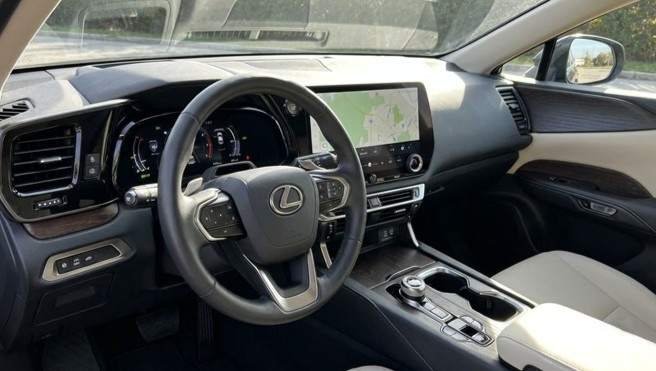
DIRECT4 is Lexus’s technology for controlling front-to-rear torque using electric motors, with the ability to vary how much force each axle gets as you accelerate, brake, and turn. Instead of a purely mechanical split, software and motors decide how to place torque. In a straight-line launch, more rear torque can help the vehicle squat and go. In a corner, the system can adjust distribution to stabilize the chassis. On a slick surface, it can bias toward the axle that can still use the power.
Think of it as traction and chassis control, not a transfer case. You will find DIRECT4 associated with electrified Lexus models that have independently driven axles—most clearly the AWD versions of the RZ electric crossover. Lexus has also used the DIRECT4 idea in other electrified performance applications. Do not slap the DIRECT4 label on an NX 350h or a GX 550. Those are different drivetrains.
What DIRECT4 is good at: smoothness, launch, and the kind of on-road composure luxury buyers want from an EV or high-end hybrid. What it is not: a substitute for winter tires, or a crawl-ratio 4WD system. If your shopping list is “electric Lexus that still feels planted in the rain,” DIRECT4 is relevant. If your shopping list is “Utah two-track and a roof tent,” you want a GX, not a seminar on motor control.

Lexus AWD vs 4WD
Lexus uses both labels because the hardware is not the same.
AWD in the Lexus crossover sense is for on-road traction. It is automatic. You do not get out and turn a hub. You do not select 4-Low on an NX. The vehicle decides how to share power while you drive like a normal person in weather.
4WD on the GX and LX is a truck system. Full-time 4WD still drives more than one axle as you commute. The extra pieces—low range, terrain modes, stronger hardware, higher clearance—are there when pavement ends. That is why Lexus AWD vs 4WD is not a branding argument. It is a chassis argument.
| Situation | Crossover AWD (NX, RX, TX, many hybrids) | Body-on-frame 4WD (GX, LX) |
|---|---|---|
| Rain, highway slush | Well suited | Also fine; more truck than needed |
| Daily commuting | Easier size, ride, MPG | Heavier, thirstier |
| Deep snow / unplowed cabin road | Tires decide; clearance can run out | Better clearance and gearing |
| Towing heavy | Modest, config-specific | The more serious option |
| Rocks, ruts, trails | Not the assignment | The assignment |
| Parking garages | Happier | Wider, taller, less happy |
Lexus uses different approaches because an NX that rode and sipped fuel like a GX would not be an NX. An LX that was as light as an RX would not survive the job Lexus sells it for. Snow, rain, towing, off-road, commuting: pick the column that matches the worst day you actually have, not the worst day you imagine twice a year.
Is Lexus AWD Good in Snow and Rain?
Yes, with the boring caveats that actually keep people out of ditches. Lexus AWD helps you accelerate with less front-wheel spin. In rain, that means cleaner launches and more composure when a puddle unloads one tire. In snow, it means the vehicle is less likely to sit there grinding two front tires while the rears do nothing. On a gentle grade out of a driveway, that help is real.
It does not shorten stopping distance the way people wish it did. Brakes do not care that you have a rear motor. Tires care. Speed cares. An RX AWD on bald all-seasons will slide through a stop sign that an FWD Civic on snow tires might still make.
Ground clearance still matters. A packed-snow neighborhood that looks harmless can high-center a crossover. Driver behavior still matters. AWD can make a vehicle feel more confident than the grip deserves, which is how people enter corners too fast.
For rain: AWD is useful, not magic. For snow: buy the AWD Lexus if you want the traction assist, then buy winter tires if you live where snow sticks. That combination is the actual winter package. Lexus snow modes and traction control help. They do not replace rubber.
Lexus AWD Fuel Economy
AWD can cost fuel. It does not always cost a lot, and hybrids complicate the old rule.
Extra drivetrain parts add weight. They add friction. All-wheel models often wear different tires or wheels than the FWD version of the same Lexus. Those tires can move EPA numbers more than the extra coupling does. A hybrid AWD system that only wakes the rear motor as needed may lose less highway efficiency than a full-time mechanical setup.
The only honest method is configuration-to-configuration comparison on fueleconomy.gov or the window sticker:
- RX 350 FWD vs RX 350 AWD
- NX 350 AWD vs NX 350h AWD
- TX 350 AWD vs TX 500h AWD
- GX 550 vs any of the above (the GX will lose; it is a truck)
City vs highway vs winter also moves the result. Cold batteries, roof boxes, aggressive throttle, and 20-inch summer-compound tires will wreck an MPG story that looked great in a brochure. Lexus AWD fuel economy is not one number. It is a sticker on one vehicle.
Lexus AWD Maintenance
Lexus AWD maintenance is mostly about not doing something stupid to the tires, then following the model’s actual service schedule.
Tires. This is the big one. AWD and 4WD systems dislike mismatched rolling circumference. Mixing a nearly new tire with three bald ones, or replacing one tire and leaving a major diameter gap, can stress couplings, motors, and differentials. If you blow one tire on an AWD RX, ask a Lexus-savvy shop whether you can replace one or need a pair or a set. The answer depends on remaining tread, not on a forum’s confidence.
Alignment. A dragging, misaligned AWD crossover wears tires in a way that eventually becomes a drivetrain problem. Keep it aligned.
Fluids. Mechanical AWD and 4WD units have transfer and differential fluids on a schedule that varies by model and duty. Hybrids add inverter coolant and hybrid-system inspections per the maintenance guide. Do not invent a universal “AWD flush every 30,000 miles” rule. Use the 2026 (or used vehicle’s) Lexus schedule.
Inspection. Listen for clunks on tight turns, hums that change with speed, and warning lights that mention AWD, 4WD, or hybrid systems. Those are shop visits, not “it always does that.”
Hybrids and EVs. Rear-motor AWD still needs tire matching. It also needs high-voltage system care that a gas GX does not. Different machine, different checklist.
Complexity is higher than FWD. It is not automatically a money pit if you service it and keep the tires even. Neglect is what makes AWD expensive.
Lexus AWD vs FWD
Front-wheel drive is simpler, often cheaper, and enough for many Lexus buyers in mild climates.
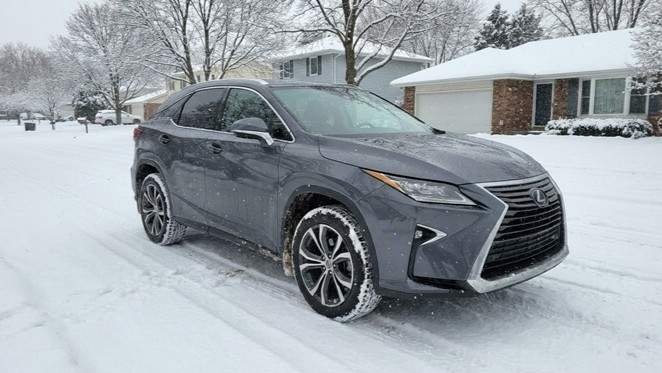
AWD adds traction when you are applying power. FWD Lexus models still have stability control, good brakes, and (on hybrids) plenty of low-speed torque at the front axle. In Phoenix in July, FWD is not a character flaw. In Buffalo in February, FWD plus winter tires can still be rational—but AWD plus winter tires is the more complete tool.
Trade-offs, without a universal winner:
- Traction: AWD wins when you need to move in snow or wet gravel. FWD is fine in rain if you drive like an adult.
- Price: AWD usually costs more up front and can cost more in tires.
- Fuel economy: FWD often wins on the same gas model. Hybrids blur this.
- Complexity: FWD has less to service.
- Winter: AWD is the better starting point; tires still decide.
- Everyday use: Most miles on either system are just miles.
If the FWD Lexus is thousands less and you will never see snow, take the FWD and spend the difference on tires you will actually wear out. If you climb a steep, icy driveway every January, stop pretending FWD is “basically the same.”
Choosing a Lexus AWD Vehicle by Driving Need
Rankings are how content farms dodge the real question. Use cases are how people buy.
Daily commuting. NX or RX. Hybrid AWD if you want easier city mpg and enough weather traction. Keep the vehicle size matched to your garage. DIRECT4 RZ if you are ready for an electric commute and home charging.
Family transportation. TX if you need a third row that adults might survive. RX if you do not. AWD for wet-road family trips; child-seat fit and cargo floor matter more than torque-split diagrams.
Winter climates. AWD or 4WD plus a dedicated winter tire. NX/RX/TX for paved winter cities. GX if unplowed roads and clearance are the actual problem. Do not buy LX only for snow unless you also need the size.
Long-distance travel. RX or TX for ride and cabin quiet. Hybrid AWD for fewer fuel stops if your route matches hybrid strengths. Confirm the spare tire, roof rating, and real cargo with suitcases, not with seats folded in a brochure.
Hybrid / fuel-conscious driving. NX 350h, RX 350h, or the plug-ins if you can charge. Electrified AWD is the path. GX is not.
Towing. Read the door sticker and the 2026 towing guide for that VIN. GX and LX are the structural answer. TX is the crossover answer with a much lower ceiling. AWD does not magically raise a tow rating.
Off-road use. GX or LX. Period. Crossover AWD is a gravel-road and snow-lane tool.
Luxury-focused driving. LS AWD if you still want a flagship sedan. RX or LX if you want the brand’s current idea of luxury, which is an SUV. DIRECT4 models if you want the newer electrified feel.
Used Lexus AWD Vehicles: What Buyers Should Check
A used AWD Lexus can be an excellent buy. A neglected one can be a tire-and-driveline bill with a good badge.
- History: Accidents, flood flags, and title brands. Underbody hits matter more on AWD/4WD vehicles.
- Service records: Transfer case / differential / hybrid inspections if the model has them. Oil history on turbos.
- Tire matching: Same size, similar brand and tread depth on all four. A cheap mismatched spare on an AWD RX is a warning.
- Warning lights: AWD, 4WD, traction, hybrid, and ABS lights are walk-away flags until scanned.
- Noises: Binding on tight, dry pavement; grinding; humming that tracks with speed.
- Leaks: Differential seepage, rusted covers, wet undertrays.
- Suspension and alignment: Uneven inner-edge wear on an AWD Lexus is a cost forecast.
- Hybrid battery: For hybrid AWD, get a scan and a road test that includes hills and a cold start. Range fairy tales are not data.
- Pre-purchase inspection: Independent shop, not the seller’s “we checked it.” On a GX/LX, ask them to look at 4WD engagement, underbody, and leaks specifically.
Used NX and RX hybrids are everywhere. Used GX 460s and GX 550s are a different inspection. Do not use one checklist for both.
Frequently Asked Questions
What Lexus vehicles have all-wheel drive?
In the current U.S. lineup, AWD is widely available on NX, RX, TX, and electrified models such as AWD RZ versions, plus certain IS and LS sedans. GX and LX use 4WD rather than crossover AWD. Several gas crossovers are still sold in FWD form. Check the 2026 window sticker.
Which Lexus SUVs have AWD?
NX, RX, and TX offer AWD on many trims. UX hybrid AWD has been part of the compact lineup. RZ offers AWD on dual-motor models. GX and LX are 4WD SUVs. The NX 250 and some RX 350/TX 350 builds can still be FWD.
Is Lexus AWD good in snow?
It helps you get moving and stay composed in light to moderate snow. It does not guarantee stopping or steering grip. Winter tires, clearance, and speed matter more than the badge.
Does Lexus offer hybrid AWD?
Yes. NX, RX, TX, and other electrified Lexus models use hybrid or plug-in hybrid AWD. Many use a rear electric motor rather than a traditional mechanical rear driveshaft.
What is Lexus DIRECT4?
DIRECT4 is Lexus’s motor-based system for varying front/rear torque on specific electrified models, notably AWD RZ vehicles. It is not the name of every Lexus AWD setup.
Is Lexus AWD better than FWD?
It is better for traction in snow, slush, and wet gravel. FWD can be cheaper, simpler, and enough in mild climates. Tires and driving still decide the outcome.
Is Lexus AWD the same as 4WD?
No. Crossover AWD is for on-road traction. GX and LX 4WD is a body-on-frame system with off-road hardware and, on those trucks, low-range capability.
Does AWD reduce Lexus fuel economy?
It can, especially on gas models versus FWD. Hybrid AWD may narrow the gap. Compare EPA figures for the exact configuration.
Does Lexus AWD cost more to maintain?
It can, mainly via tire-replacement rules and extra driveline fluids. A well-kept Lexus AWD is not automatically a penalty. Mismatched tires are the expensive mistake.
Is the Lexus GX AWD or 4WD?
4WD. Full-time four-wheel drive on a body-on-frame SUV, not a unibody crossover AWD system.
Does the Lexus RX have AWD?
Many do. RX 350 is FWD or AWD depending on build. Hybrid RX models typically use AWD. Confirm on the sticker.
Does the Lexus NX have AWD?
NX 350, NX 350h, and NX 450h+ use AWD. The NX 250 is typically FWD.
Does the Lexus TX have AWD?
Yes, on many TX 350 builds and on the hybrid/plug-in TX models. Some TX 350s are FWD. Check the configuration.
Lexus all wheel drive vehicles are not one product line with a three-letter option. They are a set of systems: on-demand and conventional AWD in crossovers, hybrid rear-motor AWD, DIRECT4 on specific electrified models, and real 4WD in the GX and LX.
Shop the job, not the badge. Commuters and most families belong in NX, RX, or TX AWD—often hybrid AWD if efficiency matters. Snow-state drivers should budget for winter tires before they budget for a bigger SUV. Towing and dirt belong to the body-on-frame trucks. FWD still makes sense where weather is mild and the price gap is real.
Read the 2026 window sticker. Match the tires. Understand whether you are buying a rear motor, a mechanical coupling, or a transfer case. That is the difference between buying Lexus AWD and just buying the letters.
Related Post