Mustang Mach-E
Range & Charging
Illustrative reference for planning, panel sizing, and trim comparison. All values marked VERIFY require confirmation against official sources before publishing.
Quick-Reference Metrics
Verify before useRelative Range Comparison
Proportional onlyBar lengths are proportional examples only — extended-range RWD typically longest; GT / larger wheels typically shorter. Replace bar widths with actual EPA figures for your trim.
Range Calculator
Your conditionsEnter your usable battery size and efficiency. This is not Ford’s official rating — it reflects your inputs.
Official Test Cycle Results
EPA / WLTP| Cycle | City | Highway | Combined | Source |
|---|---|---|---|---|
| EPA range | VERIFY mi | VERIFY mi | VERIFY mi | fueleconomy.gov / window sticker |
| EPA MPGe | VERIFY | VERIFY | VERIFY | EPA label |
| kWh / 100 mi (EPA) | VERIFY | EPA label | ||
| WLTP (if shown) | Not the U.S. shopping number | Do not mix with EPA | ||
← Swipe to see all columns →
| Condition | What it typically does | Planning range vs sticker |
|---|---|---|
| Mild, no HVAC | Closest to sticker in mixed driving | ~90–100% of EPA |
| Cabin heat, near freezing | Heat pump / resistive + denser air | Often ~70–85% |
| Cabin heat + 70–75 mph | Aero + HVAC stack | Often ~60–75% |
| Preconditioned while plugged in | Uses wall power instead of pack | Protects range |
Real-World Range
Planning estimates| Scenario | Speed / climate | vs EPA sticker | Notes |
|---|---|---|---|
| City / suburban | 30–45 mph, mild | At or above sticker | Regen helps |
| Mixed commute | EPA-like mix | Near sticker | Best comparison baseline |
| U.S. interstate | 70–75 mph | Below sticker | Aero dominates |
| Winter commute | 20–35°F, heat on | Well below sticker | Cabin + battery conditioning |
| Towing | Rated trailer, if equipped | Sharply lower | Owner’s manual rating only |
← Swipe to see all columns →
| Factor | Direction | Why it matters |
|---|---|---|
| RWD vs AWD | AWD usually uses more | Extra motor / drivetrain loss |
| Wheel / tire size | Larger cuts range | Mass, aero, rolling resistance |
| Speed | 75 mph costs more than 65 | Crossover aero drag |
| Cabin heat / A/C | Heat bigger hit in winter | Drawn from pack unless preconditioned |
| Battery size | Extended range goes farther | More kWh, not magic efficiency |
Charging Performance
Home & public| Method | Typical setup | Approx. power | Best use |
|---|---|---|---|
| Level 1 | 120V mobile charger | ~1–2 kW | Short daily miles only |
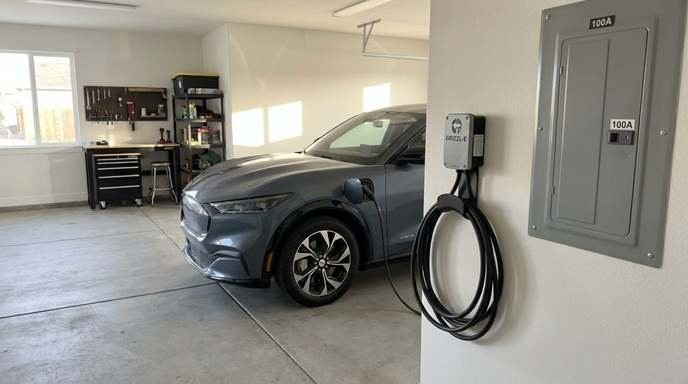
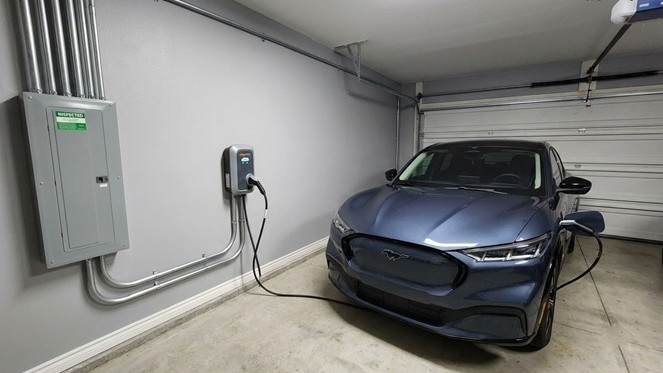
| Level 2 · 32A | 240V EVSE | ~7.7 kW | Overnight on tighter 100A service |
| Level 2 · 40A | 240V EVSE | ~9.6 kW | Overnight if panel has room |
| Level 2 · 48A | 240V EVSE / onboard limit | ~11.5 kW or vehicle cap | Only if car and service allow |
| DC fast charge | Public DCFC | Peak VERIFY kW | Road trips; taper after mid-SOC |
← Swipe to see all columns →
| Energy needed | Level 1 ~1.4 kW | 32A ~7.7 kW | 40A ~9.6 kW | DC (tapering) |
|---|---|---|---|---|
| Daily ~10 kWh (~30 mi) | ~7 h | ~1.3 h | ~1.0 h | Minutes at station |
| 20 kWh recovery | ~14 h | ~2.6 h | ~2.1 h | Short stop if taper allows |
| 10–80% road-trip window | Not practical | Overnight | Overnight | Use mfr / test figure |
← Swipe to see all columns →
| Charge source | kW | mi / hour | mi / minute |
|---|---|---|---|
| Level 1 | 1.4 | 4.2 | 0.07 |
| Level 2 · 32A | 7.7 | 23.1 | 0.39 |
| Level 2 · 40A | 9.6 | 28.8 | 0.48 |
| Level 2 · 48A * | 11.5 | 34.5 | 0.58 |
| DC avg ~100 kW | 100 | 300 | 5.0 |
* Only if the onboard charger and EVSE are both at that rate. Cold weather lowers mi/kWh, so miles/minute fall even if kW stays the same.
DC Charging Curve
Illustrative shape onlyIllustrative DC fast-charge shape only — high early, taper after mid-SOC, slow after ~80%. Not a measured Mach-E curve. Log your own session on a known stall for accurate trim data.
| SOC window | Speed character | Driver takeaway |
|---|---|---|
| 0–10% | May ramp; battery cold-limited | Precondition before arriving at DCFC |
| 10–40% | Usually fastest DC region | Best road-trip charging window |
| 40–80% | Taper begins / continues | Average kW matters more than peak |
| 80–100% | Slowest DC; AC often fine | Finish at home on Level 2 |
| SOC | Power (kW) | Notes | Range added / 5 min |
|---|---|---|---|
| 0% | VERIFY | May ramp / thermal limit | — |
| 10% | VERIFY | Often near peak if warm | — |
| 20% | VERIFY | — | |
| 30% | VERIFY | — | |
| 40% | VERIFY | Taper may start | — |
| 50% | VERIFY | — | |
| 60% | VERIFY | — | |
| 70% | VERIFY | — | |
| 80% | VERIFY | Typical road-trip stop | — |
| 90% | VERIFY | Slow | — |
| 100% | VERIFY | Balance / crawl | — |
← Swipe to see all columns →
Vehicle Specifications
Verify per trim / year| Item | Value |
|---|---|
| Vehicle | Ford Mustang Mach-E |
| Model year / trim | VERIFY (Select, Premium, GT, Rally…) |
| Drivetrain | RWD or AWD — VERIFY |
| Battery | Standard or extended range — VERIFY kWh |
| Charge port | CCS or NACS by year — VERIFY |
| Seating | 5 |
| Item | Value |
|---|---|
| Motors | VERIFY (single rear or dual) |
| Output | VERIFY hp / lb-ft |
| 0–60 mph | VERIFY — don’t mix GT with Select |
| Top speed | VERIFY |
| Drive modes | VERIFY in owner’s manual |
| Item | Value |
|---|---|
| Front | VERIFY (independent; spec by year) |
| Rear | VERIFY |
| GT / handling pack | VERIFY dampers, bushings, brakes |
| Ride height / wheels | VERIFY — wheels change range |
| Item | Value |
|---|---|
| Pack (usable / gross) | VERIFY kWh |
| Architecture | VERIFY voltage class |
| EPA range | VERIFY mi |
| Onboard AC | VERIFY kW |
| DC peak | VERIFY kW |
| Home EVSE sweet spot | Often 32–48A @ 240V if service allows |
| Item | Value |
|---|---|
| Location | Driver-side front fender (typical) |
| AC inlet | VERIFY by year (J1772 or NACS) |
| DC inlet | VERIFY by year (CCS1 or NACS) |
| Cable routing tip | Front-fender port favors near-side charger; see 20–25 ft cable guide |
| Item | Value |
|---|---|
| Rear cargo (seats up) | VERIFY cu ft |
| Rear cargo (seats down) | VERIFY cu ft |
| Frunk | VERIFY cu ft |
| Max towing | VERIFY lb — owner’s manual only |
| Hitch type | Only as Ford-equipped and rated |
| Item | Notes |
|---|---|
| Center display | VERIFY size / SYNC gen by year |
| Instrument cluster | VERIFY |
| Charge scheduling | FordCharge / connected — VERIFY |
| One-pedal / regen | Owner’s manual for that model year |
| Physical controls | Do not assume identical year to year |
| Feature | Availability |
|---|---|
| Adaptive cruise / stop-go | VERIFY trim / package |
| Lane centering / BlueCruise | VERIFY year, coverage, subscription |
| Blind-spot / cross-traffic | VERIFY |
| Reverse camera / 360° | VERIFY |
| AEB / pedestrian | VERIFY window sticker |
| Hardware | Count / placement |
|---|---|
| Exterior cameras | VERIFY — do not invent Tesla-style count |
| Ultrasonic / parking sensors | VERIFY package |
| Radar | VERIFY by year (driver-assist stack changed) |
| Interior camera | VERIFY if BlueCruise / in-cabin monitoring equipped |
Key Insights
Planning tips- EPA combined range is a comparison label — not your winter highway number.
- Home charging time is set by EVSE amps, onboard AC limit, and how empty the pack is — not by a 100-amp panel rating alone.
- DC “peak kW” is a momentary spike, not the average speed from 10–80%.
- Stopping DC around 70–80% is usually faster on a road trip than pushing to 100%.
- A second household load (dryer, heat strips) does not change the car’s kW — it changes whether the house can spare that kW.
- Preconditioning battery and cabin while plugged in protects pack range and can improve DC charging speed.
- The front-fender charge port favors a near-side or wall-mounted EVSE — plan your cable run before installation.
Related Post