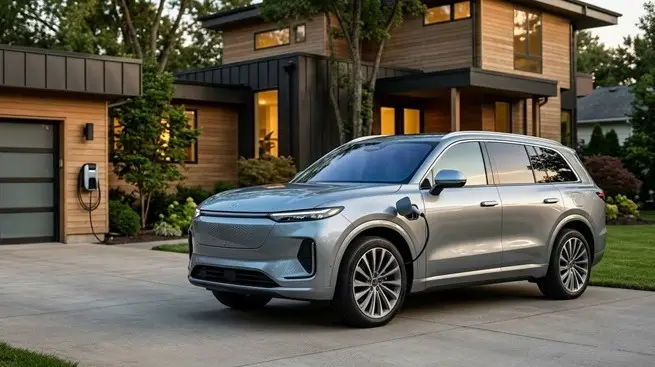
As more three-row SUV shoppers consider going electric, it’s natural to wonder whether Chevrolet’s popular family hauler is getting a battery-powered version. The short answer: as of this writing, Chevrolet has not announced a production electric Traverse. The 2026 Traverse lineup remains gasoline-only, built around a turbocharged engine rather than a battery pack.
That doesn’t mean the question is pointless. Chevrolet has been aggressively expanding its EV lineup, and three-row electric SUVs are one of the fastest-growing segments in the U.S. market. we breaks down exactly what’s confirmed about the 2026 Chevy Traverse EV, what remains speculation, and which electric alternatives are worth cross-shopping if you want a three-row EV today rather than waiting on an uncertain future announcement.
Is the 2026 Chevy Traverse EV Actually Available?
No. Based on Chevrolet’s official vehicle lineup and GM’s published product communications, the 2026 Chevy Traverse EV is sold exclusively with a gasoline powertrain. There is no electric Traverse trim, no EV reservation page, and no confirmed production timeline for a battery-electric version of this specific nameplate.
It’s worth being precise here, because online searches often blur the line between rumor and confirmation. Chevrolet has publicly stated its intention to grow its EV lineup across multiple segments, and the brand already sells electric models like the Equinox EV and Blazer EV. However, intent to expand an EV lineup generally is not the same as a confirmed three-row electric Traverse.
If GM announces an electric Traverse or a related three-row EV in the future, it will likely appear first through official channels: GM’s investor communications, Chevrolet press releases, or a formal reveal event. Until that happens, treat any claims of a “2026 Traverse EV” launch, price, or specification as unverified.
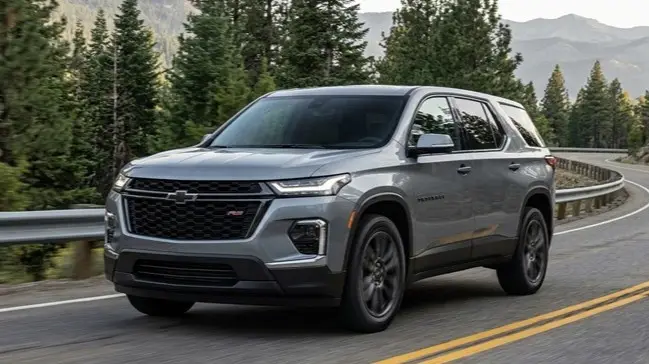
2026 Chevy Traverse Gas Model
While an electric version isn’t on the table yet, the current gasoline-powered 2026 Traverse is a legitimately strong three-row SUV worth understanding on its own merits — especially since it may be your most practical option right now.
The 2026 Traverse is powered by a 2.5-liter turbocharged four-cylinder engine. This engine replaced the previous V6 in recent model years as part of Chevrolet’s shift toward smaller, more efficient turbocharged powertrains across its SUV lineup. Official output figures and exact specifications can vary slightly by trim, so shoppers should confirm the precise horsepower and torque ratings for their specific configuration on Chevrolet’s official build-and-price tool.
- Transmission: An 8-speed automatic transmission paired with the turbocharged engine.
- Drivetrain: Front-wheel drive standard, with all-wheel drive available on most trims.
- Seating: Three rows of seating, typically accommodating seven or eight passengers depending on second-row configuration (bench vs. captain’s chairs).
- Cargo flexibility: A fold-flat third row and available fold-flat second row for maximizing cargo space when needed.
- Towing capacity: Chevrolet publishes official towing figures that vary by trim and configuration; buyers should confirm the exact rating for their intended trim directly through Chevrolet’s official specifications, as towing capacity can change based on equipment packages.
This is a traditional family SUV built for road trips, carpools, and cargo-hauling duty — not a hybrid or electrified powertrain. If you need three-row seating and dependable range without rethinking your charging habits, the gas Traverse remains a straightforward, proven choice.
2026 Chevy Traverse EV Price
Here’s where honesty matters most: there is no official price for a 2026 Chevy Traverse EV, because no such vehicle exists in Chevrolet’s current lineup. Any number you see attached to that phrase elsewhere is either a guess, a misunderstanding, or outdated speculation — not a confirmed MSRP.
What we can tell you is the starting price for the gasoline-powered 2026 Traverse, which gives useful context for what a Traverse-badged vehicle typically costs. Chevrolet’s official MSRP for the base LS trim starts in the mid-$30,000s, with higher trims like RS and High Country pushing well into the $50,000s before options. These figures do not include destination charges, which Chevrolet adds separately, nor do they include your state’s sales tax, dealer fees, or optional equipment packages.
If Chevrolet does eventually introduce an electric three-row SUV, a few general EV pricing patterns are worth keeping in mind, without treating them as predictions for the Traverse specifically:
- Electric SUVs often carry a higher starting MSRP than comparable gas models due to battery costs.
- Federal and state EV tax incentives can offset some of that premium, but eligibility rules change frequently and depend on vehicle assembly location, battery sourcing, and income limits.
- Total cost of ownership calculations should include home charging equipment, electricity rates, and potential differences in maintenance costs.
Until Chevrolet confirms otherwise, assume that any electric three-row SUV from the brand would likely price above the current gas Traverse’s range, consistent with how other automakers have priced electric versions of gas-powered nameplates.
Chevy Traverse EV Range and Battery
Because no electric Traverse has been announced, there is no official battery size, EPA-estimated range, or charging specification to report. Any range figure attached to a “Traverse EV” online should be treated as speculation unless it links directly to a Chevrolet or GM press release.
That said, it’s useful to understand what actually determines range and charging performance in real electric SUVs, since these factors would apply to any future three-row Chevrolet EV:
- Battery size: Measured in kilowatt-hours (kWh), a larger battery generally enables more range but adds weight and cost. Three-row electric SUVs typically require larger battery packs than smaller crossovers to offset the added weight of extra seating and cargo capacity.
- Highway speed: EVs lose efficiency at sustained highway speeds more dramatically than gas vehicles lose fuel economy, since aerodynamic drag increases sharply above 65-70 mph.
- Cold weather: Battery chemistry is less efficient in cold temperatures, and cabin heating draws additional energy, which can meaningfully reduce real-world range compared to EPA estimates.
- Passenger and cargo load: A fully loaded three-row SUV carrying seven passengers and luggage will see reduced range compared to EPA testing conditions, which typically use lighter loads.
- Towing: If a future electric Traverse offered a towing rating, towing would substantially reduce range, similar to how it affects other electric SUVs and trucks currently on the market.
- Charging infrastructure: Access to Level 2 home charging or reliable DC fast-charging networks matters enormously for day-to-day usability, especially for larger families covering more daily miles.
These are general EV principles, not confirmed specifications for any Chevrolet product. If and when Chevrolet announces a three-row electric SUV, expect official EPA range and charging figures to be published alongside the reveal.
Could an Electric Traverse Offer Three-Row Family Practicality?
This is where we’re firmly in speculation territory, but it’s a reasonable question for shoppers to ask. Electric three-row SUVs face specific engineering challenges that gas-powered models don’t.
Packaging three rows of seating, adequate cargo space, and a large enough battery pack to deliver competitive range is a genuine engineering balancing act. Other automakers have addressed this differently:
- Some prioritize a flat battery floor for interior space but accept a higher ride height.
- Some offer dual-motor AWD as standard to handle the added weight of three rows and a large battery.
- Some trade maximum range for more second- and third-row legroom.
If Chevrolet ever brings an electric Traverse to market, buyers could reasonably expect GM to leverage its Ultium battery platform, which already underpins other Chevrolet, GMC, and Cadillac EVs. However, this is an assumption based on GM’s broader EV strategy — not a confirmed detail about any specific Traverse EV. Any claims about three-row electric Traverse seating capacity, cargo space, or published features should be treated as speculation unless Chevrolet states otherwise.
2026 Chevy Traverse EV
Expected Price, Specs & Rivals — What an Electric Three-Row Chevy Could Look Like
Why This Rumor Exists
GM has been clear that its long-term EV strategy includes filling out every major SUV size class with an Ultium-based electric counterpart. The company already covers compact (Equinox EV) and midsize two-row (Blazer EV) segments. The obvious gap is a three-row electric SUV to sit alongside the gas-powered Traverse, competing with the growing wave of three-row EVs like the Kia EV9, Hyundai Ioniq 9, and Rivian R1S. Whether GM ultimately badges this vehicle “Traverse EV,” gives it a distinct nameplate, or routes it through Cadillac/GMC instead remains unconfirmed.
Hypothetical Snapshot (If It Launches)
Unconfirmed
No official reveal date exists. If developed, a 2026 or 2027 model-year launch is the earliest realistic window based on Ultium platform rollout pace.
~$48,500
Speculative only. Likely positioned above the Blazer EV (~$44,600 starting) and below the Cadillac Vistiq, roughly $47,000–$52,000 for a base three-row trim.
~290–300 mi
Estimated based on Ultium large-pack configurations used in the Blazer EV RS AWD (~279 mi) and Equinox EV (~319 mi FWD), scaled for a heavier three-row body.
~300 hp (dual-motor)
Single-motor FWD base and dual-motor AWD upgrade, mirroring the Blazer EV’s structure but tuned for added weight and third-row capability.
Current Gas Traverse vs. Hypothetical EV Version
| Specification | 2026 Traverse (Gas, Current/Real) | Hypothetical Traverse EV |
|---|---|---|
| Powertrain | 2.5L turbo I4 (328 hp) | Dual-motor Ultium electric (~300 hp est.) |
| Transmission | 8-speed automatic | Single-speed direct drive |
| Drivetrain | FWD std / AWD opt | RWD or FWD base / AWD optional |
| Combined MPG / MPGe | ~21–24 mpg | ~90–100 MPGe (est.) |
| Estimated Range (full tank/charge) | ~500+ miles (gas) | ~290–300 miles (est.) |
| Towing Capacity | 5,000 lbs | 3,500–5,000 lbs (est.) |
| Seating | 7 or 8-passenger | Likely 6 or 7-passenger (battery packaging) |
| Starting MSRP | ~$36,400 | ~$48,500 (est.) |
All “Hypothetical Traverse EV” figures are estimates based on GM’s existing Ultium-platform vehicles and are not official specifications. No such vehicle has been confirmed by Chevrolet or General Motors.
How It Would Compare to Real Three-Row EV Rivals
Even as a hypothetical, it’s useful to see where a Chevy three-row EV would need to land to be competitive. Here’s how the segment’s real, currently available or confirmed three-row electric SUVs stack up:
| Vehicle | Starting Price | EPA Range | Seating | Status |
|---|---|---|---|---|
| Kia EV9 | $54,900 | 230–304 mi | 6 or 7 | On sale now |
| Hyundai Ioniq 9 | $58,955 | 311–335 mi | 6 or 7 | On sale now |
| Rivian R1S | $69,900 | 270–410 mi | 7 | On sale now |
| Tesla Model X | $79,990 | 335–352 mi | 5, 6, or 7 | On sale now |
| VW ID. Buzz (3-row) | $59,995 | 234 mi | 7 | On sale now |
| Cadillac Vistiq | $73,590 | ~305 mi | 6 or 7 | On sale now (GM’s own 3-row EV) |
| Chevy Traverse EV | ~$48,500 (hypothetical) | ~290–300 mi (hypothetical) | 6 or 7 (hypothetical) | Not confirmed to exist |
Notably, GM already has a three-row electric SUV on sale: the Cadillac Vistiq, which launched for 2026 and shares Ultium underpinnings with the Blazer EV and Equinox EV. This makes a separate, lower-priced Chevy-badged three-row EV a logical next step for GM’s lineup strategy — positioned below the Vistiq the same way the gas Traverse sits below the Cadillac XT6/Escalade. If Chevrolet does greenlight this vehicle, the Vistiq’s existing architecture gives strong clues about what a Traverse EV’s underlying hardware would look like.
What a Real Chevy Three-Row EV Would Need to Win
Price under $50,000: The segment’s cheapest real competitor, the Kia EV9, starts near $55,000. A Chevy three-row EV priced in the high $40,000s would immediately become the value leader in the class, consistent with how the gas Traverse undercuts many three-row rivals today.
300+ miles of range: To be competitive rather than a laggard, it would need to match or beat the Ioniq 9 and R1S’s lower trims, not just hit the EV9’s base-level 230 miles.
Genuine third-row usability: The current gas Traverse is praised for class-competitive third-row space; any EV version would need to preserve that despite battery packaging constraints that often shrink interior room in converted platforms.
Fast charging: Ultium vehicles like the Blazer EV support up to 190 kW DC fast charging; a three-row version would need similar or better speeds to stay relevant against 800-volt-capable rivals like the Ioniq 9.
There is no 2026 Chevy Traverse EV to buy today.
The real, purchasable 2026 Traverse remains gas-only with a 2.5-liter turbo engine. If you want a three-row electric SUV from General Motors right now, the closest actual product is the Cadillac Vistiq. A Chevy-badged, more affordable three-row EV is a logical and plausible future product given GM’s Ultium strategy and existing Vistiq platform, but it remains unannounced. Treat all pricing, range, and spec figures in this article as informed speculation, not confirmed information, until Chevrolet makes an official statement.
2026 Chevy Traverse EV vs. Gas Model
Because the EV version doesn’t officially exist, this comparison highlights what’s confirmed about the gas model alongside what remains unknown for a hypothetical electric version.
| Spec | 2026 Traverse (Gas) — Confirmed | 2026 Traverse EV — Status |
|---|---|---|
| Powertrain | 2.5L turbocharged 4-cylinder | Not announced |
| Transmission | 8-speed automatic | Not applicable / unknown |
| Drivetrain | FWD standard, AWD available | Unknown |
| Starting MSRP | Mid-$30,000s (before destination, taxes, fees) | Not announced |
| Seating | 7-8 passengers, 3 rows | Unknown |
| Towing capacity | Varies by trim; confirm via Chevrolet | Unknown |
| Battery/range | Not applicable (gas engine) | Not announced |
| Charging | Not applicable | Not announced |
This table should make one thing clear: there’s no legitimate side-by-side spec comparison to make yet, because only one of these vehicles exists.
Which Electric SUVs Should Traverse Shoppers Consider Instead?
If you want a three-row electric SUV today rather than waiting on Chevrolet, several verified options are already on the market. Always confirm current pricing, range, and trim availability through each manufacturer’s official site, since EV lineups change frequently.
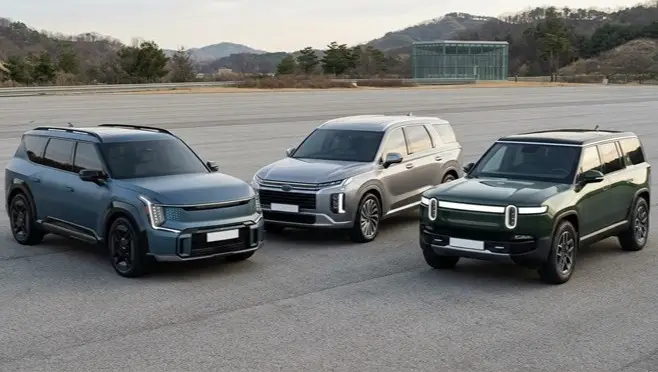
Kia EV9: A three-row electric SUV with seating for up to seven or eight passengers depending on configuration. Kia offers multiple trims with varying range estimates and both single- and dual-motor drivetrain options. Check Kia’s official site for current EPA range and pricing by trim.
Hyundai IONIQ 9: Hyundai’s three-row electric SUV, built on the same E-GMP platform as the IONIQ 5 and 6. It offers three-row seating with a focus on efficiency and fast-charging capability. Confirm current range and pricing through Hyundai’s official source, as these figures are updated periodically.
Rivian R1S: A premium three-row electric SUV with strong off-road capability and multiple battery pack options affecting range. Pricing sits well above mainstream three-row SUVs, positioning it as a more premium alternative.
Chevrolet Equinox EV: Worth mentioning directly, since it’s Chevrolet’s own electric SUV — but it’s important to note this is a two-row compact electric SUV, not a three-row family hauler. It’s a relevant option if you want an electric Chevrolet badge today but don’t need three rows of seating.
Each of these alternatives has its own tradeoffs in price, range, and available features, so cross-shopping based on your specific seating, budget, and charging needs matters more than brand loyalty alone.
Should You Wait for a Chevy Traverse EV?
This comes down to your timeline, charging access, and how badly you need three-row seating right now. If you need a family SUV in the near term and don’t have a confirmed reason to believe an electric Traverse is imminent, it generally makes more sense to evaluate the current gas-powered Traverse or an already-available three-row EV like the Kia EV9 or Hyundai IONIQ 9. Waiting indefinitely for an unannounced product carries real opportunity cost, especially if your current vehicle needs replacing soon.
If you’re flexible on timing and specifically want a Chevrolet-badged electric three-row SUV, the most reliable approach is to monitor Chevrolet’s official newsroom and GM’s investor communications for future announcements, rather than relying on rumor sites or speculative articles. GM has shown clear intent to expand its EV lineup, but intent alone doesn’t guarantee a specific nameplate or launch window.
Consider these questions before deciding:
- Do you have reliable access to home or public charging?
- Does your household regularly drive long highway distances that would benefit from a gas vehicle’s quicker refueling?
- Is three-row seating a non-negotiable requirement right now, or can you wait a model year or two?
- Would a smaller electric Chevrolet, like the Equinox EV, meet your needs if three rows aren’t strictly necessary?
Your answers will likely point toward either the current gas Traverse, an already-available three-row EV competitor, or a wait-and-see approach if you’re not in a rush.
Frequently Asked Questions
Q.1. Is the 2026 Chevy Traverse fully electric?
No. The 2026 Chevrolet Traverse is only available with a gasoline-powered 2.5-liter turbocharged engine. Chevrolet has not announced an electric version of the Traverse for the 2026 model year.
Q.2. How much will the Chevy Traverse EV cost?
There is no official price, because no electric Traverse has been announced. The gas-powered 2026 Traverse starts in the mid-$30,000s before destination charges, taxes, and fees.
Q.3. What is the Chevy Traverse EV’s estimated range?
No range estimate exists, since Chevrolet has not confirmed an electric Traverse. Any range figures circulating online are speculative and not based on official EPA testing or Chevrolet data.
Q.4. When will the electric Traverse be released?
Chevrolet has not announced a release date for an electric Traverse. Any specific launch date claims should be treated as unverified until confirmed through Chevrolet’s official newsroom.
Q.5. Does the 2026 Traverse need to be plugged in?
No. The current 2026 Traverse is a standard gasoline vehicle and does not require charging. It refuels at gas stations like a traditional SUV.
Q.6. Does Chevrolet make an electric three-row SUV?
Not currently. Chevrolet’s EV lineup includes two-row models like the Equinox EV and Blazer EV, but no three-row electric SUV has been confirmed as of this writing.
Q.7. What is the best electric alternative to the Traverse?
The Kia EV9 and Hyundai IONIQ 9 are currently available three-row electric SUVs worth considering, while the Rivian R1S offers a premium option. Compare official specs and pricing directly through each manufacturer’s website.
The 2026 Chevy Traverse EV doesn’t exist yet — at least not as a confirmed, official Chevrolet product. The current Traverse lineup runs exclusively on a gasoline-powered turbocharged engine, and no price, range, battery size, or release date has been announced for an electric version.
If you need a three-row family SUV today, your realistic choices are the proven gas-powered Traverse or an already-available three-row electric SUV from Kia, Hyundai, or Rivian. If you specifically want a Chevrolet EV badge and don’t need three rows, the Equinox EV is worth a look. For the most accurate, up-to-date information on any future electric Traverse, check Chevrolet’s official newsroom directly rather than relying on speculation — and until that announcement comes, approach any “Traverse EV” pricing or specs you encounter online with healthy skepticism.
Related Post