A used Hyundai Tucson is an appealing buy. It offers flexible cargo space, a comfortable ride, a long list of driver-assistance features and, depending on the version, excellent fuel economy. The Tucson’s wide range of model years and powertrains also makes shopping more complicated. A 2021 gas model, a 2023 hybrid and a 2025 turbo trim can feel like three different vehicles, and each has its own inspection priorities. This guide explains where the Tucson’s real risks are, how to tell documented recalls from owner complaints, and how to check hybrid battery health without relying on the dashboard. The goal is to help you avoid an expensive mistake before you sign anything.
Is a Used Hyundai Tucson Worth Buying in 2026?
For many buyers, yes. The Tucson’s cabin is roomy for its size, the rear seat folds in useful configurations, and the ride is generally composed on highways. Newer model years offer large infotainment screens, wireless smartphone connectivity on some trims and driver-assistance systems that can make daily driving less tiring.
Fuel economy is another draw. Gasoline Tucsons are reasonably efficient for their class, and hybrid and plug-in hybrid versions can deliver significantly better city numbers. Verify exact EPA ratings for the year, trim and drivetrain you’re considering at fueleconomy.gov.
The downsides are real, though. Used prices for recent Tucsons remain higher than for older compact SUVs. Infotainment systems can be laggy or buggy, and some owners find the menus frustrating. Turbocharged trims and the dual-clutch transmissions used on some of them require more attentive maintenance and a careful test drive. Hybrid models add a high-voltage battery system that a general mechanic may not know how to evaluate. None of this makes the Tucson a bad choice, but it means you should shop with a plan rather than a bargain-hunting impulse.
Which Hyundai Tucson Model Years Should You Consider?
The Tucson has had two major generations in recent years, so start by identifying which one you’re looking at. Check the model year on the VIN decoder or window sticker.
2019–2021: These are third-generation Tucsons. Depending on the year and trim, they were offered with naturally aspirated and turbocharged gasoline engines and automatic or dual-clutch transmissions. Because these vehicles are now several years old, maintenance history matters most. Ask for proof of regular oil changes, timing-related service where applicable and any transmission fluid service. Check whether the car has been subject to engine-related campaigns, since Hyundai has had engine recalls and settlements across several model lines.
2022–2024: These are fourth-generation Tucsons, a major redesign that brought new styling, a larger interior, and gasoline and hybrid options. The hybrid and plug-in hybrid versions were added during this generation’s run, so confirm the powertrain by VIN rather than trusting the listing title. Because this generation is newer, pay close attention to recall completion and to any software updates related to infotainment and electrical systems.
2025: This model year received updates to the fourth-generation vehicle, typically including styling and technology changes. Confirm exactly what changed in the 2025 model year through Hyundai’s official specifications before assuming the 2022–2024 inspection points apply unchanged.
Used 2026: Because the 2026 model year is current, examples on the used market will be limited and generally low-mileage. Low mileage doesn’t eliminate the need for an inspection. Check the in-service date, since it determines the remaining warranty period, and confirm all recall repairs have been completed.
The practical rule: don’t assume that a model year’s reputation applies to every version. Two Tucsons from the same year can have different engines, transmissions and recall histories.
Common problems by generation, reliability by model year, and realistic repair costs.
Which Tucson Generation Are You Looking At?
The generation determines the engine, transmission, and the problems you should check for
Early Third Generation
Available with the 2.0L GDI, 1.6L turbo GDI, and 2.4L GDI engines. The 1.6T has been paired with a 7-speed dual-clutch transmission in some years.
- Watch for dual-clutch shudder
- Check oil consumption on GDI engines
- Confirm engine-related recalls are complete
Refreshed Third Generation
Updated styling, with the 2.4L and 1.6T carried over. Many buyers consider these the most balanced years in this generation.
- Better transmission tuning overall
- Infotainment and sensor software updates are common
- Still check GDI engine maintenance history
Current Generation
A larger, more modern design with a 2.5L non-turbo option, a turbo option, and a hybrid (and later, plug-in hybrid) powertrain. Hybrid models bring the main battery-health questions in this guide.
- Hybrid battery state of health is the key check
- Newer cars are more likely to be under warranty
- Check for software updates on the infotainment system
Common Problems to Check
Owner-reported patterns. Use the VIN and a pre-purchase inspection to confirm what applies to the specific car.
Engine-related recalls (Theta II 2.4L GDI years)
Some Theta II GDI engines in Hyundai and Kia models have been subject to recalls and a class action settlement over connecting rod bearing failure. Confirm the VIN shows completed recall work before buying.
Hybrid battery degradation (hybrid models)
High-voltage batteries lose capacity over time, especially with heat exposure, frequent fast charging (PHEV), or long periods of deep discharge. Check state of health with a scan tool before you buy.
Dual-clutch shudder and hesitation
Reported on 7-speed dual-clutch transmissions in some earlier years. Look for jerking at low speed, slow engagement from a stop, or a shudder during light acceleration.
Oil consumption on GDI engines
Direct-injection engines can burn oil between changes. Check the dipstick at the viewing and after the test drive, and ask for oil change records.
12V battery drain and failure
Hybrids and newer electronics can pull power when parked. A weak 12V battery can cause warning lights, a slow start, or random electrical faults that look bigger than they are.
Infotainment freezing and sensor glitches
Touchscreens can freeze or reboot, and parking sensors or the backup camera can misreport. Software updates or a dealer reset usually fix these.
Reliability at a Glance
Relative ratings based on commonly reported ownership patterns. Individual cars vary.
Battery Health Checklist
Two batteries matter on a used Tucson: the 12V battery that powers electronics, and the high-voltage battery on hybrid models.
12V Battery (all models)
- Check the date sticker on the battery; over 4 years old is a flag
- Load-test the battery during the pre-purchase inspection
- Watch for slow cranking, dim lights, or intermittent warning lights
- Budget roughly $150–$300 for a replacement, installed
High-Voltage Battery (hybrid)
Interactive Buying Checklist
Tick items off as you go. Your progress is saved in this browser.
Phase 1: Before You Visit
Phase 2: At the Viewing
Phase 3: Test Drive
Phase 4: Paperwork and Closing
Repairs & Cost Estimates
Rough ranges to help you negotiate. Actual costs depend on region, shop, and parts choice.
| Repair | Typical Range | Notes |
|---|---|---|
| Oil change (synthetic) | ~$70–$120 | GDI engines benefit from regular changes on schedule. |
| Transmission fluid / dual-clutch service | ~$150–$400 | Ask whether the service was done on schedule and with the correct fluid. |
| Spark plugs (GDI) | ~$250–$500 | Check service records. Labor varies by engine. |
| Carbon cleaning (GDI, if needed) | ~$200–$500 | Only if symptoms appear. Not a routine fix for every car. |
| Hybrid cooling vent cleaning | ~$50–$150 | Low-cost preventive step that’s easy to overlook. |
Inspection Guide: What to Ask a Mechanic
Give your mechanic this list. It covers the Tucson-specific areas most often missed.
Scan for codes
Read stored and pending codes, including any transmission, hybrid, or emissions codes.
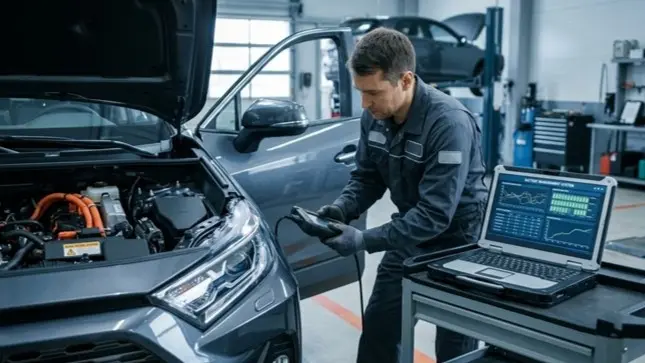
Check hybrid SOH
On hybrid models, get the battery state of health and cell balance readings, not just a pass or fail.
Load-test the 12V
Test under load, check the charging system voltage, and look for parasitic drain.
Inspect for leaks
Look at valve cover gaskets, oil pan, and the rear main seal area for oil seepage.
Check the undercarriage
Check suspension bushings, exhaust hangers, and brake lines for rust or damage.
Review accident repair
Look for paint thickness differences and mismatched panels that could signal past collision repair.
Practical Buying Tips
1. Prioritize maintenance records
A Tucson with complete oil change and service history is often a better buy than a lower-mileage car with gaps.
2. Confirm recalls with the VIN
Dealers can check open recalls and any extended warranties for your specific car, not just the model year.
3. Ask for the hybrid warranty status
If the car is a hybrid, confirm whether the hybrid component warranty is still active and whether it transfers to you.
4. Don’t skip the cold start
Problems like rattles, rough idle, and oil ticking often show up only when the engine is cold.
5. Use repair estimates to negotiate
If the inspection finds brakes, suspension, or a weak 12V battery, use the quoted costs to justify a lower price.
6. Budget for the first year
Plan for maintenance and possible repairs in addition to the purchase price, taxes, registration, and insurance.
A used Tucson can be a strong buy, especially the 2019–2020 years or a well-documented 2022+ model. The main risks are engine recall status on earlier GDI years, dual-clutch behavior in some 2016–2018 cars, and hybrid battery health on hybrid models. Confirm recalls by VIN, get a pre-purchase inspection with a hybrid SOH scan where applicable, and price in battery and brake costs before you make an offer.
Hyundai Tucson Hybrid Battery Degradation Symptoms
Watch for these warning signs during the test drive and inspection:
- The gas engine runs more often than expected, especially in light traffic
- Fuel economy is noticeably worse than the EPA rating for similar driving conditions
- Hybrid system warning messages or “check hybrid system” alerts appear
- Power delivery feels inconsistent, with surging or hesitation during electric-only driving
- The vehicle loses power sharply or goes into a limited mode
- Cooling fans run loudly or constantly
Degradation can be gradual, and some symptoms have other causes. A hybrid with some capacity loss may still be serviceable. The point is to gather evidence, not to rely on a single symptom.
Hyundai Tucson 12V Battery vs. Hybrid Battery
These are two different batteries with different jobs. The 12V battery is a conventional battery that powers lights, locks, electronics and the computers that start the hybrid system. The hybrid traction battery is a high-voltage pack that stores energy for the electric motor. A weak 12V battery can cause confusing warning messages, and a failing hybrid battery can cause power loss. Don’t assume one problem is the other, and have both tested.
How Much Does a Hyundai Tucson Hybrid Battery Replacement Cost?
I’m not going to quote a number, because replacement costs depend on the model year, whether the pack is new, remanufactured or refurbished, labor rates in your area, and whether other components are affected. Get a written estimate that breaks out parts, labor and any diagnostic fees. If a seller claims a battery replacement is “cheap,” ask for documentation and confirm whether the replacement unit is covered by a warranty.
Is the Hyundai Tucson Hybrid Battery Warranty Transferable?
Hyundai’s hybrid component coverage is generally described in the warranty booklet, and the terms can differ for the original owner and for later owners. Don’t assume the original-owner term carries over unchanged. Look up the vehicle’s in-service date and mileage, confirm the remaining coverage with a Hyundai dealer using the VIN, and get the answer in writing if the seller is relying on it as a selling point. Warranty terms can also change between model years, so verify them directly from Hyundai’s official documentation.
What Mileage Is Too High for a Used Hyundai Tucson?
There’s no universal number. A well-documented Tucson with 90,000 miles can be a better buy than a lower-mileage car with missing service records. Mileage matters most when paired with maintenance history, engine condition and transmission behavior.
Highway miles are generally easier on a vehicle than heavy city driving, since steady speed reduces stop-and-go wear on brakes, clutches and transmissions. Hybrids tend to behave differently: they may handle city driving more efficiently, but their battery and cooling systems still need attention regardless of driving style. For suspension wear, look at the condition of the bushings and the vehicle’s ride quality rather than mileage alone. Above roughly 100,000 miles, insist on a complete service record and a thorough inspection before you negotiate on price.
Used Hyundai Tucson Gas vs. Hybrid
The right powertrain depends on how you drive and how much complexity you’re willing to manage. Fuel economy figures are EPA estimates and should be verified for each model year and trim.
| Factor | Gasoline Tucson | Hybrid Tucson (HEV) | Plug-In Hybrid Tucson (PHEV) |
|---|---|---|---|
| High-voltage traction battery | No | Yes | Yes, larger than HEV |
| Charging | Fuel only | Fuel only; battery charged by engine and braking | Plug in for electric-only driving |
| Fuel economy pattern | Relatively consistent across city and highway | Often strongest in city driving | Depends heavily on charging habits |
| Maintenance complexity | Conventional | Adds battery and cooling checks | Adds battery, charging port and cooling checks |
| Inspection focus | Engine, transmission, brakes | Hybrid battery health and cooling | Battery health, charging system and cooling |
| Best for | Highway-heavy drivers, budget-focused buyers, those who want simpler ownership | Mixed or city commuters who want better fuel economy without plugging in | Short-commute drivers with reliable home charging |
| Key risk | Engine and transmission condition | Battery health and repair cost if an issue develops | Charging habits, battery health and more complex components |
Gasoline Tucsons suit buyers who want a simpler powertrain and who drive mostly on highways, where the efficiency gap narrows. Hybrids suit commuters who spend a lot of time in traffic. PHEVs can be excellent for drivers with short daily trips and reliable home charging, but they demand more attention to the battery and charging hardware.
Hidden Costs of Owning a Used Hyundai Tucson in 2026
Purchase price is only part of the cost. Plan for these expenses:
- Maintenance: Oil changes, filters, fluids, brake service and scheduled inspections. Costs depend on the model year, your local labor rates and whether you use a dealer or an independent shop.
- Tires: SUV tires can be expensive, and a worn set may need replacement shortly after purchase. Factor in tire age as well as tread.
- Brakes: Pads and rotors wear differently depending on driving style and vehicle weight.
- 12V battery: Usually a moderate expense, but worth budgeting for an older vehicle.
- Hybrid battery: Potentially the largest unexpected expense on a hybrid or PHEV if it isn’t covered by warranty. Confirm coverage before buying.
- Insurance: Premiums vary by driver, location, coverage and vehicle. Get quotes before buying.
- Diagnostics: A professional hybrid or transmission diagnosis can cost more than a standard code reading, but it’s often worth paying for before purchase.
Avoid relying on generic repair-cost estimates from articles. Ask a local shop for quotes on the specific services you expect to need, and get the quotes in writing.
FAQs/ Frequently Asked Questions
Q1: Is the Hyundai Tucson hybrid battery covered by warranty on a used model?
Coverage depends on the vehicle’s in-service date, mileage and ownership status. Original-owner and later-owner terms can differ, so confirm the remaining coverage using the VIN with a Hyundai dealer.
Q2: How do I check Hyundai Tucson hybrid battery health?
Ask a dealer or hybrid-experienced shop to read battery management system data, which can show state-of-health information. A dashboard charge level does not show battery health.
Q3: Are there recalls I should check on a used Hyundai Tucson?
Yes. Enter the VIN at NHTSA’s recall lookup and confirm completed repairs with a Hyundai dealer. Check for tow-wiring, electric oil-pump controller and console wiring campaigns, depending on the model year.
Q4: Is a used Hyundai Tucson hybrid better than a gas model?
It depends on your driving. Hybrids often perform best in city driving, while gas models are simpler and may suit highway-focused drivers. Compare EPA ratings for each model year and budget for battery inspection.
Q5: What mileage is too high for a used Hyundai Tucson?
There’s no fixed cutoff. Complete maintenance records, a clean inspection and a healthy engine, transmission and hybrid battery matter more than mileage alone.
A used Hyundai Tucson can be a smart buy if you choose the right model year and powertrain and verify its condition. Buyers who want a practical, comfortable SUV with simpler ownership should look at a well-documented gasoline Tucson, especially one with a clean inspection and completed recalls. Buyers who spend a lot of time in traffic and want better city fuel economy should consider a hybrid, but only after a professional battery health report and a careful review of cooling and maintenance records. A plug-in hybrid suits drivers with short commutes and reliable home charging, provided the battery and charging system check out.
Walk away if the seller can’t provide a VIN-based recall history, refuses a pre-purchase inspection, claims a hybrid battery is “fine” based only on the dashboard, shows unexplained gaps in maintenance, or has a transmission that shudders or hesitates on the test drive. Those red flags are much more expensive to discover after you’ve signed.
So is the used Hyundai Tucson buying guide 2026 worth following? Yes. A Tucson is worth buying when its condition, maintenance history, recall status and battery health (for hybrids) all check out. If any of those are unclear, the price discount isn’t enough to justify the risk.
Related Post