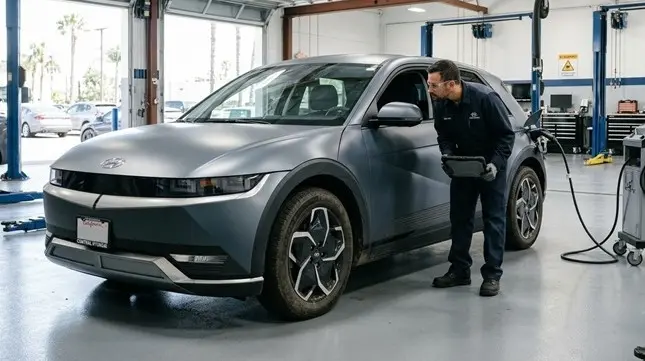
A used Hyundai can be one of the smartest purchases a California driver makes. Depreciation has already done some of the damage, the lineup covers everything from budget sedans to three-row SUVs and electric crossovers, and many models offer strong fuel economy. But the lowest advertised price can hide expensive problems. Missing maintenance records, an unresolved recall, a title problem, or a smog certificate that doesn’t match the car can turn a bargain into a headache.
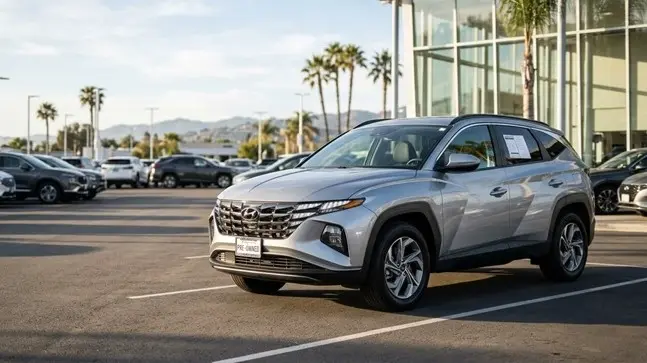
This guide walks through the steps that matter most for California buyers: choosing a model and model year, checking the VIN, understanding Smog Check rules, handling title and registration paperwork, inspecting the car, comparing dealer and private-party sales, and calculating the true out-the-door cost. Legal requirements are noted as such. Buying suggestions are opinion based on common practice, not official rules.
1. Why Consider Buying a Used Hyundai in California?
The biggest advantage of a used car is that someone else absorbed the steepest depreciation. A vehicle that is a few years old has usually lost a significant share of its original sticker value, which means you can often get more car for the money than you would buying new.
Hyundai’s recent lineup adds some appeal. Many models offer modern safety equipment, practical interiors and fuel-efficient engines, and some are available as hybrids or fully electric vehicles. In a state where gas prices and electricity rates both matter, that variety gives buyers useful choices.
Still, a used Hyundai’s value depends on its history, not its badge. A well-maintained vehicle with complete service records is almost always a better buy than a cheaper car with an unknown past. Before you fall for a low price, ask how the car was maintained, who owned it, and whether the work was done on schedule. Those answers tell you more about future repair bills than the model name does.
2. Which Used Hyundai Models Are Worth Considering?
Each Hyundai serves a different buyer, so start with your needs rather than the model you saw in an ad.
- Elantra: A compact sedan that suits commuters and first-time buyers who want low running costs and easy parking in dense cities.
- Sonata: A midsize sedan with more rear-seat room and trunk space, a good fit for drivers who spend long days on freeways like I-5 or I-10.
- Tucson: A compact SUV with flexible cargo space, a practical choice for small families and buyers who want a higher seating position.
- Santa Fe: A midsize SUV that adds more interior room, and in some years, a third row. It suits growing households.
- Kona: A subcompact crossover that is easy to park and suits city dwellers. It is less roomy than the Tucson or Santa Fe.
- IONIQ 5: A fully electric crossover that works well for buyers with reliable home or workplace charging. Battery health matters more here than on any gas model.
- IONIQ 6: A fully electric sedan with a sleek profile and strong efficiency ratings. Like the IONIQ 5, it requires careful battery and charging evaluation.
Reliability varies by model year, engine and transmission. Don’t assume that a model’s reputation applies to every year. Check each specific vehicle’s history, recall status and service records. The sections below cover the model-specific items worth researching.
3. What Model Year of Used Hyundai Should You Buy?
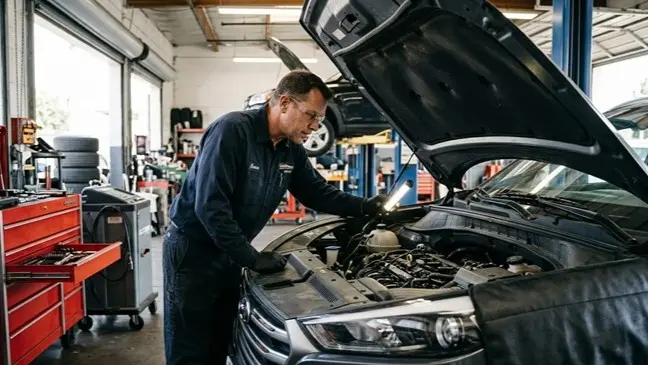
Model years matter more than many buyers expect. A redesign can bring new engines, transmissions, or electrical systems, and early production years sometimes carry issues that later ones fix. Compare the model years you’re considering and look at each one’s recall history, technical service bulletins and owner-reported problem patterns, using NHTSA data and reputable automotive sources.
Service history often matters more than age. A four-year-old Tucson with documented oil changes, timely brake service and a completed recall repair may be a safer choice than a newer model with missing records. Ask for receipts, check whether maintenance was done on schedule, and note any gaps. A long break between services can be a warning sign, even if the odometer reading looks reasonable.
A complete checklist, real cost breakdown,and practical buying tips for the Golden State.
Complete Buyer Checklist
Tick items off as you go. Your progress is saved in this browser.
Phase 1: Before You Visit
Phase 2: At the Viewing
Phase 3: Test Drive
Phase 4: Paperwork and Closing
Real Costs Beyond the Sticker Price
Budget for these on top of the purchase price. Figures are estimates.
| Cost Item | Typical Range | Notes |
|---|---|---|
| DMV transfer / title fee | Roughly $15 + fees | Fee amounts change. Check the DMV fee schedule. |
| Vehicle registration | Base fee plus VLF | The vehicle license fee is based on the car’s value, so newer or pricier cars cost more to register. |
| Local use tax | ~8–10.75% of price | Paid at the DMV when you register a private-party purchase. Dealers collect sales tax at the time of sale. |
| Smog check | ~$50–$100 | Required before most transfers. The seller usually provides the certificate in a private sale. |
| Auto insurance | Varies widely | Get quotes before buying. Premiums depend on age, driving record, and ZIP code. |
| Out-of-state VIN verification | Small fee | Required when registering a car that came from another state. |
Smog Check in California
How the process works and what buyers should know
Check if it’s required
Most gasoline vehicles require a smog check on a change of ownership, but many newer cars are exempt. Ask the seller or check with the BAR.
Get a current certificate
A smog certificate used for a transfer must be dated within 90 days before the sale. A certificate that’s too old won’t work.
Look for red flags
A “fail” result, a car recently repaired right before the test, or a seller who wants to skip the test are all warning signs.
Plan for repairs
If a car fails, the seller may cover repairs under the sale agreement. Otherwise, ask for a price reduction that covers the estimated cost.
What a Pre-Purchase Inspection Should Cover
Ask the mechanic to check these specific areas on any Hyundai
| Area | What to Look For |
|---|---|
| Engine | Oil leaks, oil level after a run, abnormal noises on cold start, and a clean diagnostic scan. |
| Transmission | Smooth shifts, no slipping, and no shuddering at low speed. Check the fluid condition. |
| Brakes and tires | Pad thickness, rotor condition, and even tire wear. Uneven wear can point to alignment or suspension issues. |
| Suspension | Worn struts, bushings, or control arms. These are common at higher mileage. |
| Body and frame | Signs of collision repair, mismatched paint, rust on frame rails, and panel gaps. |
| Electrical and tech | Infotainment, backup camera, driver-assist sensors, and any warning lights. |
Hyundai Reliability by Model
Commonly reported patterns. Model years matter a lot, so check the specific year you’re considering.
Hyundai Elantra
Efficient, affordable, and usually simple to maintain. Check that any engine recalls on earlier years were completed.
Hyundai Santa Fe (2019+)
Roomy and well-equipped. Verify the maintenance history and confirm the transmission operates smoothly.
Hyundai Tucson (2016–2018)
Reported issues with engine and transmission behavior in some years. Be thorough with the inspection and ask for complete service records.
Hyundai Sonata (2011–2019)
Subject to engine-related recalls and an extended warranty for affected engines. Confirm the VIN shows completed recall work before buying.
Hyundai Veloster / Elantra GT (2012–2017)
Dual-clutch transmissions have reported shudder, hesitation, and clutch issues. A low-speed test drive is essential.
Hyundai Kona (2018+)
Good efficiency and features. Check the battery and charging system on any hybrid or EV variant.
Known Hyundai Problems to Check For
Specific issues to verify, with severity ratings
Theta II engine failure (high priority)
Connecting rod bearing problems on certain 2.0L and 2.4L GDI engines can cause knocking and engine seizure. Verify recall and warranty work through the VIN.
Theft vulnerability (high priority)
Some 2011–2021 Hyundais lack an engine immobilizer and have been targeted by thieves. Ask whether the anti-theft software update was installed, and get an insurance quote before you buy.
Dual-clutch shudder (medium priority)
Low-speed jerking or hesitation in DCT-equipped models. Test at slow speeds in stop-and-go traffic.
Oil consumption (medium priority)
GDI engines can burn oil. Check the dipstick and ask for oil change receipts. Frequent top-offs are a warning sign.
Suspension and steering wear (medium priority)
Common at higher mileage. Listen for clunks over bumps and check for uneven tire wear.
Infotainment and sensor glitches (lower priority)
Touchscreens may freeze, and parking sensors can give false readings. These are usually fixable with software updates or minor repairs.
Practical Buying Tips for California
1. Choose dealer or private sale deliberately
Dealers handle more paperwork but usually charge more. Private sellers can offer lower prices, but you handle the DMV steps yourself.
2. Check the title before paying
Confirm the seller’s name matches the title, the VIN matches, and there are no liens or unusual brands.
3. Don’t rely on the smog certificate alone
Smog shows emissions compliance, not mechanical health. Your pre-purchase inspection covers the rest.
4. Understand “as-is” sales
Most used cars are sold as-is. California’s Used Car Lemon Law can offer limited protection for dealer sales, depending on the car’s age, mileage, and price. Read the Buyers Guide posted on the car.
5. Watch out for out-of-state cars
Cars from snowy or coastal-salt states may have rust, and you’ll need VIN verification to register them in California.
6. Negotiate with repair numbers
If the inspection finds $800 in needed brake and suspension work, use that figure to justify a lower price.
7. Get insurance quotes before signing
Costs vary a lot between models, and theft-prone Hyundais may cost more to insure in some areas.
8. Don’t miss the 10-day deadline
Late transfers can lead to penalties. Schedule your DMV visit or online appointment right after you buy.
Buying a used Hyundai in California can be a smart move, especially a newer Elantra, Santa Fe, or Kona. The real risks depend on the model year. Earlier Theta II engines and dual-clutch transmissions need careful verification. Before you buy, confirm recall status, get a pre-purchase inspection, check the smog certificate’s date, and budget for taxes, registration, and insurance. Then transfer the title within 10 days.
5. California Smog Check Requirements When Buying a Used Hyundai
Smog certification is one of the most misunderstood parts of buying a used car in California. Rules come from the California Bureau of Automotive Repair (BAR) and the DMV, and they distinguish between two situations: a change of ownership and a registration renewal. Verify current rules on bar.ca.gov and dmv.ca.gov before you buy, since eligibility depends on the vehicle’s model year and the date of the transaction.
Change of ownership: When a vehicle changes hands, it generally needs a smog certificate unless it qualifies for an exemption. The exemption is generally available for vehicles that are four model years old or newer at the time of the transfer. For example, if a transfer takes place in 2026, the model year 2022 and newer vehicles would generally fall within that window, though you should confirm the calculation with the DMV because the count is based on model year.
Registration renewal: Separate rules apply when you renew registration. Vehicles that are eight model years old or newer are generally exempt from the biennial smog check at renewal. Older vehicles typically need a smog check every two years. Buying a vehicle that is exempt for transfer does not automatically mean it is exempt for every future renewal, so plan ahead.
Dealer responsibilities: Licensed dealers must smog-certify used vehicles they sell when the vehicle doesn’t qualify for an exemption. The certificate is part of the sale paperwork, and the dealer is responsible for completing it correctly.
Private-party responsibilities: In a private sale, the seller is generally responsible for providing a valid smog certificate when one is required. Buyers should not accept a vague promise that a smog check “will be done later.” Ask for the certificate itself before paying.
How to verify a certificate: Check that the VIN and odometer reading on the certificate match the car. Confirm the inspection date falls within the valid window, which is generally 90 days before the transfer. Ask the station that issued it to confirm the record if anything looks off. Be cautious of any paperwork that has been altered or doesn’t match the vehicle.
Electric vehicles: Battery electric vehicles like the IONIQ 5 and IONIQ 6 do not require smog checks because they have no tailpipe emissions. Hybrids are different. A gasoline-hybrid Tucson or Sonata still has an engine and generally must meet smog requirements like any other gas vehicle. Plug-in hybrids follow the same logic. Don’t assume a hybrid is exempt just because it’s electrified.
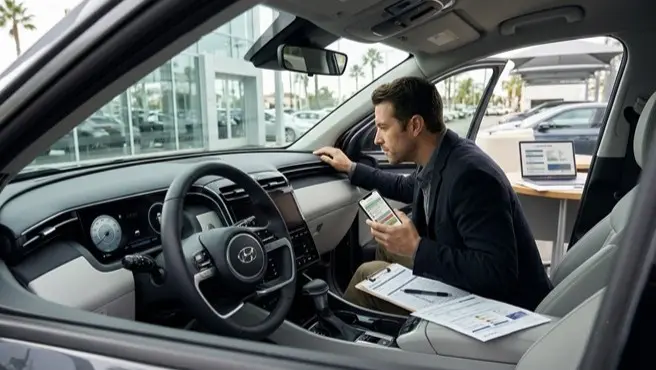
Hyundai-Specific Problems to Research Before Purchasing
Every used car has potential issues, and Hyundai is no exception. Research the specific year, engine and transmission you’re considering, and don’t generalize from one model to another. The following examples are starting points, not a full list.
- Theta II GDI engines: Certain earlier model years equipped with Theta II gasoline direct-injection engines were the subject of recalls, service campaigns and a class action settlement. Check the VIN on NHTSA’s recall site and ask whether any engine-related campaigns were completed.
- Oil consumption: Some engines in certain years have been associated with excessive oil use. Ask for oil change receipts, check the dipstick, and ask the mechanic to look for signs of heavy consumption.
- Dual-clutch transmission behavior: Some Hyundai models have used dual-clutch transmissions. Owners and technicians have reported hesitation, shuddering or rough engagement on certain models. Ask for service records, especially any software updates or clutch-related repairs.
- Battery recalls on electric models: Some earlier Kona Electric model years were subject to a battery-related recall. Confirm the repair was completed through NHTSA’s VIN lookup.
- Anti-theft concerns: Some Hyundai models from certain earlier years lacked engine immobilizers, and Hyundai has offered software updates and anti-theft-related measures. Confirm whether the vehicle has been updated.
- Electrical and infotainment systems: Test every screen and connection. Software problems can sometimes be resolved, but they can also indicate larger electrical issues.
- Steering, suspension and brakes: These are common wear items, so check them carefully on any high-mileage vehicle.
Before buying, confirm recall completion, search for technical service bulletins for the specific model year, and ask the dealer or seller to show you the repair history. If the answers are vague, treat that as a warning.
Hyundai Certified Pre-Owned vs. Regular Used Hyundai: Which Is Better?
Hyundai’s Certified Pre-Owned (CPO) program offers a higher level of protection than a typical used-car sale, but it isn’t the right choice for every buyer.
Eligibility: CPO vehicles must meet Hyundai’s age and mileage requirements and pass a manufacturer-defined inspection. Not every used Hyundai qualifies.
Inspection: CPO vehicles are inspected against Hyundai’s standards before certification, which can reduce the risk of undisclosed mechanical issues. An independent inspection is still worth doing.
Warranty coverage: CPO programs extend certain powertrain coverage from the vehicle’s original in-service date, subject to age and mileage limits. The exact terms vary, so review the written warranty and Hyundai’s current CPO information before assuming any coverage. Don’t assume every used Hyundai carries the original 10-year/100,000-mile powertrain warranty. That coverage generally applies to the original owner, and coverage for later owners depends on the vehicle’s age and the program.
Roadside assistance: CPO programs commonly include roadside assistance. Confirm the coverage period and terms with the dealer.
Vehicle history: Certified vehicles typically come with a vehicle history report. Review it yourself rather than relying on the dealer’s summary.
Price: CPO vehicles generally cost more than comparable non-certified vehicles. Whether the premium is worth it depends on the car’s age, mileage and condition, and how much you value the warranty.
A CPO vehicle can be the smarter choice for buyers who want predictable coverage, lower risk and fewer surprises in the first few years. A non-certified vehicle can offer better value for buyers who have a trusted mechanic, a clear inspection and a realistic budget for repairs.
How Much Does It Cost to Buy a Used Hyundai in California?
The advertised price is only the starting point. Your real cost includes:
- Advertised vehicle price: The number that draws you in, which may not include fees or add-ons
- Sales and use taxes: Based on the statewide base rate plus local district taxes
- DMV fees: Registration, transfer and vehicle license fees
- Dealer documentation charges: Fees the dealer charges for processing paperwork. California caps some of these charges, and the cap is adjusted over time. Ask what the fee is before you negotiate.
- Smog certification costs: If required, the cost varies by station
- Insurance: Premiums vary by driver, location, vehicle and coverage
- Maintenance and repairs: Oil changes, brake service, tires and any deferred repairs found during inspection
- Tire replacement: A set of quality tires can cost a meaningful amount, especially for SUVs and electric crossovers
- Immediate post-purchase expenses: Items like an inspection, a set of fluids or a battery replacement, if needed
Ask for an itemized out-the-door price in writing. It should list the vehicle price, taxes, DMV fees, dealer fees and any add-ons separately. Dealers sometimes add accessories, extended warranties or paint protection that you didn’t request, so read every line before signing.
Avoid using average-price statistics from memory. Instead, compare current listings for the same model, year, trim, mileage and region, and record the date and source of each comparison.
Buying a Used Hyundai From a Dealer vs. Private Seller
Price: Private-party sales often have lower sticker prices because the seller avoids dealer overhead. Dealers can offer financing, trade-in options and certified programs, which may justify a higher price.
Condition and inspection: Dealers are more likely to have reconditioned vehicles, but reconditioning doesn’t guarantee a clean history. Private sellers may offer a more personal history, but they may also have less documentation. Either way, get an independent inspection.
Warranty availability: Dealers may offer a limited warranty, a Certified Pre-Owned warranty or a third-party service contract. Private sales are usually as-is.
Smog certification: Dealers handle certification as part of the sale. Private sellers must provide a valid certificate when one is required. Don’t accept a vague promise.
Title transfer paperwork: Dealers typically handle DMV paperwork for you. In a private sale, you’re responsible for completing the transfer within the required window.
Dealer disclosures: Dealers selling used vehicles must display an FTC Buyers Guide on the window. The guide states whether the vehicle is sold with a warranty or as-is, and it should be part of your sale documents. Read it before you negotiate. You can find more information at consumer.ftc.gov.
Negotiation opportunities: Both dealers and private sellers may negotiate, but private sellers often have more room to adjust the price, especially if you can pay promptly.
The warranty and as-is question: Read the written warranty carefully. If the car is sold “as is,” you generally accept the cost of repairs after the sale. California’s Song-Beverly Consumer Warranty Act includes some protections for certain used vehicles sold by dealers, depending on the sale and the vehicle. Confirm your rights with the California Department of Consumer Affairs before assuming any protection applies.
Test-Drive Checklist: What Should You Notice?
A test drive should include a cold start, city streets and a highway stretch. Use this checklist:
- Cold-start behavior: Listen for unusual noises, rough idle or smoke from the exhaust.
- Acceleration: Look for hesitation, surging or lag. The engine and transmission should respond smoothly.
- Gear changes: Shifts should feel predictable. Report any slipping, banging or delayed engagement.
- Steering: The car should track straight, with no pulling or excessive play.
- Braking: Brakes should feel firm, stop evenly and avoid pulsing or vibration.
- Road noise: Note whirring, humming or clunking, especially at highway speeds.
- Air conditioning: Test cold and hot air on multiple settings.
- Parking cameras and sensors: Confirm the image is clear and sensors respond.
- Infotainment: Check connectivity, Bluetooth pairing, navigation and touchscreen response.
- Warning lights: Confirm none stay on after the car is running.
Drive on both city streets and freeways if possible. Some problems appear only at higher speeds, and some transmission or steering issues show up only during stop-and-go traffic. Bring a second person if you can, so one of you can focus on the car’s behavior.
Final Used Hyundai Buying Checklist for California Buyers
Save or print this checklist before you visit a seller:
- VIN verified against the title, registration and vehicle
- Clean title confirmed, with no salvage, rebuilt or flood brands
- Vehicle history report reviewed
- Recall status checked on NHTSA.gov
- Smog requirements confirmed for the transfer and future renewal
- Independent pre-purchase inspection completed
- Test drive completed on city streets and highways
- Warranty terms reviewed in writing
- Bill of sale, odometer disclosure and transfer forms prepared
- Out-the-door price confirmed in writing
Frequently Asked Questions
1. Is buying a used Hyundai a good idea in California?
It can be, especially if you find a well-maintained vehicle with a clean history and a fair price. Condition, service records and total ownership costs matter more than the brand name.
2. What is the best used Hyundai model to buy?
It depends on your needs. Commuters may prefer the Elantra, families may consider the Tucson or Santa Fe, and buyers who want electric driving may look at the IONIQ 5 or IONIQ 6. Compare specific model years and check recall history for each.
3. Does a used Hyundai need a smog check in California?
It depends on the model year, the type of transaction and whether the vehicle is electric. Change-of-ownership and registration-renewal rules differ, and battery electric vehicles are generally exempt. Check current BAR and DMV rules before buying.
4. Can I buy a used Hyundai without a smog certificate?
Generally, no, unless the vehicle qualifies for an exemption. Get the certificate before completing the sale, and confirm that it matches the vehicle’s VIN and odometer reading.
5. Is Hyundai Certified Pre-Owned worth the extra money?
It can be, especially if you want manufacturer-backed coverage and a documented inspection. Compare the price premium with the warranty terms and your own tolerance for repair risk.
6. How do I check a used Hyundai for recalls?
Enter the VIN on NHTSA’s recall lookup at nhtsa.gov/recalls. Ask the seller or dealer to confirm that all open recalls have been completed.
7. Can I buy a used Hyundai from a private seller?
Yes. Just be sure to verify the title, get a valid smog certificate when required, complete a bill of sale and transfer the title within the DMV’s deadline.
8. How many miles are too many for a used Hyundai?
There’s no universal cutoff. A well-documented vehicle with high mileage can be a better buy than a low-mileage car with unknown maintenance. Focus on service records and inspection results.
9. Does the original Hyundai warranty transfer to a second owner?
Some coverage may carry over, but the original 10-year/100,000-mile powertrain warranty generally applies to the original owner. Confirm the remaining terms in writing based on the vehicle’s age and mileage.
10. What documents do I need to buy a used car in California?
Typically you’ll need the certificate of title, a bill of sale, odometer disclosure, a valid smog certificate if required, proof of insurance, and the DMV forms for transfer and registration. Confirm the current requirements with the DMV before your visit.
A used Hyundai can be an excellent value for California drivers, but the right purchase depends on the specific car in front of you. Check the VIN, review the title and history report, confirm recall completion, and understand which smog rules apply to the transaction. Get an independent inspection, test drive the car in real driving conditions, and read every page of the paperwork before you sign.
The best used Hyundai isn’t necessarily the cheapest or newest one. It’s the vehicle with documented maintenance, clean history, completed recalls, reasonable out-the-door pricing and the warranty coverage that fits your budget. Choose based on the car’s actual condition, not just the lowest advertised number, and you’ll be far more likely to enjoy it for years.
Related Post