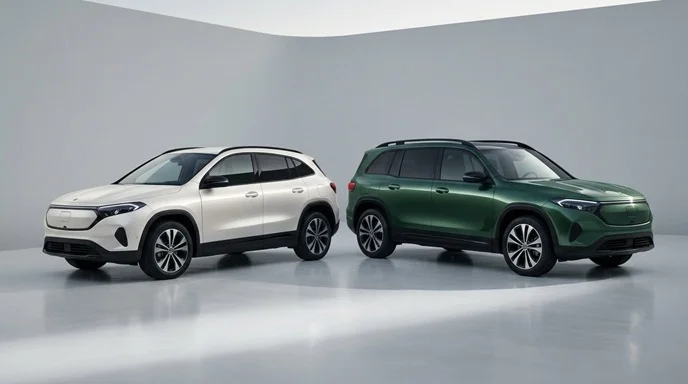
Which Electric SUV Makes More Sense?
Subaru’s electric SUV lineup finally gives shoppers a real choice, and the 2026 Subaru Uncharted vs. 2026 Trailseeker decision is becoming one of the most common questions among buyers exploring the brand’s 2026 EV lineup. Both are built around the same electric architecture shared with Toyota, but they’re tuned for different priorities: the Uncharted is the smaller, more affordable entry point, while the Trailseeker is the larger, standard-AWD model aimed at families and road-trippers.
The core question most shoppers ask is simple: Is it smarter to save money with the compact Uncharted, or pay more for the Trailseeker’s extra space, standard all-wheel drive, and stronger power output? This guide compares official pricing, EPA-estimated range, charging specs, cargo room, and ownership costs so you can match the right Subaru EV to your budget and driving habits.
Note: Both vehicles are newly launched for the 2026 model year. Confirm current pricing, trims, and availability with your local Subaru dealer or Subaru.com before making a purchase decision, as manufacturer figures can be updated after initial announcements.
| Spec | Subaru Uncharted | Subaru Trailseeker |
|---|---|---|
| Starting MSRP + destination | ~$37,995 + ~$1,395 (est.) | ~$44,995 + ~$1,395 (est.) |
| Trims | Premium, Limited | Premium, Limited |
| EPA-estimated range | Up to ~290 mi (FWD, base wheels) | Up to ~260 mi (Premium, 18-in wheels) |
| Horsepower | ~201 hp (FWD) / ~214 hp (AWD) | ~272 hp standard / up to 338 hp (Limited boost mode) |
| Drivetrain | FWD standard, AWD available | AWD standard on all trims |
| Battery | ~74.7 kWh (shared architecture) | ~74.7 kWh |
| DC fast charging | Up to 150 kW, NACS port | Up to 150 kW, NACS port |
| Ground clearance | ~8.0 in (est.) | ~8.3 in (est.) |
| Overall length | ~175 in | ~184 in |
| Passenger capacity | 5 | 5 |
| Max cargo capacity | ~25 cu ft behind rear seat | ~27.7 cu ft behind rear seat / ~65 cu ft max |
| Towing capacity | Not officially rated | Not officially rated |
| Warranty | 3-yr/36k basic, 5-yr/60k powertrain, 8-yr/100k battery | Same coverage |
Figures reflect Subaru’s initial 2026 model-year announcements. Some values are approximate pending final EPA certification and should be confirmed on Subaru’s official trim pages before purchase.
The three biggest differences: price (Trailseeker costs several thousand dollars more), drivetrain (Uncharted offers a cheaper FWD option while Trailseeker is AWD-only), and size (Trailseeker is longer with more cargo room).
2026 Subaru Uncharted vs. 2026 Trailseeker
Range, Price, Specs & Key Differences Between Subaru’s Two New All-Electric SUVs
Why Subaru Is Launching Two EVs at Once
For years, Subaru’s only electric vehicle was the Solterra, a co-developed twin of the Toyota bZ4X. Sales were modest, and critics pointed to its conservative range, slow charging, and lack of Subaru-specific character. For the 2026 model year, Subaru is replacing that single-EV strategy with two distinct ground-up electric SUVs: the Trailseeker and the Uncharted. Rather than being badge-engineered Toyota clones, both vehicles were developed with much heavier Subaru engineering input, each targeting a different kind of buyer within Subaru’s outdoorsy customer base.
The core idea is simple: give adventure-focused, AWD-loyal Subaru customers two different-sized, different-priced entry points into electrification, while keeping the brand’s signature all-wheel-drive capability and rugged styling intact — something the Solterra was criticized for lacking.
Quick Side-by-Side Snapshot
- Built in Lafayette, Indiana (USA)
- Smaller, more affordable footprint
- Single or dual-motor AWD options
- Estimated 250–260 mile range
- Likely eligible for U.S. EV tax incentives
- Softer, more crossover-like styling
- Best Value
- Built in Gunma, Japan (imported)
- Larger, more off-road-styled body
- Standard dual-motor AWD
- Estimated 260+ mile range (Onsen trim)
- Likely not eligible for full federal credit
- More aggressive, Wilderness-adjacent design
- Most Capable
Release Date & Availability
Subaru revealed the Trailseeker first, at the New York International Auto Show in spring 2025, positioning it as the brand’s next-generation electric SUV and a clear step beyond the Solterra. Subaru has indicated the Trailseeker will reach U.S. dealerships as a 2026 model, with production in Japan and deliveries expected to begin in late 2025 or early 2026 depending on region.
The Uncharted was unveiled shortly after and is being built domestically at Subaru of Indiana Automotive (SIA) in Lafayette, Indiana — the same plant that produces the Outback, Ascent, and Impreza. U.S. production gives the Uncharted a meaningful advantage: domestic assembly historically improves eligibility for federal EV tax credits (subject to battery-sourcing rules in effect at the time of sale), something the Japan-built Trailseeker is less likely to qualify for in full.
Both nameplates are expected to arrive in U.S. showrooms within months of each other, giving Subaru dealers a genuine two-tier electric lineup for the first time.
Pricing Breakdown (Estimated)
| Trim Tier | Uncharted (est.) | Trailseeker (est.) |
|---|---|---|
| Base / Entry Trim | $39,900 | $46,500 |
| Mid Trim | $43,500 | $50,000 |
| Top Trim (Premium/Onsen-equivalent) | $47,900 | $54,500+ |
| Federal Tax Credit Potential | More likely (U.S.-built) | Less likely (imported) |
| Destination Fee (est.) | ~$1,300 | ~$1,350 |
If the Uncharted does qualify for incentives while the Trailseeker does not, the effective price gap between the two models could widen to $10,000 or more after incentives — a significant factor for budget-conscious buyers choosing between the two.
Full Specs Comparison
| Specification | Uncharted | Trailseeker |
|---|---|---|
| Assembly Location | Lafayette, Indiana (USA) | Gunma, Japan |
| Vehicle Size Class | Compact SUV | Compact-to-Midsize SUV |
| Drive Layout | Single-motor FWD or Dual-motor AWD | Dual-motor AWD standard |
| Estimated Horsepower | 215–315 hp (trim dependent) | Up to ~375 hp |
| Estimated Range | ~250–260 miles | ~260+ miles (top trim) |
| Fast-Charging Capability | Improved over Solterra (est.) | Improved over Solterra (est.) |
| Design Direction | Softer, mainstream crossover lines | Rugged, Wilderness-inspired styling |
| Ground Clearance | Standard crossover height | Higher, more off-road focused |
| Target Buyer | Value & efficiency-focused shoppers | Adventure & capability-focused shoppers |
| Platform | Subaru-led EV architecture | Subaru-led EV architecture (shared underpinnings, different tuning) |
Note: Final EPA-rated range, exact horsepower by trim, and locked pricing had not been fully published by Subaru at the time of writing. Figures above reflect the most consistent numbers from Subaru’s reveal events and early industry reporting; treat specific digits as close estimates rather than confirmed final specs.
Design & Styling Differences
Visually, the two models are easy to tell apart. The Trailseeker leans hard into Subaru’s outdoor identity — it borrows design cues similar to the brand’s Wilderness-trim trucks and SUVs, with squared-off wheel arches, a taller stance, skid-plate-style lower body cladding, and a more upright greenhouse. It’s clearly aimed at buyers cross-shopping rugged EVs rather than mainstream crossovers.
The Uncharted, by contrast, has smoother, more rounded surfacing and a lower, more conventional crossover profile. It’s styled to compete directly with mainstream compact electric SUVs rather than off-road-oriented rivals. Both vehicles carry Subaru’s updated EV-specific front-end treatment (no traditional grille, slim light bars), but the Uncharted’s proportions feel closer to something like a Crosstrek-sized EV, while the Trailseeker’s proportions sit closer to a Forester or Outback-sized footprint.
Interior & Technology
Both models are expected to share a similar interior architecture given their common development timeline: a large portrait or landscape-oriented central touchscreen, a digital driver display, physical climate controls (Subaru has resisted going fully touch-only), and Subaru’s StarLink connected services. Trim-dependent features likely include a panoramic glass roof, heated/ventilated seats, a premium audio system, and Subaru’s EyeSight driver-assistance suite adapted for EV use.
Where they’re expected to differ is material quality and off-road-focused tech. The Trailseeker is likely to offer more rugged interior trim (water-resistant upholstery, additional driving modes for low-traction surfaces), while the Uncharted is expected to focus more on efficiency readouts, a simpler trim walk, and value-oriented standard features to hit its lower price point.
Off-Road & AWD Capability
All-wheel drive has always been Subaru’s calling card, and both EVs retain it — though in different forms. The Trailseeker, as the more capability-focused of the two, is expected to offer the stronger dual-motor setup across its lineup by default, more generous ground clearance, and driving modes tuned for snow, mud, and light trail use, continuing the spirit of Subaru’s gas-powered Wilderness models.
The Uncharted is expected to offer a lower-cost single-motor front-wheel-drive variant as its entry point (a first for a modern Subaru EV), with dual-motor AWD available as an upgrade rather than standard equipment. This makes the Uncharted more approachable for buyers who want Subaru’s badge and styling without necessarily needing full off-road capability or paying for AWD they may not use daily.
Manufacturing & Tax Credit Advantage
This is one of the most practically important differences for American buyers. Because the Uncharted is assembled in Lafayette, Indiana, it stands a meaningfully better chance of meeting U.S. domestic-assembly requirements tied to federal EV incentives, depending on battery sourcing rules in place at time of purchase. The Trailseeker, built in Japan, is less likely to qualify for the full federal credit, which could make its effective transaction price noticeably higher than its sticker price alone suggests.
For budget-sensitive buyers, this manufacturing difference could matter as much as the spec sheet — potentially closing or widening the real-world price gap between the two models by several thousand dollars depending on incentive eligibility at time of sale.
Which One Should You Choose?
Choose the Uncharted if…
You want the most affordable path into a Subaru EV, prioritize potential tax-credit eligibility thanks to U.S. assembly, and don’t need maximum off-road capability or the largest footprint. It’s the better fit for commuters, smaller families, and first-time EV buyers who still want Subaru’s AWD safety net as an option rather than a requirement.
Choose the Trailseeker if…
You want Subaru’s most capable and rugged electric SUV, standard dual-motor AWD, stronger output, and styling that matches the brand’s outdoor-adventure identity. It’s the better choice for buyers who already love Wilderness-trim Subarus and want that same philosophy in an EV, and who are less concerned about chasing the maximum possible tax incentive.
3. Subaru Uncharted vs. Trailseeker Price
On sticker price alone, the Uncharted is the clear winner. Its FWD entry trim undercuts the Trailseeker’s starting price by roughly $7,000, making it the more accessible option for buyers who don’t need standard AWD.
That gap narrows somewhat once you compare similarly equipped trims — adding AWD to the Uncharted’s Limited trim brings its price closer to the Trailseeker’s base Premium trim, though the Trailseeker still typically carries a premium for its larger footprint and standard dual-motor setup.
Before comparing final out-the-door numbers, factor in:
- Destination charges (similar on both models)
- State and local taxes
- Dealer fees
- Optional packages (premium audio, panoramic roof, upgraded driver-assistance suites)
A transparent budget example: if the Uncharted Premium FWD starts near $39,400 after destination and the Trailseeker Premium starts near $46,400, that’s roughly a $7,000 difference before incentives or financing terms — enough to cover several years of home charging costs for many drivers.
The more expensive Trailseeker isn’t automatically the better value. If you don’t need the extra cargo room or standard AWD, the Uncharted likely delivers more value per dollar.
4. Subaru Uncharted vs. Trailseeker Range
Based on Subaru’s preliminary figures, the Subaru Uncharted vs Trailseeker range comparison favors the smaller Uncharted — but only in its FWD configuration. The lighter, single-motor Uncharted is estimated to reach around 290 miles on a full charge, while the AWD Trailseeker tops out closer to 260 miles on its most efficient Premium trim.
This isn’t an apples-to-apples comparison, though. FWD models are typically lighter and more efficient than AWD variants, so an AWD Uncharted would likely land closer to the Trailseeker’s range rather than beating it outright.
Real-world range on both vehicles will vary based on:
- Cold weather and cabin heating demand
- Sustained highway speeds above 65 mph
- Elevation changes and headwinds
- Cargo and passenger load
EPA estimates are standardized comparison tools, not guarantees. For most daily commuters driving under 50 miles per day, the difference between 260 and 290 miles rarely matters. For road-trippers planning long highway stretches with fewer charging stops, the extra range could mean one less fast-charging session per trip.
5. Performance and Horsepower
The Trailseeker’s standard dual-motor AWD setup produces more power across the board — Subaru’s figures point to roughly 272 horsepower in standard mode, with the Limited trim’s boost mode pushing output to approximately 338 hp for brief bursts of acceleration.
The Uncharted’s single-motor FWD version is tuned for efficiency over outright speed, while its optional dual-motor AWD variant adds a modest power bump.
In everyday driving, both EVs should feel responsive off the line thanks to instant electric torque. The Trailseeker’s extra power becomes more noticeable during:
- Highway merging with a full cabin
- Passing on two-lane roads
- Driving with cargo or a loaded roof box
Without verified independent acceleration testing for these specific 2026 models at publication time, we can’t cite a confirmed 0-60 mph time for either vehicle. Treat horsepower figures as a guide to character, not a substitute for a test drive.
6. Subaru Uncharted vs. Trailseeker AWD
Every Trailseeker trim comes with standard dual-motor all-wheel drive, including Subaru’s X-MODE traction management system. The Uncharted offers FWD as standard, with AWD available as an upgrade on select trims.
For winter commuters, wet-road traction, or snowy driveways, AWD provides a meaningful advantage when accelerating from a stop or climbing a slick incline. That said, AWD doesn’t:
- Shorten stopping distances on ice or snow
- Replace the grip of proper winter tires
- Guarantee safe handling at highway speeds in heavy snow
Buyers in snowbelt states (the Northeast, Upper Midwest, mountain regions) will likely prefer the Trailseeker’s standard AWD and X-MODE, or should budget for the AWD upgrade on the Uncharted. Buyers in milder climates who primarily drive on dry or lightly wet roads may find the FWD Uncharted perfectly adequate, especially paired with quality all-season tires.
7. Dimensions and Cargo Space
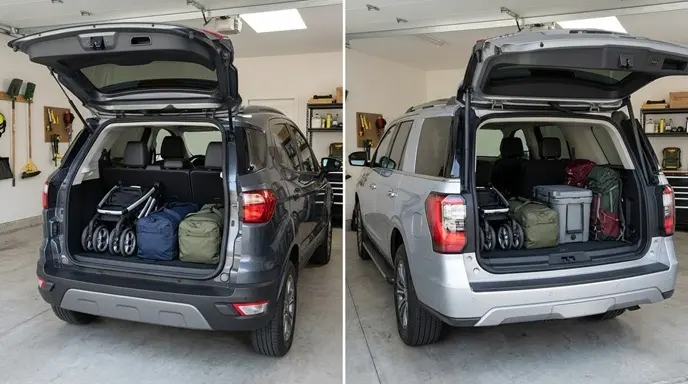
Is the Subaru Uncharted bigger than the Trailseeker? No — the Trailseeker is the larger vehicle by a meaningful margin, measuring roughly 9 inches longer overall, with more rear-seat legroom and a larger cargo hold.
Subaru Uncharted vs Trailseeker cargo space:
- Uncharted: approximately 25 cu ft behind the rear seats
- Trailseeker: approximately 27.7 cu ft behind the rear seats, up to roughly 65 cu ft with seats folded
The Trailseeker’s extra room matters most for:
- Families managing strollers, sports gear, and car seats
- Campers hauling coolers and gear
- Road-trippers packing multiple suitcases
The Uncharted’s tighter footprint is an advantage for:
- Urban and suburban drivers navigating tight parking garages
- Couples or small households without heavy cargo needs
- Buyers prioritizing easier daily maneuverability over maximum space
Both should accommodate standard child-seat installations, though families with two or more car seats and regular cargo needs will likely appreciate the Trailseeker’s extra inches.
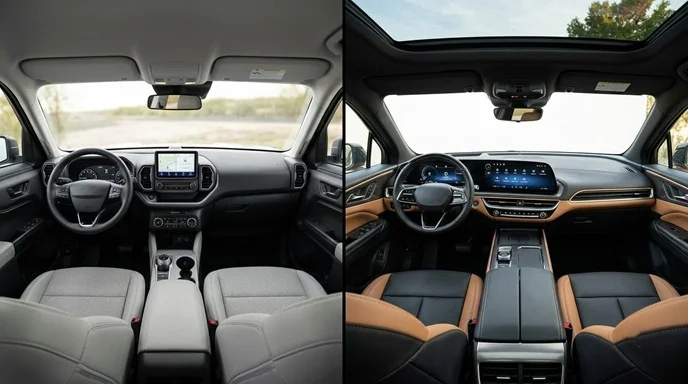
8. Interior and Technology
Subaru’s EV interiors emphasize simplicity over screen-count gimmicks. Expect a central touchscreen (specific sizes vary by trim), a digital driver display, and standard smartphone connectivity, though confirm whether wireless Apple CarPlay and Android Auto are standard or trim-dependent at the time of your purchase.
Shared or similar features across both models likely include:
- Heated front seats on mid-tier trims, with heated rear seats and ventilation on top trims
- Available panoramic moonroof on upper trims
- Subaru’s EyeSight-based driver-assistance suite (standard on most trims)
- Upgraded audio systems reserved for Limited trims
The Trailseeker’s larger cabin generally translates to more rear legroom and a roomier second-row experience, while the Uncharted’s interior prioritizes a tighter, more city-friendly layout. Neither model should be chosen on tech alone — verify your preferred trim’s exact feature list on Subaru’s configurator before ordering.
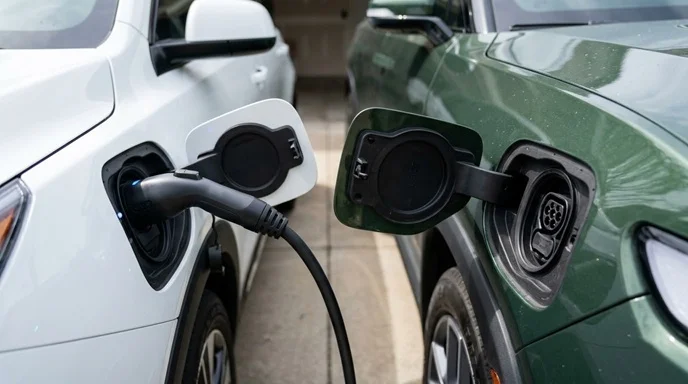
9. Charging Speed and Home Charging
Both models use a NACS (North American Charging Standard) port, Subaru’s EVs can access Tesla’s Supercharger network alongside other public NACS- or adapter-compatible chargers.
Subaru Uncharted vs Trailseeker charging speed: both are rated for DC fast charging up to roughly 150 kW. In practical terms:
- A 10%–80% DC fast charge takes approximately 30 minutes under ideal conditions for both models
- Charging speed slows significantly above 80% and in cold battery temperatures
- Peak kW figures represent a brief window, not a sustained charging rate
For home charging:
- Level 1 (standard household outlet) adds roughly 3–5 miles of range per hour — fine for very light daily driving but impractical for most owners
- Level 2 (240-volt home charger) typically replenishes a full battery overnight, making it the realistic choice for daily ownership
Homeowners should budget for potential electrical panel upgrades or a licensed electrician’s installation cost when adding a Level 2 charger, which varies widely by home and region.
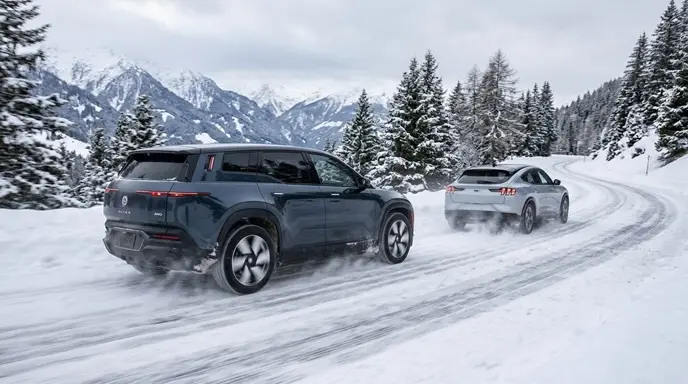
10. Ground Clearance and Off-Road Ability
Neither vehicle is marketed as a dedicated off-roader. Based on available figures, ground clearance sits around 8.0 inches for the Uncharted and roughly 8.3 inches for the Trailseeker — enough for:
- Gravel and dirt access roads
- Uneven campsites and unpaved parking areas
- Light snow-covered driveways
Neither model should be treated as suitable for rock crawling, deep mud, or technical trails. The Trailseeker’s standard AWD and X-MODE give it a slight edge for mild backroad and snow-access driving, but both are best suited to light recreational use rather than serious off-roading.
11. Towing Capacity
As of this writing, Subaru has not published an official towing rating for either the Uncharted or the Trailseeker. Based on the shared EV platform with similar Toyota and Subaru electric models that also lack a towing rating, buyers should not assume either vehicle is rated to tow a trailer, camper, or utility load.
If towing is a priority, do not infer capability from horsepower or ground clearance — wait for Subaru’s official specification sheet or ask a dealer directly. Towing with an EV also meaningfully reduces range, so even if a future rating is announced, plan for significantly shorter trip distances between charges.
12. For Families and Road Trips
Subaru Uncharted vs Trailseeker for families: The Trailseeker’s larger cargo hold and rear-seat space make it the more natural fit for families with multiple children, regular carpooling, or frequent gear-hauling needs. The Uncharted works well for smaller households or as a second vehicle.
Subaru Uncharted vs Trailseeker road trip considerations: The Uncharted’s FWD range advantage could mean fewer charging stops on long highway drives, but the Trailseeker’s extra power and cargo room may better suit trips with heavier luggage or gear.
Quick lifestyle guide:
- Urban commuters/couples: Uncharted FWD
- Snowbelt commuters: Trailseeker or AWD Uncharted
- Small families: Either, depending on budget
- Larger families/frequent road-trippers: Trailseeker
- Outdoor enthusiasts needing cargo room: Trailseeker
13. Ownership Costs
Major cost factors for both EVs include electricity, maintenance, insurance, and charging equipment.
Illustrative electricity example (assumptions stated explicitly): At a U.S. average residential rate of roughly $0.16/kWh and an estimated consumption of 30 kWh per 100 miles, driving 1,000 miles would cost approximately $48 in home electricity — notably less than the equivalent gasoline cost for a comparable gas-powered SUV, though your actual rate and efficiency will vary by location and driving style.
Other considerations:
- Public DC fast charging generally costs more per kWh than home charging
- EVs typically have lower scheduled-maintenance costs (no oil changes) but may have higher tire wear due to added weight
- Insurance premiums vary by driver, location, and insurer — get a personalized quote rather than relying on general estimates
- Federal and state EV tax incentives change frequently and have strict eligibility rules; verify current eligibility for either model through the IRS and your state’s energy office before assuming either vehicle qualifies
14. Subaru Uncharted vs. Trailseeker vs. Solterra
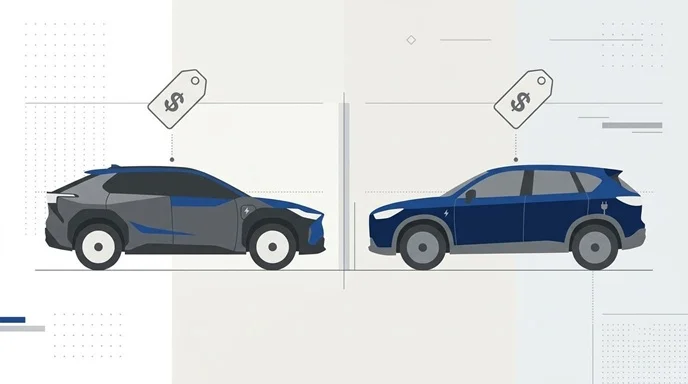
Subaru’s EV lineup now spans three models. The Subaru Uncharted vs Solterra comparison shows the Uncharted as the newer, U.S.-built compact option, while the Solterra remains Subaru’s original EV crossover, roughly similar in size to the Uncharted but built in Japan on Toyota’s assembly line. The Trailseeker, meanwhile, is the largest and most powerful of the three, with standard AWD across every trim.
In short: Uncharted and Solterra compete for budget-conscious, compact-SUV buyers, while the Trailseeker steps up in size, price, and power. For most comparison shoppers, the real decision still comes down to Uncharted vs. Trailseeker based on space and budget needs.
Which Subaru EV Should You Buy?
Choose the Uncharted if you want the lowest starting price, a smaller footprint for city driving and parking, and the highest available range in its FWD configuration. Choose the Trailseeker if you need standard AWD, more cargo room, stronger power for passing and merging, and extra space for family gear.
Paying more for the Trailseeker makes sense for snowbelt families and frequent road-trippers who need the extra room and traction. The Uncharted is the smarter purchase for commuters, couples, or anyone prioritizing affordability and efficiency over outright space.
Frequently Asked Questions
Q.1. What is the main difference between the Subaru Uncharted and Trailseeker?
The Uncharted is smaller and more affordable with FWD standard, while the Trailseeker is larger, more powerful, and comes with standard all-wheel drive across every trim.
Q.2. Which Subaru EV has the longer driving range?
The FWD Uncharted has the higher advertised EPA range at roughly 290 miles, compared to the Trailseeker’s estimated 260 miles, though AWD versions of each model will likely see reduced range.
Q.3. Is the Subaru Uncharted smaller than the Trailseeker?
Yes. The Uncharted is roughly 9 inches shorter overall and has less cargo capacity than the Trailseeker.
Q.4. Does every Subaru Trailseeker have AWD?
Yes, Subaru’s Trailseeker comes standard with dual-motor all-wheel drive on every trim level.
Q.5. Is the Subaru Uncharted available with AWD?
Yes, AWD is available as an upgrade on select Uncharted trims, though FWD is standard on the base model.
Q.6. Which Subaru EV has more cargo space?
The Trailseeker offers more cargo room, with an estimated 27.7 cubic feet behind the rear seats compared to the Uncharted’s roughly 25 cubic feet.
Q.7. How long does it take to charge the Uncharted and Trailseeker?
Both are estimated to DC fast-charge from 10%–80% in about 30 minutes under ideal conditions, while a Level 2 home charger typically provides a full overnight charge.
Q.8. Is the Subaru Trailseeker worth the extra money?
It depends on your needs. The Trailseeker’s standard AWD and extra cargo room justify the price for families and snow-climate drivers, but the Uncharted may offer better value for commuters who don’t need the added space or power.
Related Post