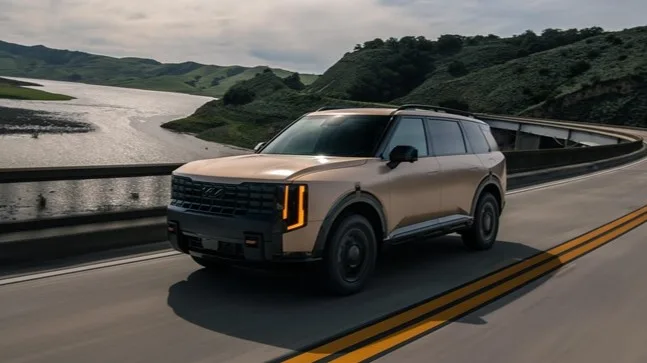
The Kia Telluride all-wheel drive, and for a lot of American families, it is the single most important box to check on the build sheet. The Telluride is sold with front-wheel drive as the base layout, but AWD is available across most trims and is virtually expected once you live somewhere with real winters, mountain roads, or just unpredictable rain.
Drivetrain is not a spec you can ignore and sort out later. It decides how your SUV behaves the first time you pull out of a snow-covered driveway, merge onto a wet highway at 65 mph, or tow a trailer up a boat ramp. For a three-row family SUV like the Telluride, that decision matters even more, because these vehicles are often loaded with kids, cargo, and a full tank of gas when the weather turns bad.
This guide breaks down which Telluride trims offer all-wheel drive, how the system actually works, how it performs in snow, what it does to fuel economy, and whether paying extra for AWD makes sense for your driving life.
Does the Kia Telluride Come With All-Wheel Drive?
The Telluride is built on a front-wheel-drive platform, with AWD offered as an upgrade on nearly every trim level. This is a common setup across the three-row SUV segment. Front-wheel drive keeps the starting price lower and tends to deliver slightly better fuel economy, while AWD adds traction, confidence, and capability when road conditions turn against you.
Kia does not force every Telluride buyer into AWD, and it does not hide it as some obscure late-cycle option either. On most trims, it is a straightforward add-on you select when configuring the vehicle, and on some of the more rugged variants, it comes standard. That flexibility is one of the reasons the Telluride sells well in both Sun Belt states and snow-belt states at the same time.
It’s worth noting that exact trim-and-drivetrain pairings can shift slightly from one model year to the next. Before you sign anything, confirm the current lineup on Kia’s official configurator or with your local dealer, since Kia does periodically adjust standard equipment and available packages.
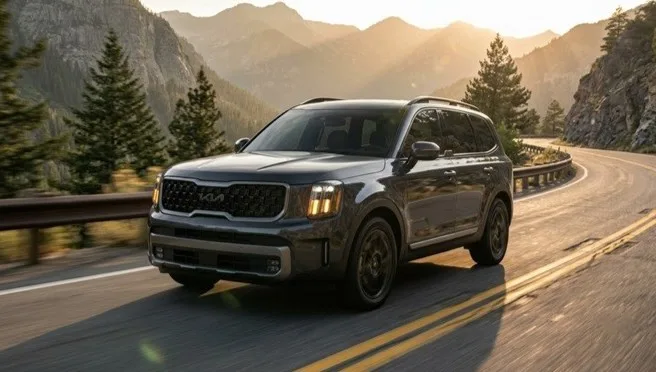
Which Kia Telluride Trims Have All-Wheel Drive?
The Telluride lineup typically spans a handful of trims, starting with a value-focused base model and climbing toward more feature-rich and off-road-oriented versions. On most of these trims, AWD is available as an option over the standard front-wheel-drive setup. The two trims built specifically with all-terrain intentions, X-Line and X-Pro, lean on AWD as a core part of their identity rather than a checkbox.
Here’s a general look at how the Telluride lineup tends to be structured. Treat the specific trim names and standard equipment as a guide, and verify the current year’s exact configuration with Kia before you buy.
| Trim Level | Drivetrain Availability | Positioning |
|---|---|---|
| Base/LX-style trim | FWD standard, AWD optional | Value-focused, fewer extras |
| Mid-level trim (EX-style) | FWD standard, AWD optional | Balanced comfort and features |
| Upper trim (SX-style) | FWD standard, AWD optional | Premium features, leather, tech |
| X-Line | AWD-focused | On-road styling with off-road cues, all-weather capability |
| X-Pro | AWD-focused | Off-road hardware, increased capability, rugged styling |
The further up the lineup you go, the more likely AWD becomes either standard or heavily recommended, simply because those trims are marketed toward buyers who want extra confidence in bad weather or light off-pavement driving.

Kia Telluride All-Wheel Drive
Features, AWD Trims, MPG, Snow Performance, Specs & AWD vs FWD — Is HTRAC Worth the Extra Cost?
How Telluride AWD Actually Works
The Kia Telluride uses Kia’s HTRAC all-wheel-drive system. It is an electronically controlled, on-demand setup: a center clutch sends torque to the rear axle when the fronts slip. On dry pavement it spends most of its time acting like FWD to save fuel. In rain, snow, or loose gravel it can send a large share of torque rearward. Drive-mode logic (including Snow on most AWD models) changes throttle, shift points, and how aggressively HTRAC engages.
This is not a locked, low-range 4×4. Standard ground clearance is about 8.0 inches; X-Pro sits higher and is the only Telluride that is genuinely trail-oriented. With the right tires, HTRAC is one of the more confidence-inspiring systems in the three-row crossover class — clearly better than FWD, not in Jeep or 4Runner territory.
Quick Snapshot
291 hp V6
3.8-liter V6, 262 lb-ft, 8-speed automatic. Same engine for FWD and AWD. Towing typically 5,000 lbs when properly equipped.
HTRAC
On-demand AWD with Snow / Comfort / Sport / Eco / Smart modes (by trim). No crawl-ratio transfer case.
~1–2 mpg
AWD usually costs about 1–2 mpg combined versus FWD. Real-world gap is similar in mixed driving.
Strong with tires
Very good in snow for a family SUV when fitted with winter or quality all-season tires. AWD is not a substitute for proper rubber.
AWD vs FWD: Specs & Real Differences
| Item | FWD Telluride | AWD Telluride (HTRAC) |
|---|---|---|
| Engine / transmission | 3.8L V6 / 8-speed auto | Same 3.8L V6 / 8-speed auto |
| Horsepower / torque | 291 hp / 262 lb-ft | 291 hp / 262 lb-ft |
| Typical combined MPG | ~20 city / 26 hwy / 23 comb. | ~18–19 city / 24 hwy / 21–22 comb. |
| Curb weight | Lighter | Heavier (AWD hardware) |
| Traction in snow/rain | Tire-dependent; can struggle | Clearly better with the same tires |
| Ground clearance | ~8.0 in | ~8.0 in (X-Pro higher) |
| Towing (when equipped) | Up to 5,000 lbs | Up to 5,000 lbs |
| Typical AWD upcharge | — | About $2,000 |
| Best for | Dry / mild climates, max MPG | Snow belt, rain, light trails, peace of mind |
EPA numbers vary slightly by year and wheel/tire package. AWD’s extra weight and driveline losses are why highway figures often drop more than city. In mixed real-world use many owners see a 1–2 mpg difference — noticeable over a year, not catastrophic given the V6’s thirst either way.
Which Trims Offer AWD?
AWD is optional on the volume trims and more tightly tied to the adventure-styled ones:
| Trim | AWD availability | Notes |
|---|---|---|
| LX / S | Optional | Cheapest path to HTRAC. Best if you only need traction, not extra off-road styling. |
| EX / SX / SX Prestige | Optional | Most popular family builds. AWD plus leather/tech packages is a very common configuration. |
| X-Line | AWD-focused | Unique cladding, wheels, and stance. Aimed at buyers who want the AWD look and capability together. |
| X-Pro | AWD + off-road hardware | Higher clearance, all-terrain tires, extra protection. The Telluride that actually looks the part for dirt roads. |
If you only need snow traction for commuting, an LX or EX with AWD and a set of winter tires is usually enough. X-Line and X-Pro make more sense if you also want the styling and extra ground clearance.
Snow Performance: Honest Assessment
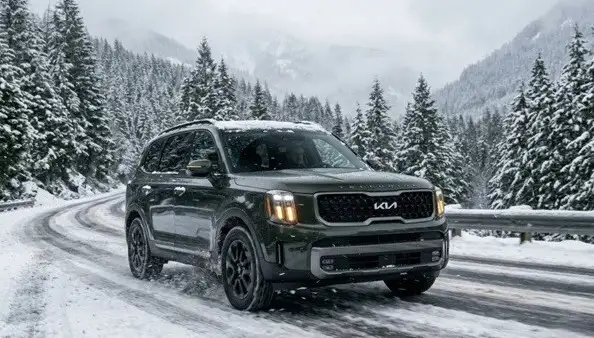
HTRAC plus the Telluride’s weight, long wheelbase, and available Snow mode make it one of the more confidence-inspiring three-row crossovers in winter — if the tires are right. All-wheel drive cannot create grip that cheap all-season tires don’t have on ice. Owners in the Midwest, Northeast, and mountain states generally describe it as “set it and forget it” in moderate snow, with Snow mode reducing wheelspin on takeoff.
Limits: Deep unplowed snow, steep icy driveways, and packed ice still favor dedicated winter tires and, in extreme cases, vehicles with more clearance or true 4WD. A standard Telluride is not an X-Pro or a Jeep. For typical suburban and highway winter driving, AWD Telluride plus winter tires is a strong combination.
Practical tip: Budget for winter tires even with AWD. Many Telluride AWD owners who skip winters still lose confidence on ice — the same as any crossover.
MPG: What AWD Really Costs You
FWD Telluride is typically rated around 20 city / 26 highway / 23 combined. AWD versions usually land about 18–19 city / 24 highway / 21–22 combined, depending on year, wheels, and exact EPA test. Over 12,000 miles a year, a 2 mpg drop is roughly 50–70 extra gallons — noticeable but not a deal-breaker for most families who actually need the traction.
If you live where AWD sits unused 10 months of the year, FWD plus a good set of winter tires (or quality all-seasons) can be the cheaper and more efficient choice. If you face regular snow, rain-soaked highways, or unpaved cabin roads, the MPG hit is the price of traction you will actually use.
Features Tied to AWD (vs Trim Features)
HTRAC itself is the hardware. What you also get on AWD models typically includes Drive Mode Select with Snow (and more terrain-related logic on X-Pro), hill-start assist, and downhill brake control on some trims. The rest of the feature list — leather, panoramic roof, 12.3-inch screens, third-row comfort, surround camera — is trim-driven, not AWD-driven. You can have a loaded FWD SX Prestige or a simpler AWD LX.
Always confirm the window sticker: “AWD” or “HTRAC” must be listed. Listings sometimes show X-Line cladding photos on a FWD vehicle.
Is Telluride AWD Worth It?
Yes — get AWD if…
You live in a snow belt, mountain region, or area with frequent ice and rain. You want extra stability with a loaded third row or when towing. You prefer not to treat winter as a once-a-year tire-swap event (though you still should run winter tires). The ~$2,000 option is cheap compared with a slide into a ditch. Choose X-Pro if you also want more clearance and trail credibility.
Skip AWD (buy FWD) if…
You live in a mild or dry climate, park in a garage, and rarely see snow. You want every mpg and the lowest purchase price. You are willing to run dedicated winter tires on FWD for the few bad weeks of the year. FWD Telluride is still a large, stable SUV — it is not “unsafe,” just less capable when pavement disappears.
Kia Telluride AWD is a well-sorted, on-demand system that meaningfully improves snow and wet-road confidence without turning the vehicle into a truck. The MPG penalty is modest, the typical price delta is about $2,000, and the V6 / 8-speed pairing stays the same. Get AWD if you will use the traction; skip it if you won’t. Pair either drivetrain with the right tires. For most snow-state families, AWD (often on EX or SX) is the Telluride people actually want to live with in January. For Sun Belt buyers, FWD is the smarter, cheaper, slightly more efficient Telluride.
Kia Telluride AWD MPG: How Much Fuel Does It Use?
AWD Telluride models typically see slightly lower EPA fuel economy ratings than their FWD counterparts, generally by a small margin in both city and highway driving. This is standard across nearly every SUV that offers both drivetrain options, since AWD hardware adds weight and some driveline friction.
Because EPA ratings can shift from model year to model year, and because Kia has introduced different engine options across the Telluride’s life (including a turbocharged engine and a hybrid variant in more recent years), the most reliable way to get accurate, current MPG figures is to check the official window sticker numbers or fueleconomy.gov for the specific model year and trim you’re considering.
A few real-world factors matter more than the sticker number, though. Short trips in cold weather lower fuel economy because the engine spends more time running rich while warming up. Larger wheel-and-tire packages, common on X-Pro and X-Line trims, can slightly reduce efficiency due to added rolling resistance. Roof racks, heavy cargo loads, and aggressive driving habits all chip away at real-world mileage more than the AWD system itself does.
If you’re cross-shopping a Telluride Hybrid, keep its figures separate from the standard gasoline AWD model. Hybrid powertrains use a different drivetrain architecture and have distinct EPA ratings, so don’t assume the two share the same fuel economy numbers.
Kia Telluride AWD Towing Capacity
Towing capacity on the Telluride varies by trim, drivetrain, and whether a tow package is equipped, so exact figures should be confirmed through Kia’s official specifications for your specific model year and configuration. In general, AWD models have historically offered the segment’s stronger towing numbers compared to FWD versions, since the extra traction helps when pulling a loaded trailer away from a stop or up an incline.
Towing capacity isn’t just about the drivetrain, though. Payload capacity, passenger count, and cargo weight all factor into how much you can safely tow at any given time. Loading up three rows of passengers and a full cargo area reduces how much trailer weight you can safely add, even if the Telluride’s maximum tow rating looks impressive on paper.
If towing is a priority, whether for a small camper, a boat, or a utility trailer, make sure your dealer confirms the exact tow rating and any required equipment (like a factory tow package or trailer brake controller) for the specific Telluride trim and drivetrain you’re buying.
Frequently Asked Questions
Q.1. Does every Kia Telluride come with AWD?
No. FWD is the standard drivetrain on most trims, with AWD offered as an upgrade. Some higher trims, like X-Pro, lean on AWD as a core part of their build.
Q.2. Is the Kia Telluride AWD good in heavy snow?
It performs well in moderate to heavy snow, especially with Snow Mode engaged and quality tires. For the harshest winter conditions, dedicated winter tires significantly improve results.
Q.3. Can you turn off AWD on a Kia Telluride?
The Telluride’s AWD system is automatic and electronically controlled; there isn’t a manual on/off switch like a part-time 4WD truck system. It engages as needed based on conditions.
Q.4. Does AWD improve handling in rain?
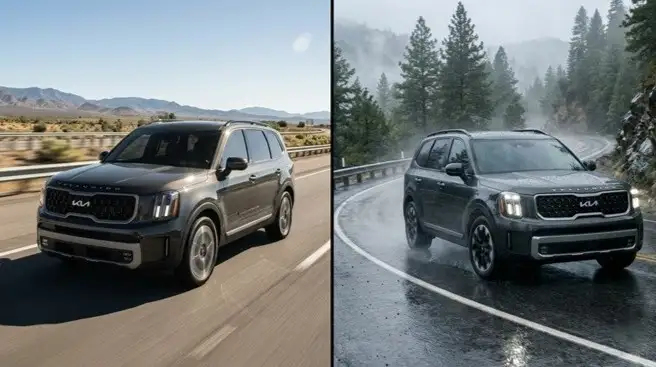
Yes, AWD helps maintain traction and stability on wet roads, particularly during acceleration and cornering, though tire quality still plays a major role.
Q.5. What is the difference between Telluride X-Line and X-Pro?
X-Line focuses on styling and everyday all-weather capability, while X-Pro adds more off-road-oriented hardware, like all-terrain tires and additional clearance, for light trail use.
Q.6. Does the Kia Telluride have Snow Mode?
Yes, Snow Mode is available and adjusts throttle response and traction settings to help with slippery conditions.
Q.7. Is the Kia Telluride AWD full-time or automatic?
It’s an automatic, on-demand system that primarily drives the front wheels and sends power rearward as needed, rather than a constant 50/50 full-time setup.
Q.8. Does AWD reduce fuel economy?
Yes, typically by a small margin compared to FWD, due to added weight and drivetrain components.
Q.9. Which Telluride trim has the best AWD features?
X-Pro generally offers the most robust AWD-related hardware and terrain modes, geared toward drivers who want extra capability beyond daily commuting.
Q.10. Is AWD worth buying in a warm climate?
It can still help in heavy rain or occasional road trips to colder regions, but buyers in consistently dry, mild climates may not see enough benefit to justify the added cost.
The all-wheel drive Kia Telluride earns its reputation as one of the more dependable choices in the three-row SUV segment for buyers who deal with real weather. It won’t turn your SUV into a dedicated off-roader, and it won’t replace the value of good tires or careful driving, but it does give you a meaningful traction advantage exactly when you need it most.
If you live somewhere with real winters, mountain driving, or simply unpredictable weather throughout the year, the AWD Telluride is worth the modest price premium and small fuel economy trade-off. If your climate is mild and dry year-round, FWD remains a smart, budget-conscious choice that still delivers everything the Telluride is known for: a comfortable ride, three rows of usable space, and a well-built cabin.
Before you buy, confirm the exact trim lineup, AWD availability, towing capacity, and EPA fuel economy ratings for the current model year directly through Kia’s official resources, since these details can shift from year to year. Whichever drivetrain you choose, the Telluride remains one of the more complete family SUVs on the market, and getting the drivetrain right for your actual driving life is the easiest way to make sure you’re happy with it for years to come.
Related Post